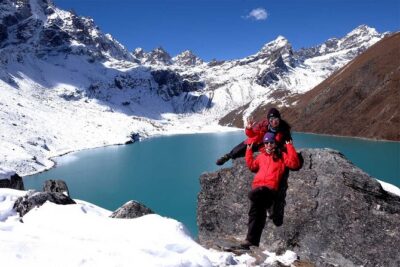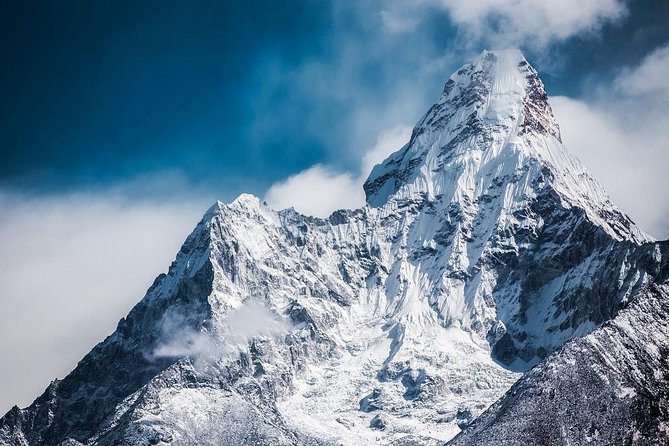
REVIEW · KATHMANDU
Helicopter Return Everest Base Camp Trek, KTM-LUKLA & Gorakshep-KTM by Heli
The great hook here is simple: you walk into the Everest region the traditional way, then skip the long return trek with a helicopter from Gorakshep to Kathmandu. You still get prayer-flag bridges, Sherpa villages, Namche Bazaar, Tengboche, Everest Base Camp, and Kala Patthar without retracing every step on foot.
I like the gradual route through Phakding, Namche Bazaar, Tengboche, and Dingboche. I also like the small-group limit of 15, the included mountain guide, and the chance to trek with guide Dipak, who is named in the company’s trip information and customer accounts. The main concern is the unclear duration and cost: the experience is advertised as nine days at $9,999, but the detailed schedule runs to 14 days and lists helicopter charges separately.
Key points at a glance
- Classic approach to Base Camp: Walk from Lukla through Phakding, Namche Bazaar, Tengboche, Dingboche, Lobuche, and Gorakshep.
- High-altitude highlights: Reach Everest Base Camp at 5,364 meters and Kala Patthar at 5,545 meters.
- Helicopter return: The advertised route flies from Gorakshep back to Kathmandu, avoiding the full return trek.
- Sherpa culture along the way: Expect monasteries, chortens, prayer wheels, prayer flags, trading traditions, and teahouse evenings.
- Small group format: The maximum group size is 15 people, with a guide included and porters available at an extra daily cost.
- Check the price carefully: Helicopter flights and porter service are listed as additional charges, despite the headline price.
Walking into the Everest region from Lukla
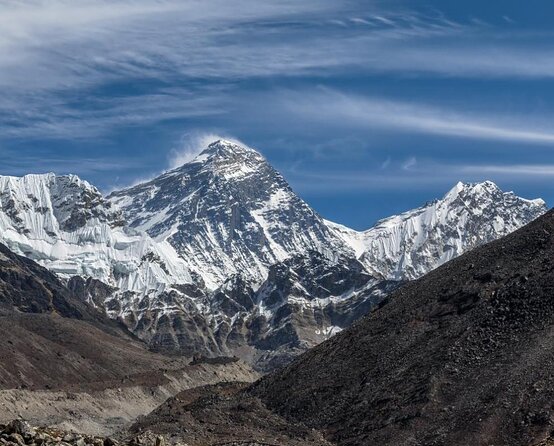
This trip begins in Kathmandu, but the real walking starts after the short flight to Tenzing-Hillary Airport in Lukla. The flight takes about 35 minutes and brings you to 2,828 meters, where the trail immediately feels different from the capital.
The route follows the Dudh Koshi River, known as the Milky River, through villages such as Nurning, Phakding, Benkar, Monjo, and Jorsale. You cross suspension bridges decorated with prayer flags and pass prayer wheels, chortens, and mountain settlements that give the walk a strong sense of place.
Your first trekking day ends in Phakding after roughly three to four hours. That is a sensible opening stage. You get moving after the early flight without being asked to cover a long distance on day one.
The next day takes you toward Namche Bazaar in about five to six hours. This is where the route becomes more demanding. The trail climbs steadily, and the altitude begins to matter. You enter Sagarmatha National Park along the way, with mountain scenery and the possibility of seeing local wildlife.
More Helicopter Transfers in Kathmandu
- Everest Base Camp Trek with Helicopter Return from Gorakshep to Lukla
★ 5.0 · 161 reviews - Everest Base Camp Trek with Helicopter Return to Lukla – 10 Days
★ 5.0 · 34 reviews - Everest Base Camp Trek with Helicopter Return -11 Days
★ 5.0 · 12 reviews
Namche Bazaar gives the trek its first big pause
Namche Bazaar sits at 3,440 meters and is one of the most important stops on the route. It is not just a place to sleep. It is a trading center, a meeting point, and the last major town before the trail heads higher into the Khumbu.
You have a rest day here, which is essential rather than optional decoration. The itinerary allows your body time to adjust before the bigger altitude gains ahead. Namche also gives you a chance to look through shops, eat a wider range of food, and learn more about the local Sherpa culture.
I especially like this part of the schedule because it prevents the trek from becoming a race uphill. The route includes another rest day at Dingboche later, creating two useful pauses before the highest sections.
The downside is that an acclimatization day can feel slow if you expected a nonstop hiking holiday. At this altitude, that slower rhythm is exactly what makes the rest of the trip more manageable.
Tengboche brings monasteries and mountain views
From Namche, you trek to Tengboche at 3,850 meters. The walk takes around four to five hours and continues through the Everest region’s mix of river valleys, forests, open hillsides, and mountain settlements.
Tengboche is known for its monastery, and this is one of the places where the cultural side of the route becomes as important as the peaks. Prayer flags, chortens, and prayer wheels are not simply trail decoration. They show how closely daily life and Buddhist practice are tied together in the Sherpa villages.
The schedule places you in a mountain teahouse each night. These are practical places rather than luxury hotels. You should expect simple accommodation and shared facilities, with evenings spent indoors as temperatures drop. The trip includes teahouse lodging, but meals are not fully covered. Breakfast for nine mornings is listed as included, while lunch and dinner are paid locally.
That arrangement gives you some freedom, but it also means you need a daily food budget. At high altitude, you may prefer familiar meals and hot drinks, so costs can add up.
Dingboche is the second key acclimatization stop
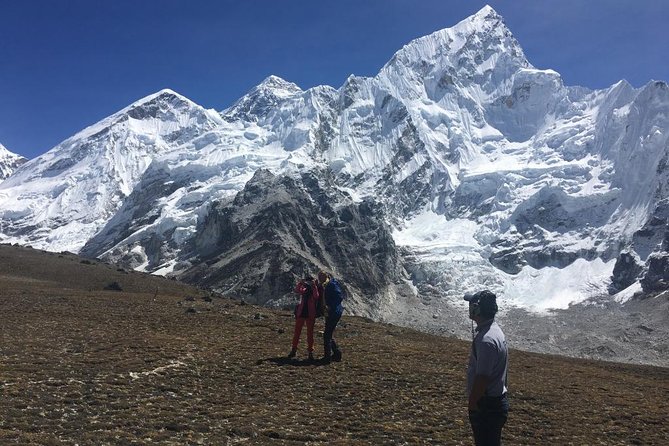
The trail continues to Dingboche at 4,350 meters, with another four to five hours of walking. This is a major step higher, so the scheduled rest day is important.
Dingboche is the point where the trek starts to feel properly high-altitude. From here, the air is thinner, the nights are colder, and ordinary tasks can take more effort. Your guide should help manage the pace, and guide Dipak has been specifically praised for keeping the hiking portion organized, informative, and enjoyable.
I would use the rest day to protect your energy rather than treat it as a spare sightseeing day. The supplied packing list calls for a down jacket, warm layers, gloves, a woolen hat, and a four-season sleeping bag if needed. The company can provide a sleeping bag, but it must be returned after the trip.
A useful packing detail is the complimentary trekking duffel bag. You bring a day pack, while the duffel is used for larger belongings. The bag is supplied for the trek and returned afterward, so do not plan to keep it as a souvenir.
More Helicopter Transfers in Nepal
- Everest Base Camp Trek with Helicopter Return – 10 Days
★ 5.0 · 9 reviews - Everest Base Camp trek with Helicopter return 9 days
★ 5.0 · 8 reviews
Lobuche and Gorakshep mark the high point
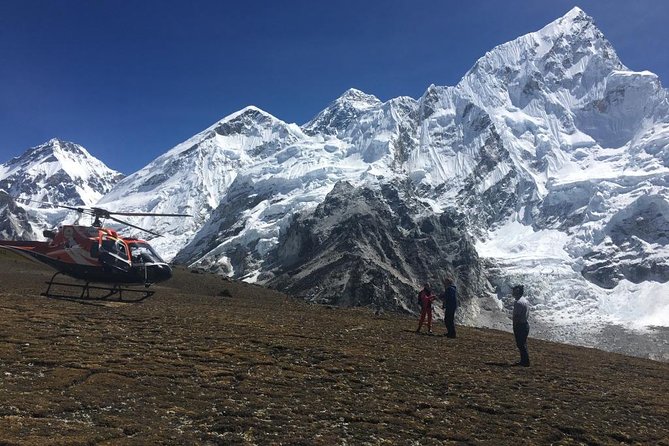
After Dingboche, you continue to Lobuche at 4,910 meters. This section takes about four to five hours. The itinerary is now focused on the main goal, but the altitude makes every hour count.
The following day takes you to Gorakshep at 5,180 meters in about three to four hours. From there, you walk another two to three hours to Everest Base Camp, reaching 5,364 meters.
Base Camp is the emotional center of the trek. You are walking into the same broad region associated with George Mallory, Edmund Hillary, and Tenzing Norgay, though the experience is less about a single monument than the full journey through the Khumbu. Along the way, the route gives you views of glacial rivers, the Khumbu Glacier, avalanche paths, and the famous Khumbu Icefall.
The schedule brings you back to Gorakshep after the Base Camp outing. That makes for a long day at high altitude. You should think of it as a demanding achievement, not a casual afternoon walk.
Gorakshep itself is a functional overnight stop. It is included because of its position near Base Camp and Kala Patthar, not because it offers comfort. Cold rooms, limited facilities, and thin air are part of the bargain.
Kala Patthar supplies the great mountain view
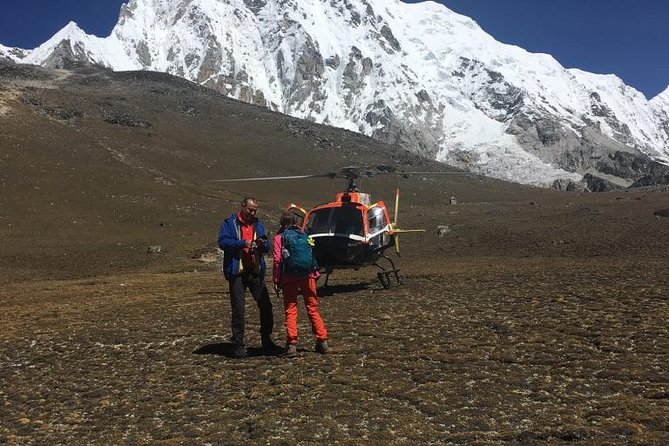
The next morning begins with the climb to Kala Patthar at 5,545 meters. This is the highest point in the walking itinerary and one of the main reasons to choose this route.
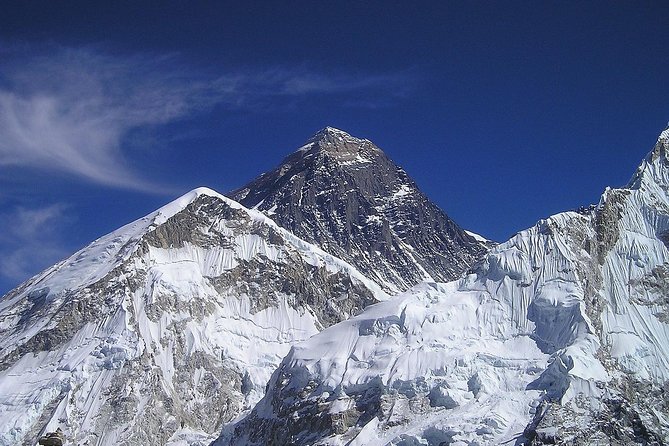
From Kala Patthar, you can see Everest, Nuptse, Pumori, Lhotse, and Changtse, along with the Khumbu Glacier and the surrounding ice and mountain formations. The viewpoint is especially valued for its broad view of Everest, which is not always as direct from Base Camp itself.
You then descend to Pheriche, at 4,280 meters, in about five to six hours. That is a substantial walking day. The descent helps with altitude, but it can still be tiring after the early climb and the previous day’s Base Camp outing.
The planned helicopter return is supposed to take place from Gorakshep to Kathmandu, so the exact timing needs clarification. The detailed schedule instead continues by foot to Namche Bazaar and Lukla, then includes a flight to Kathmandu and a final departure day. That is not a minor wording issue. It changes the length, cost, and character of the trip.
The return plan needs written confirmation
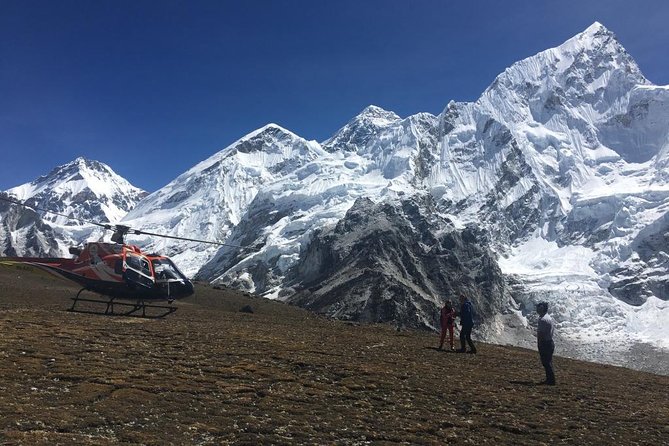
There are two different versions of the experience in the supplied information.
The headline describes a helicopter return from Gorakshep to Kathmandu and gives an approximate duration of nine days. The detailed daily plan describes a 14-day journey, with the trek continuing from Pheriche to Namche Bazaar and Lukla before a regular flight back to Kathmandu.
The price also needs careful checking. The listed rate is $9,999 per person, but the additional-cost section says a shared helicopter from Kathmandu to Lukla costs $400 per person during October, November, March, April, and May. It also lists a shared helicopter from Gorakshep to Kathmandu at $999 per person during those months.
A private helicopter from Gorakshep to Kathmandu is listed at $3,600 per helicopter, while a private Kathmandu to Lukla helicopter is listed at $2,000. These charges appear to be outside the headline price.
Before paying, ask the operator to confirm in writing:
- Whether the $9,999 price includes both helicopter flights
- Whether the trip lasts nine days or follows the 14-day walking schedule
- Whether the return from Gorakshep is guaranteed or weather dependent
- Whether breakfast is included for nine mornings only
- Whether a regular flight from Lukla is used if the helicopter plan changes
This matters because mountain aviation depends on weather. The cancellation terms say poor weather can lead to a different date or a full refund, but you should also ask what happens to the itinerary if weather interrupts the helicopter flight after you have already started trekking.
What guide support and group size mean in practice
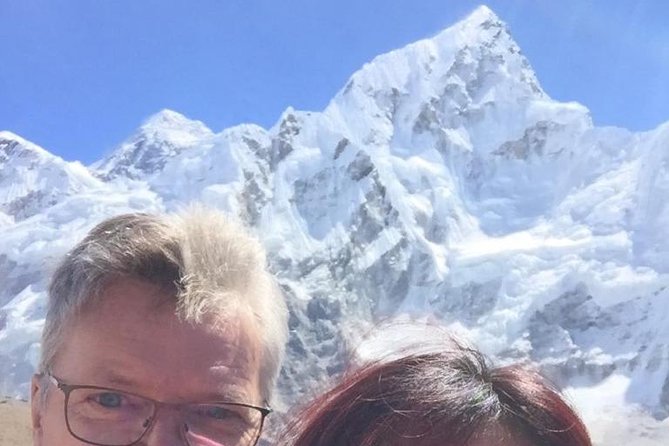
The maximum group size is 15 people. That is not a private trek, but it is small enough for the guide to keep the group together more easily than on a large departure.
Buddhi is associated with trip planning and local support, while Dipak is named as the mountain guide. The company’s customer accounts also name porters Carmen and Desantis on one departure. Staff can change, so treat these names as useful contact points to confirm rather than a promise about your exact team.
Porters cost $30 per day each and are paid directly in Lukla. That charge is not included. If you use a porter, pack a manageable day bag with water, warm layers, sun protection, and the items you need during the day.
The equipment list is sensible for a high-altitude trek. You need trekking shoes, warm clothing, waterproof layers, gloves, sunglasses, a headlamp or torch, a water bottle, and several pairs of socks. Non-cotton underwear is recommended. The company can provide a sleeping bag if you need one.
Food, lodging, and the real value of the $9,999 price
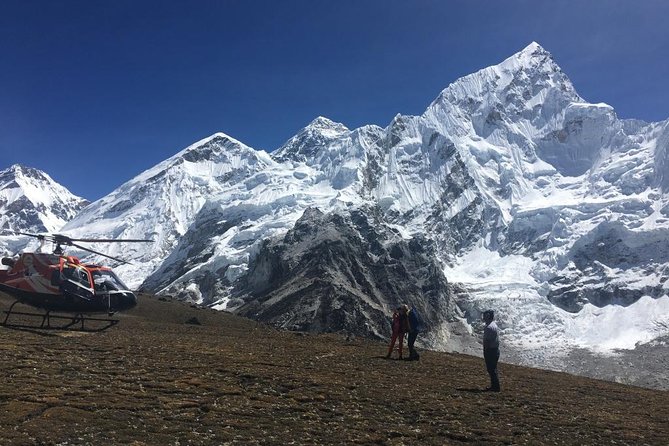
The price may offer good value if it genuinely includes the helicopter flights, guide, permits, teahouses, and the nine listed breakfasts. A helicopter return saves several days of walking and avoids retracing the trail from the high country.
It is poor value if the helicopter flights are added on top of the $9,999 price. The extra $400 and $999 shared-flight charges total $1,399 per person for the two listed helicopter legs, before porter fees, lunch, dinner, and private transport.
The included items are mountain teahouse lodging, a trekking guide, entry and trekking permits, and nine breakfasts. Lunch and dinner are paid locally. Private transportation is also excluded.
This is why the trip should not be judged on the headline number alone. You need the full cost, including flights, meals, porter service, airport transfers, and any extra Kathmandu nights. The operator offers free cancellation up to 24 hours before the start time, but last-minute changes are not accepted, and the experience requires suitable weather.
Who will enjoy this route most
I would recommend this trip to a fit hiker who wants the classic Everest Base Camp approach but does not want to walk all the way back to Lukla. You need to be comfortable with several five to six-hour walking days, cold teahouse nights, basic facilities, and high altitude.
It suits someone who cares about both scenery and culture. You pass through Sherpa villages, monasteries, trading centers, prayer-flag bridges, and Sagarmatha National Park rather than simply flying over the region.
It is less suitable if you want a short, simple sightseeing flight or a polished hotel-based holiday. The helicopter saves time at the end, but the route to Base Camp remains a serious trek. You also need patience with weather and a willingness to settle the itinerary details before booking.
Should you book this Everest Base Camp trek?
Book it if you want the full walking approach to Everest Base Camp, a proper acclimatization schedule, Kala Patthar, and a helicopter escape from the long return route. The cultural stops, mountain scenery, and guide support make it more than a point-to-point hike.
Do not book until the operator clarifies the nine-day versus 14-day schedule and confirms exactly what the $9,999 includes. If the helicopter return is included, the time-saving design can be very appealing. If it is extra, calculate the total first.
For a well-prepared hiker who values the classic route but wants a faster finish, this can be an excellent plan. Just make the price and return flight part of the booking agreement, not an assumption.
FAQ
How long is the experience?
The summary describes the experience as approximately nine days, but the detailed schedule lists 14 days, including arrival and final departure. Confirm the actual duration with the operator before booking.
Is the helicopter flight from Gorakshep to Kathmandu included?
The information lists a shared helicopter from Gorakshep to Kathmandu at $999 per person during October, November, March, April, and May. It also lists this under additional costs, so you should confirm whether it is included in the $9,999 price.
What is the highest point reached on foot?
The itinerary reaches Kala Patthar at 5,545 meters. Everest Base Camp is listed at 5,364 meters.
Are meals included?
Nine breakfasts are listed as included. Lunch and dinner are paid locally.
Is a porter included?
No. Porter service is listed at $30 per day per porter, paid directly in Lukla.
What happens if bad weather cancels the experience?
The activity requires good weather. If it is canceled because of poor weather, you are offered a different date or a full refund. Any cancellation or change made less than 24 hours before the start time is not accepted.
More Hiking and Trekking Trips in Kathmandu
- Everest base camp trek & Heli return
★ 5.0 · 6 reviews - Everest Base Camp Trek | Deluxe Lodges | Both Way Helicopter Ride
★ 5.0 · 6 reviews - Everest Base Camp Trek with Helicopter Flight Back
★ 5.0 · 3 reviews - Everest Base Camp Trek with Chopper Return To Kathmandu
★ 5.0 · 2 reviews
More Everest Helicopter Tours in Kathmandu
- Everest Base Camp Helicopter Tour landing at Everest View Hotel
★ 5.0 · 668 reviews - Everest Base Camp Helicopter Tour landing at Hotel Everest View
★ 5.0 · 218 reviews - Everest Base Camp helicopter tour with landing
★ 5.0 · 61 reviews - Everest Base Camp Helicopter Tour with Hotel Everest View Landing
★ 5.0 · 52 reviews
Just added around Kathmandu
- Mount Everest Helicopter Tour with Landings★ 5.0 · 2 reviews
- Day Tour to Everest Base Camp By Helicopter★ 5.0 · 16 reviews
- Guaranteed Landing at Everest Base Camp Kalapathar by Helicopter★ 5.0 · 38 reviews
- Kathmandu To Lukla By Helicopter Flight★ 5.0 · 6 reviews
- Mount Everest Scenic Helicopter Tour★ 5.0 · 6 reviews
- Langtang Helicopter Tour★ 5.0 · 6 reviews
- Everest Helicopter Tour★ 5.0 · 3 reviews
- Everest Base Camp Tour & View Point by Helicopter from Katmandu★ 5.0 · 3 reviews
Everest & Himalaya Helicopter Tours, compared.
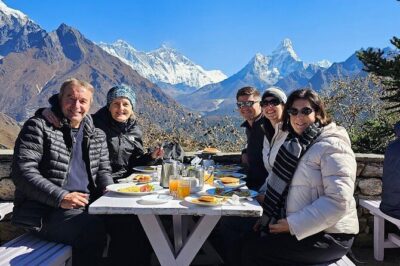
Everest Base Camp Helicopter Tour landing at Everest View Hotel
Read our review →
Everest Base Camp Helicopter Tour landing at Hotel Everest View
Read our review →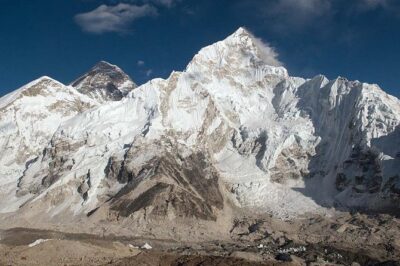
Everest Base Camp Trek with Helicopter Return from Gorakshep to Lukla
Read our review →
Everest Base Camp helicopter tour with landing
Read our review →
Everest Base Camp Helicopter Tour with Hotel Everest View Landing
Read our review →
Guaranteed Landing at Everest Base Camp Kalapathar by Helicopter
Read our review →Everest Base Camp Helicopter Tour landing at Everest View Hotel.
Read our review →