REVIEW · KATHMANDU
Everest Base Camp Trek with Helicopter Return to Lukla – 10 Days
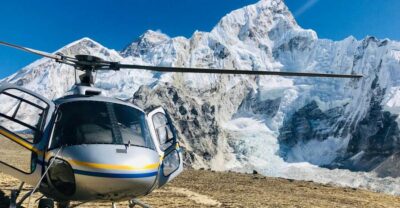
The most unusual feature here is the helicopter return from Gorakshep to Lukla. You walk the classic approach to Everest Base Camp, then swap a long descent for a thrilling flight over the valleys and peaks you have just crossed. The route also includes Kala Patthar, the usual high point for mountain views.
I like the tidy logistics: permits, a licensed English-speaking guide, standard guesthouses, a duffel bag, sleeping bag, medical kit, and domestic flights are covered. I also like the small maximum group of 15, plus the Kathmandu farewell dinner with Nepali food and traditional dance. The main caution is the tight 10-day schedule and high altitude. This is not a casual walk, and weather can disrupt both the Lukla flights and the helicopter ride.
Key points to know before booking
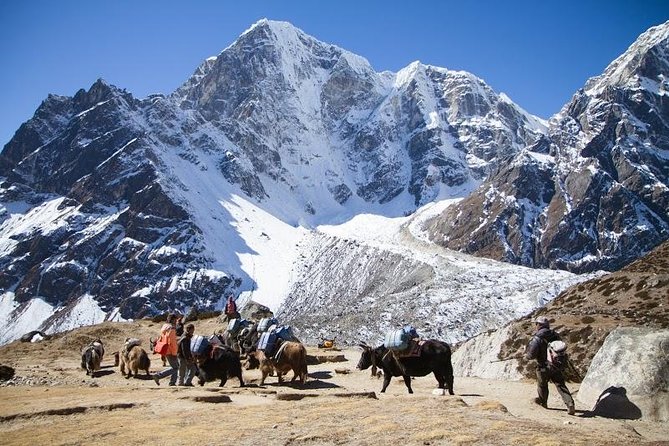
- Gorakshep to Lukla by helicopter: You avoid the long trek back down and see the route from above.
- Classic Everest route: The walk passes through Namche Bazaar, Tengboche, Dingboche, and the Everest Base Camp area.
- Kala Patthar sunrise: This viewpoint is included for some of the best close views of Everest and the surrounding peaks.
- Small group size: The maximum is 15 people, with a licensed English-speaking guide.
- $799 price: A strong package price if the included flights, permits, lodging, transfers, and helicopter flight operate as described.
- Important extras: Trek meals, a porter, insurance, personal expenses, and international flights are not included.
What the 10-day Everest trip is really like
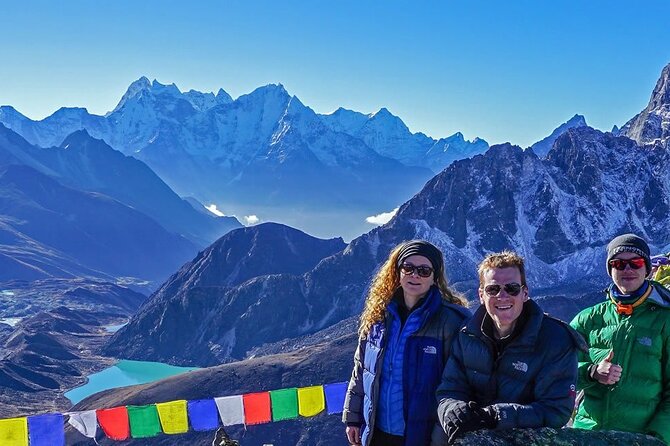
This is a fast, carefully arranged version of the Everest Base Camp trek. You start in Kathmandu, fly toward Lukla, walk steadily uphill through Sherpa country, spend time above 4,000 meters, reach Everest Base Camp and Kala Patthar, then return by air instead of retracing the entire route on foot.
That last point changes the feel of the trip. A classic Everest Base Camp trek usually needs more time for the return journey. Here, the helicopter gives you a quicker finish and a memorable aerial view, but it also means the walking schedule is demanding. You do not get much spare time if weather, altitude, or flight delays interfere.
The package is best understood as a mountain trek with practical support, not a luxury trek in the usual sense. You sleep in standard guesthouses rather than high-end lodges. The luxury comes from the reduced return walk, private airport transfers, organized permits, and the helicopter ride.
More Helicopter Transfers in Kathmandu
- Everest Base Camp Trek with Helicopter Return from Gorakshep to Lukla
★ 5.0 · 161 reviews - Everest Base Camp Trek with Helicopter Return -11 Days
★ 5.0 · 12 reviews - Helicopter Return Everest Base Camp Trek, KTM-LUKLA & Gorakshep-KTM by Heli
★ 5.0 · 9 reviews
Kathmandu arrival and preparation
Your trip begins with pickup at Tribhuvan International Airport in Kathmandu at the listed start time of 9:00 a.m. A private vehicle takes you to a three-star hotel, where breakfast is included.
Kathmandu gives you a useful first taste of Nepal before the mountains take over. The farewell dinner later in the trip includes Nepali cuisine and traditional dance, adding a cultural finish rather than ending the trip with a simple airport transfer.
Do not confuse the included hotel breakfast with a full meal plan. Lunch and dinner in Kathmandu are your responsibility, as are drinks, snacks, laundry, and other personal purchases. You should also confirm how much time you have in Kathmandu, since a 10-day schedule leaves little room for extra sightseeing.
The operator provides a duffel bag, sleeping bag, T-shirt, and map. That is helpful, especially if you are arriving with more luggage than you want to carry into the Khumbu. Ask in advance about the luggage handoff and the weight limit for the duffel, since those details are not specified here.
The flight to Lukla and the first walking days
The route begins with a domestic flight from Kathmandu or Manthali to Lukla. Flight arrangements in this region can depend heavily on weather and airport operations, so you should treat the departure time as flexible. The package includes domestic flights, but it does not remove the risk of delays.
Lukla is the gateway to the Everest region. From there, you walk through Sherpa villages, forested sections, and along the Dudh Koshi River. The early part of the route gives you a gradual introduction to the rhythm of mountain travel, with guesthouses serving as places to eat, sleep, and warm up.
The walk is not simply a scenic stroll. You will be gaining altitude day after day, and even moderate uphill sections can feel different as the air thins. A good guide should keep the pace controlled and watch how each person is handling the climb. Guides connected with this operator, including Ram, Rupak, Dambar, and Naren, have been praised for patience, organization, encouragement, and care with mixed-age groups. Your booking should confirm the name of your assigned guide.
A porter is not included. One porter for two trekkers is recommended, so budget for that separately if you do not want to carry your own larger bag. The guide carries the medical kit and helps manage the route, but porter service is a separate cost.
Namche Bazaar, the social heart of the route
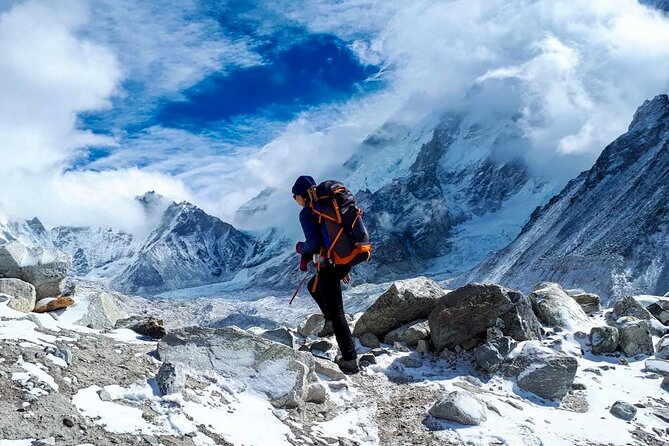
Namche Bazaar is one of the most memorable stops on the Everest route. It is a major Sherpa settlement and a natural place to pause as the trail turns higher into the mountains.
The attraction is not just the views. Namche gives you a sense of how trade, tourism, and local life meet in the Khumbu. You can expect a compact mountain town atmosphere, guesthouses, shops, and a chance to catch your breath before the more demanding sections.
Acclimatization is important here, although the supplied schedule does not spell out the exact number of nights or rest hours. Ask for the day-by-day plan before paying. A short itinerary can work for a fit person who responds well to altitude, but you should not assume that speed alone makes the trip safer.
The guide’s role matters most at this stage. Guides praised by past clients, particularly Ram, have been noted for adapting the pace, checking conditions, and helping with practical matters in Kathmandu as well as on the trail. That kind of support is useful when you are tired, worried about altitude, or dealing with a change in plans.
More Helicopter Transfers in Nepal
- Everest Base Camp Trek with Helicopter Return – 10 Days
★ 5.0 · 9 reviews - Everest Base Camp trek with Helicopter return 9 days
★ 5.0 · 8 reviews
Tengboche and the Sherpa cultural side
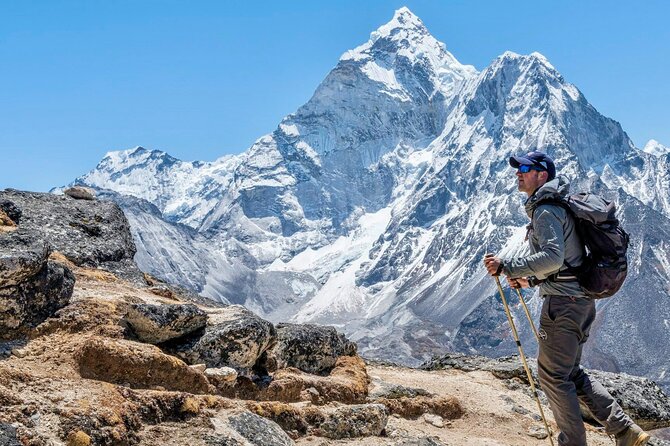
The trail continues toward Tengboche, known for its monastery and its setting among the Himalayan peaks. This is one of the places where the trek becomes more than a route to a famous photograph.
The monastery offers a quiet cultural pause in the middle of a hard walk. You are passing through a region where Tibetan Buddhist traditions shape village life, architecture, prayer spaces, and daily routines. Your guide can add meaning to what you see, especially if you ask about local customs and the role of monasteries.
The route through this section also includes forests and open mountain views. Conditions can change quickly, and the walking surface may feel rougher than the early approach. Standard guesthouses keep the trip practical, but comfort is basic at this altitude. Meals during the trek are not included in the price, so plan for a steady food and drink budget.
That exclusion is easy to overlook when you see the $799 headline price. The package covers the main transport and support structure, but your total cost will be higher once you add food, porter service, tips, insurance, snacks, and possible weather-related changes.
Dingboche and the serious altitude
Dingboche is where the altitude begins to dominate the experience. The village is used as an acclimatization stop on the route, and the schedule identifies it as an important place to pause before the final push toward Gorakshep.
This is the point where fitness and altitude tolerance become different things. You may be strong on hills at home and still need to walk slowly here. The trip requires a moderate physical fitness level, but that description should not be read as a promise that the trek is easy.
Take the guide’s advice seriously. Walk slowly, drink regularly, eat even when your appetite drops, and tell the guide if you feel unwell. The supplied medical kit is a useful safety measure, but it is not a substitute for proper insurance or medical evacuation cover.
Your insurance must specifically cover medical treatment and high-altitude evacuation. This is one of the most important costs outside the tour price. Do not assume a normal holiday policy will cover a trek at Everest Base Camp.
Gorakshep and Everest Base Camp
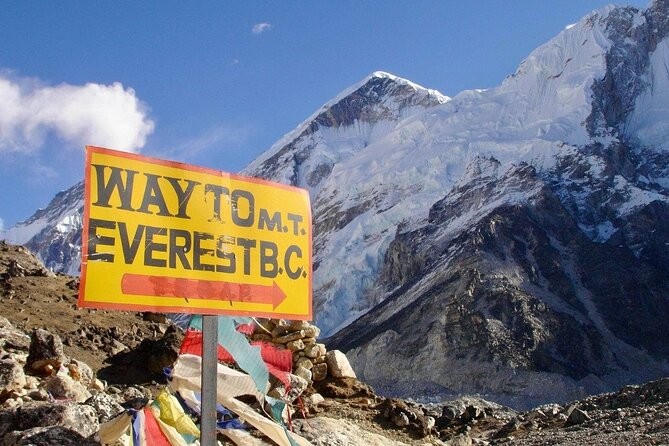
Gorakshep is the final major settlement before the Everest Base Camp area and the launch point for the helicopter return. By this stage, the setting is stark, cold, and dominated by high peaks rather than trees and villages.
The walk to Everest Base Camp is the emotional center of the trip. You reach the famous base area used by climbers preparing for Everest, surrounded by enormous Himalayan peaks and glacial terrain. The exact views depend on weather, and Everest itself may not appear in the most dramatic position from Base Camp.
That is why Kala Patthar matters. The schedule includes a hike there for a sunrise view, and it is often the better place for a broad view toward Everest. The early start can be cold and physically tough, but the changing light over the peaks is a fitting reward for the effort.
You should ask the operator how the Base Camp visit and Kala Patthar timing fit together. The supplied description includes both, but the exact sequence is not provided. On a 10-day schedule, the order and rest periods matter.
The helicopter ride back to Lukla
The return flight from Gorakshep to Lukla is the trip’s big convenience and its most unusual memory. Instead of spending several days walking downhill, you lift above the valleys and see the route from a new angle.
From the air, the villages, river valleys, ridgelines, and trekking path connect into one clear picture. You get a sense of the distance you have covered on foot, which makes the helicopter ride more than a simple transfer.
There is also a practical limitation. Helicopters need suitable weather, and mountain conditions can change quickly. If the flight cannot operate, you need to know what the backup plan is. The activity states that poor weather may lead to a different date or a full refund if the experience is canceled, but it does not explain every possible disruption during the trek.
The package also lists domestic flights to Lukla and back, alongside the Gorakshep to Lukla helicopter. Ask the operator to explain the exact flight sequence. The details may depend on whether you fly back to Kathmandu directly from Lukla, use Manthali, or need to wait for a scheduled aircraft.
Lodging, meals, and support
The accommodation is simple guesthouse lodging along the trail and a three-star hotel in Kathmandu. This is appropriate for the route, but you should not expect hotel-style facilities in the high mountains.
The included sleeping bag is useful, especially in cold rooms, while the duffel keeps your larger belongings manageable. The guide is licensed and speaks English, and the medical kit is included. Permits cover Sagarmatha National Park, TIMS, and the Pasang Lhamu entry requirement, which saves you from arranging those separately.
Meals are the biggest daily omission. You pay for breakfast, lunch, and dinner during the trek, along with drinks and snacks. That gives you some choice, but it also means your daily spending will vary according to appetite and what is available at each guesthouse.
Tips are not included. Set aside money for the guide and any porter you hire. A porter is optional, but the recommendation of one porter for two trekkers is sensible if you want to walk with a lighter daypack.
Is $799 good value?
At $799 per person, this is an attractive package price for a guided Everest Base Camp trek with permits, lodging, Kathmandu transfers, domestic flights, trekking gear, and a helicopter return. The helicopter alone makes the comparison more complicated, because you need to confirm exactly what is covered and how the return flights are arranged.
The value is strongest for someone who wants one organized booking rather than separate arrangements for permits, guides, guesthouses, flights, and the helicopter. You are paying to reduce the amount of planning and to avoid walking the full route back down.
The value is weaker if you expect meals, porter service, travel insurance, or a high-end lodge experience to be included. Add those costs before comparing this trip with longer packages. Also ask if flight changes caused by weather create any extra charges.
A 100 percent recommendation rate and a 4.9 rating from 34 ratings suggest strong satisfaction with the service, but the written praise is especially useful for one reason: guide quality appears to be central. Ram is repeatedly singled out for patience, flexibility, and care, while Rupak and Dambar are praised for English, organization, and keeping group spirits up. Those qualities matter more than a fancy brochure on a high-altitude trek.
Who should book this trek?
You should consider it if you want the classic Everest route but do not want to spend several extra days walking back down. It suits people who value organized transport, a local guide, a small group, basic guesthouses, and a memorable helicopter flight.
It may also suit you if you are comfortable with a brisk schedule and have a reasonable fitness base. You need to accept that the itinerary is demanding and that altitude, not just distance, is the main challenge.
I would be more cautious if you need a slow acclimatization program, dislike basic lodging, or want every meal and porter cost included upfront. You should also avoid booking without suitable high-altitude medical and evacuation insurance.
Free cancellation is available up to 24 hours before the start time for a full refund. Changes or cancellations inside that window are not accepted or refunded, and weather cancellations may lead to a new date or a full refund.
Should you book it?
Book this trek if the helicopter return is the feature you really want and you are prepared for a fast, high-altitude schedule. The package handles many difficult details and adds a strong finish to the classic route.
Before committing, confirm the exact day-by-day plan, acclimatization stops, guide assignment, luggage limits, flight routing, helicopter weather backup, and your expected extra budget for meals, porters, insurance, and tips. If those answers suit you, $799 offers a practical way to reach Everest Base Camp and return with less time spent retracing the trail.
FAQ
How long is the Everest Base Camp trek with helicopter return?
The experience lasts approximately 10 days, including Kathmandu time, the trek to Everest Base Camp, Kala Patthar, the helicopter ride to Lukla, and the return to Kathmandu.
Where does the experience start?
Pickup is offered from Tribhuvan International Airport in Kathmandu, Nepal. The listed start time is 9:00 a.m.
Is the helicopter flight included?
Yes. A helicopter ride from Gorakshep to Lukla is included.
Are meals included?
Breakfast is included at the three-star Kathmandu hotel. Lunch and dinner in Kathmandu, plus all meals during the trek, are not included.
Is a porter included?
No. Porter service is optional and costs extra. One porter for two trekkers is recommended.
What fitness level is needed?
You should have a moderate physical fitness level. The route includes high-altitude trekking, so you also need insurance covering medical care and high-altitude evacuation.
What happens if bad weather cancels the experience?
The experience requires good weather. If it is canceled because of poor weather, you may be offered a different date or a full refund. You can cancel for a full refund up to 24 hours before the scheduled start time.
More Hiking and Trekking Trips in Kathmandu
- Everest base camp trek & Heli return
★ 5.0 · 6 reviews - Everest Base Camp Trek | Deluxe Lodges | Both Way Helicopter Ride
★ 5.0 · 6 reviews - Everest Base Camp Trek with Helicopter Flight Back
★ 5.0 · 3 reviews - Everest Base Camp Trek with Chopper Return To Kathmandu
★ 5.0 · 2 reviews
More Everest Helicopter Tours in Kathmandu
- Everest Base Camp Helicopter Tour landing at Everest View Hotel
★ 5.0 · 668 reviews - Everest Base Camp Helicopter Tour landing at Hotel Everest View
★ 5.0 · 218 reviews - Everest Base Camp helicopter tour with landing
★ 5.0 · 61 reviews - Everest Base Camp Helicopter Tour with Hotel Everest View Landing
★ 5.0 · 52 reviews
Just added around Kathmandu
- Mount Everest Helicopter Tour with Landings★ 5.0 · 2 reviews
- Day Tour to Everest Base Camp By Helicopter★ 5.0 · 16 reviews
- Guaranteed Landing at Everest Base Camp Kalapathar by Helicopter★ 5.0 · 38 reviews
- Langtang Helicopter Tour★ 5.0 · 6 reviews
- Kathmandu To Lukla By Helicopter Flight★ 5.0 · 6 reviews
- Mount Everest Scenic Helicopter Tour★ 5.0 · 6 reviews
- Everest Helicopter Tour★ 5.0 · 3 reviews
- Everest Base Camp Tour & View Point by Helicopter from Katmandu★ 5.0 · 3 reviews
Everest & Himalaya Helicopter Tours, compared.
Everest Base Camp Helicopter Tour landing at Everest View Hotel
Read our review →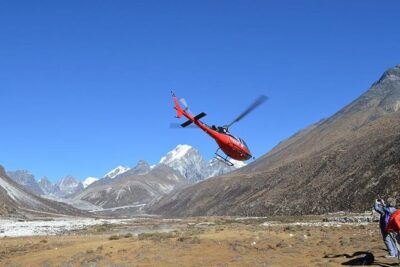
Everest Base Camp Helicopter Tour landing at Hotel Everest View
Read our review →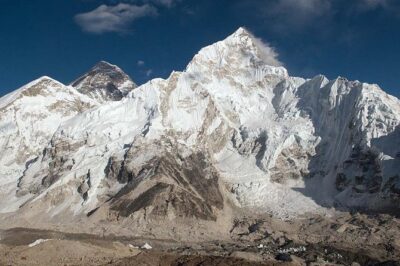
Everest Base Camp Trek with Helicopter Return from Gorakshep to Lukla
Read our review →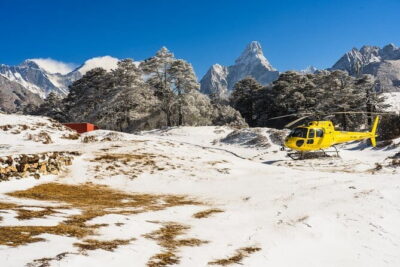
Everest Base Camp helicopter tour with landing
Read our review →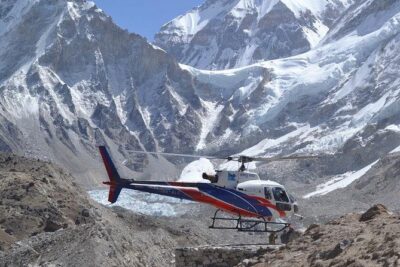
Everest Base Camp Helicopter Tour with Hotel Everest View Landing
Read our review →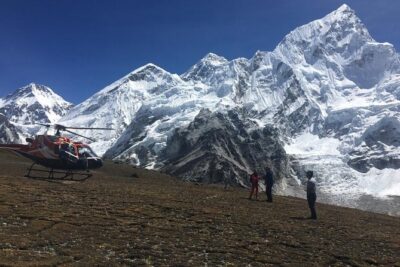
Guaranteed Landing at Everest Base Camp Kalapathar by Helicopter
Read our review →Everest Base Camp Helicopter Tour landing at Everest View Hotel.
Read our review →