
REVIEW · KATHMANDU
Everest Base Camp Trek with Helicopter Flight Back
The clever part of this Everest Base Camp trek is the return. You walk into the Khumbu Valley at a steady pace, then trade the long trek back for a helicopter flight from Gorak Shep to Kathmandu. That saves several hard days on the trail and gives you one last grand view of the Himalayas.
I like the built-in acclimatization day in Dingboche, and I like that the package handles the guide, permits, meals, gear, airport pickup, and Kathmandu hotel night. Guides such as Surendra and porter Doma Ghale have been praised for careful support and determination.
The main catch is simple: the helicopter flight is not included in the advertised $446.50 price. Porters, international flights, insurance, tips, and bar bills also cost extra, so confirm the full budget before booking.
Key points to know before you book
- The return helicopter saves roughly several trekking days: You reach Base Camp on foot but avoid retracing the entire route.
- Dingboche includes a real acclimatization day: The hike toward Nagarjun Peak helps prepare you for higher ground.
- Kala Patthar is the visual high point: The early hike reaches about 5,550 meters for sunrise views.
- The package includes useful trekking equipment: A sleeping bag, down jacket, poles, duffle bag, and cap are supplied if needed.
- The advertised price has important exclusions: The Gorak Shep to Kathmandu helicopter flight and porters are not included.
- This is a private trip: Only your group participates, with pickup from Tribhuvan Airport and an evening briefing in Kathmandu.
Why this 10-day Everest trek makes sense
The classic Everest Base Camp route is demanding because you must walk both in and out. This version keeps the hard, rewarding approach to Base Camp but removes the long return through the same villages. For you, that means a tighter schedule, less wear on your knees, and a memorable flight over the Khumbu region.
At about $446.50 per person, the price looks low for a private 10-day Himalayan trip. Read the fine print carefully. The return helicopter is listed separately, and that is likely the single biggest additional expense. The advertised rate still covers a good collection of essentials: a guide with salary, food, accommodation, and insurance; park and local entrance fees; TIMS; domestic airfare to Lukla; meals during the trek; and one Kathmandu hotel night.
You also receive a sleeping bag, down jacket, trekking poles, and duffle bag if needed. Those inclusions can reduce the cost and hassle of preparing for a high-altitude trip. Ask for a written total that includes the helicopter before you commit.
This is a private activity, not a large group departure. That matters in the mountains. Your group can move at its own pace within the planned schedule, though high altitude and flight conditions still control much of the day.
More Everest Helicopter Tours in Kathmandu:
- Everest Base Camp Helicopter Tour landing at Everest View Hotel
★ 5.0 · 668 reviews - Everest Base Camp Helicopter Tour landing at Hotel Everest View
★ 5.0 · 218 reviews - Everest Base Camp Trek with Helicopter Return from Gorakshep to Lukla
★ 5.0 · 161 reviews
Kathmandu arrival and the pre-trek briefing
Your trip begins with pickup at Tribhuvan International Airport. The company transfers you to a Kathmandu hotel, listed as Hotel Thrive or a similar category, with breakfast included for one night.
An evening briefing follows. This is the time to ask direct questions about the Lukla flight, sleeping arrangements, meal timing, gear, acclimatization, and the helicopter return. You should also confirm how the company will handle weather delays, since mountain flights can shift with conditions.
The Kathmandu portion includes one cultural show and dinner program. It is a small addition, but useful if this is your first visit to Nepal and you want an organized introduction before heading into the mountains.
Day 2: Lukla to Phakding by way of the mountains
The flight from Kathmandu to Lukla is short, scenic, and central to the whole trip. You will see Himalayan peaks from the air before landing at Lukla Airport, the gateway for the Everest region.
From Lukla, the trail drops toward Phakding through alpine forest. The first day is intentionally short, listed at about four hours. That is helpful after the flight and gives you a gentler start before the elevation increases.
Phakding is not the main prize of the trek. Its value is practical. It lets your body begin adjusting while you walk beside the Dudh Koshi River and pass through early mountain villages. Keep your first day relaxed. The goal is not to prove how fast you can walk.
Day 3: Suspension bridges and Namche Bazaar
The trail from Phakding to Namche Bazaar takes about six hours. You cross the Dudh Koshi on suspension bridges and pass through Sherpa villages, with forest and mountain views along the way.
Namche is the region’s main trading town and an important rest point. The approach is harder than Day 2, so this is where you begin to feel the trek rather than simply sample it. Walk slowly, drink regularly, and avoid treating the distance as a race.
Namche also gives you your first strong sense of the local mountain culture. The town is a stopping place for trekkers, guides, porters, and Sherpa communities, so it feels more active than the smaller settlements lower on the trail.
More Hiking and Trekking Trips in Kathmandu:
- Everest Base Camp Trek with Helicopter Return to Lukla – 10 Days
★ 5.0 · 34 reviews - Everest Base Camp Trek with Helicopter Return -11 Days
★ 5.0 · 12 reviews - Helicopter Return Everest Base Camp Trek, KTM-LUKLA & Gorakshep-KTM by Heli
★ 5.0 · 9 reviews - Everest Base Camp Trek with Helicopter Return – 10 Days
★ 5.0 · 9 reviews
Day 4: Namche rest day and Everest View Hotel
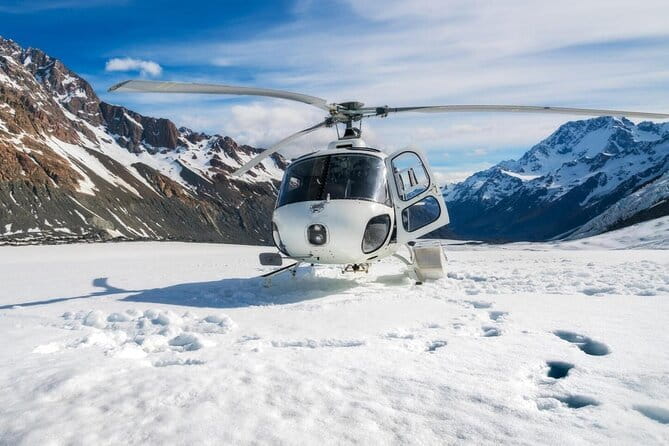
This is not a wasted day. Resting in Namche helps your body adjust before the trail climbs higher. You can visit the Sherpa Museum, then hike toward the Everest View Hotel for broad views of Everest and nearby peaks.
The five-hour schedule gives the day purpose without turning it into another long push. The hike toward the hotel is especially useful because acclimatization works better when you gain some height and return to sleep lower.
The exact mountain view depends on weather. Do not judge the day only by whether Everest appears perfectly clear. The walk itself, the museum, and the chance to let your body catch up are the real reasons this stop matters.
Day 5: Tengboche and its mountain setting
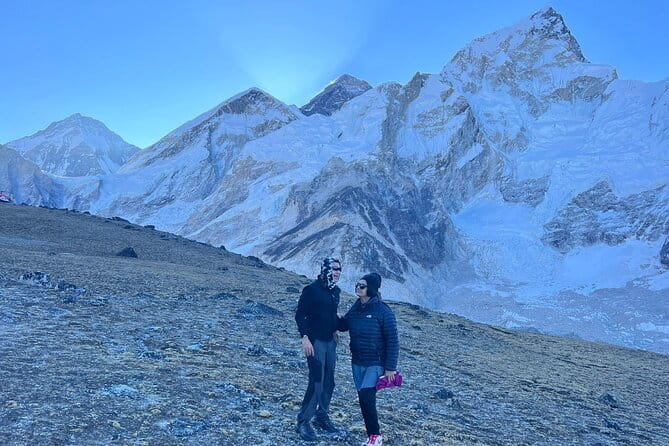
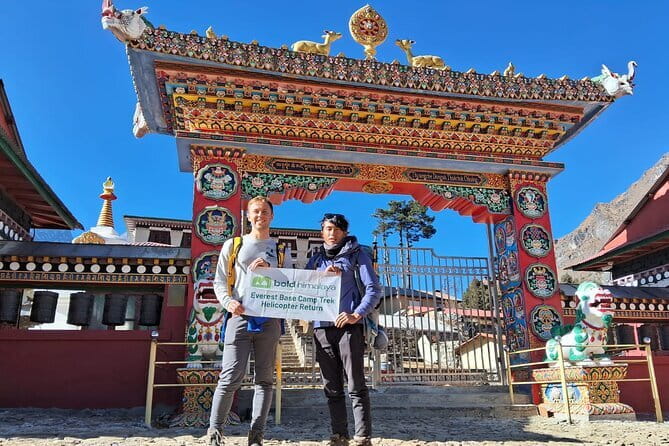
The route continues to Tengboche, with lunch in Phungi Thanga before the trail climbs onward. The day takes about six hours and brings views of Everest, Lhotse, and other high peaks.
Tengboche is known for its monastery, which gives this stop a cultural focus beyond scenery. The monastery is included in the planned visit, and it offers a chance to pause and understand the spiritual side of the Khumbu rather than simply collect photographs.
This section can feel demanding because the trail changes height and the air gets thinner. Take the down jacket and warm layers seriously. Even when walking feels comfortable, evenings at altitude can be cold.
Day 6: Pangboche, Somare, and Dingboche
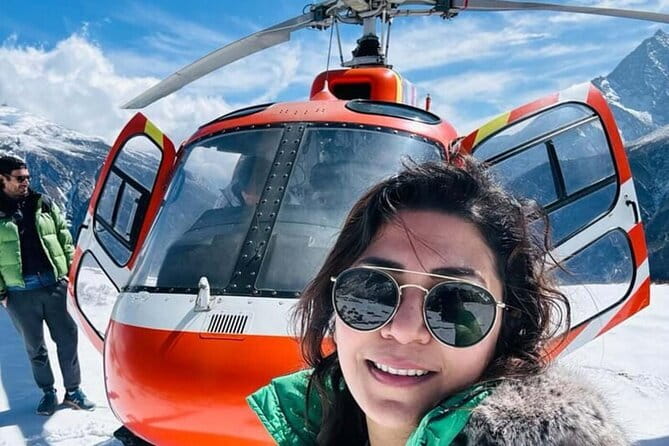
You cross a suspension bridge over the Imja Khola and continue through rhododendron forest and villages including Pangboche and Somare. After about six hours, you reach Dingboche.
Dingboche is a major turning point. The trees become less dominant, the valley opens up, and the altitude becomes a much bigger part of the experience. Your guide should pay close attention to how you feel here.
The included meals are useful on this stretch because you do not have to plan food stops independently. Breakfast, lunch, and dinner are included for the trekking portion, but desserts and bar bills are not. Keep that distinction in mind when calculating daily spending.
Day 7: The Nagarjun Peak acclimatization hike
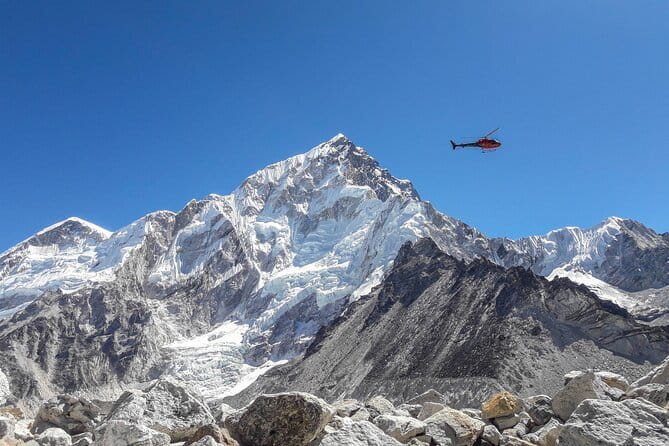
The second day in Dingboche is devoted to preparation for higher ground. The planned hike toward Nagarjun Peak takes about five hours and gives you wide views from the valley.
This is one of the strongest parts of the itinerary. You gain height during the day, then return to Dingboche rather than sleeping at the higher point. That pattern helps you adjust before Lobuche, Gorak Shep, and Base Camp.
Do not treat Nagarjun Peak as an optional sightseeing walk if you feel well. It is part of the altitude plan. At the same time, tell your guide promptly if you develop a headache, nausea, unusual fatigue, or other altitude concerns. The schedule matters less than your condition.
Day 8: Thukla Pass and Lobuche at 4,940 meters
The trek to Lobuche takes about six hours and reaches roughly 4,940 meters. You pass through Thukla Pass, where memorials honor climbers who died on Himalayan expeditions.
This is a serious and emotional section of the route. The memorials put the mountain’s beauty into perspective. Everest is not just a postcard subject, and the thin air is not a minor inconvenience.
After the pass, you continue toward Lobuche with close views of glaciers and surrounding peaks. Sleep may be less comfortable at this height, and your body may feel slower than it did in Namche. That is normal enough to expect, but you should still report symptoms to your guide.
Day 9: Everest Base Camp and Gorak Shep
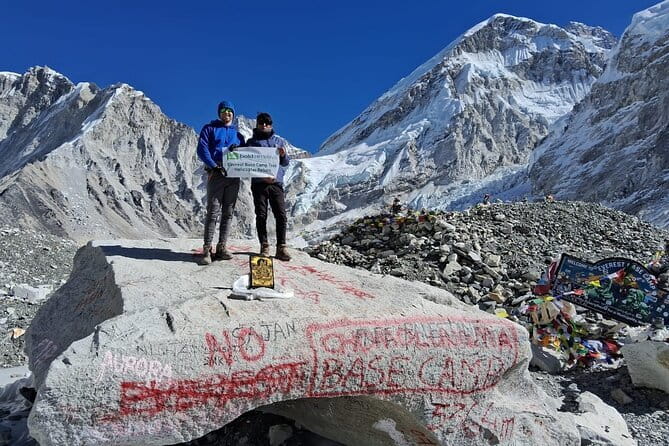
The longest and most important day takes about seven hours. You first reach Gorak Shep at approximately 5,170 meters, leave your gear, then continue toward Everest Base Camp at about 5,364 meters.
The trail toward Base Camp is rough and can feel tiring even after careful acclimatization. Your reward is the Khumbu Icefall and the knowledge that you have reached the base of the world’s highest mountain. The view is not necessarily a clear look at Everest’s summit from Base Camp itself, so keep your expectations realistic. The route, glaciers, and setting are the experience.
You return to Gorak Shep for the night. This overnight matters because the next morning begins before normal breakfast hours for the Kala Patthar hike. Keep your clothing, headwear, and water close at hand so you are not searching through bags in the dark.
Day 10: Kala Patthar sunrise and the helicopter flight
The final day begins with an early hike to Kala Patthar, around 5,550 meters. This is the highest point on the route and the place designed for panoramic Himalayan views. An early start gives you the best chance at sunrise light, although weather still has the final word.
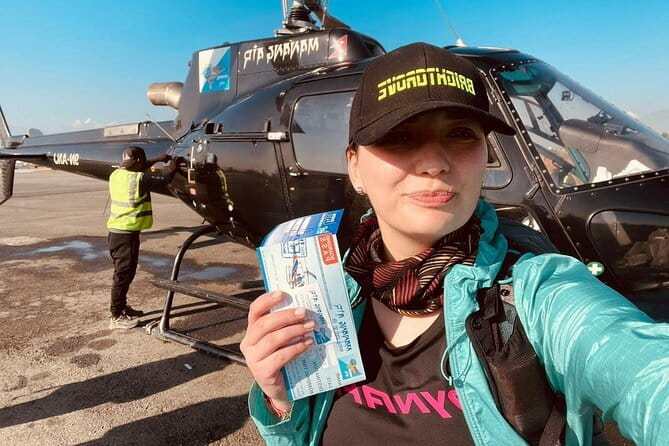
After returning to Gorak Shep, you board a helicopter for Kathmandu. This is the trip’s defining luxury feature. Instead of spending several days walking back through Lobuche, Dingboche, Tengboche, Namche, and Lukla, you see the region from above and finish in the capital.
There is an important financial and practical detail here. The helicopter flight from Gorak Shep to Kathmandu is not included in the stated tour price. Confirm the aircraft arrangement, total cost, and what happens if poor weather prevents the flight on the planned day.
The final transfer takes you back to your Kathmandu hotel or onward according to the arranged plan. Since the advertised itinerary lists only one Kathmandu hotel night, ask where you will stay after the helicopter arrives if your international flight is not the same day.
Guides, porters, and the level of support
The guide package includes salary, insurance, food, and accommodation for an experienced trekking guide. That is a meaningful inclusion in a high-altitude route where local judgment matters.
Specific names connected with the company include guide Surendra, porter Doma Ghale, and manager Sobit. If you are communicating with the company before departure, ask who will lead your group and who will handle equipment and altitude decisions. The names are useful points of contact, but you should not assume they will be assigned to every departure.
Porters are not included. You may carry your own gear or arrange porter support separately. Ask how much luggage you will carry each day and what the duffle bag allowance is before leaving Kathmandu.
The company has also been praised for keeping accommodation comfortable during difficult weather and for making changes when conditions required it. That matters in Nepal, where flights and trail plans can shift. Still, ask what backup plan applies to your dates rather than relying on a general promise of flexibility.
What is included, and where the budget can grow
Included items cover much of the basic structure:
- Kathmandu airport pickup and private transportation
- Domestic flight from Kathmandu, or from Ramechhap when required, to Lukla
- One Kathmandu hotel night with breakfast
- Trekking guide support
- Breakfast for nine days, lunch for eight days, and dinner for eight days
- Sagarmatha National Park fees, Pasang Lhamu Rural Municipality fee, and TIMS
- Sleeping bag, down jacket, trekking poles, and duffle bag if needed
- Seasonal fruit and dry nuts during the trek
- Cap and trip certificate
- Cultural show and dinner in Kathmandu
- Government taxes and service charges
The exclusions deserve equal attention. You pay separately for the helicopter, international airfare, travel insurance, porters, tips, desserts, and bar bills.
The helicopter is the biggest issue for value. If the flight adds a large amount, your true trip cost may be much higher than $446.50. On the other hand, the flight is also what makes this itinerary shorter and less physically repetitive, so the extra cost may be worthwhile if your time or knees are limited.
Who should choose this route
I would suggest this trek to someone with moderate physical fitness who wants the full walk to Base Camp but does not want to walk back down the same trail. The 10-day schedule is efficient, though not easy. You still spend nights above 4,000 meters and climb to more than 5,500 meters.
It suits a private group that values flexibility and direct support. It also works well for someone who wants trekking equipment supplied rather than buying every item before arrival.
I would be more cautious if you have little experience with sustained walking or are uncomfortable with high altitude. The company asks for moderate fitness, and that should be taken seriously. The itinerary is not a casual sightseeing trip with mountain views added on.
Should you book the Everest Base Camp helicopter return?
Book it if you want the classic approach to Everest Base Camp, a proper acclimatization day, and a fast, scenic return to Kathmandu. The combination of guide support, permits, meals, gear, airport pickup, and private scheduling gives the base price real value.
Before paying, get the helicopter price in writing, confirm who will guide your group, ask about porter arrangements, and check the plan if bad weather disrupts Lukla or the return flight. If the added helicopter cost fits your budget, this is a smart way to experience the Everest route without spending several extra days retracing your steps.
If you are counting every dollar, the advertised price may mislead you. The trek itself is substantial, but the return flight and porter costs can change the final figure. Go ahead when you want the time-saving flight and accept the added expense. Choose a standard round-trip trek instead if the helicopter cost makes the total uncomfortable.
FAQ
Is the helicopter flight from Gorak Shep to Kathmandu included?
No. The helicopter flight is specifically listed as an extra cost, even though it is the planned return method.
How long is the Everest Base Camp trek?
The experience lasts approximately 10 days, including arrival in Kathmandu, the trek from Lukla to Base Camp, the Kala Patthar hike, and the helicopter return.
Where does the experience begin?
Pickup begins at Tribhuvan International Airport in Kathmandu, Nepal.
Is this a private tour?
Yes. Only your group participates in the activity.
Are porters included?
No. Porter service is not included in the listed package price.
What happens if bad weather cancels the experience?
Because the activity requires good weather, you will be offered a different date or a full refund if it is canceled for that reason. You can also cancel at least 24 hours before the start time for a full refund.
Just added around Kathmandu
- Mount Everest Helicopter Tour with Landings★ 5.0 · 2 reviews
- Day Tour to Everest Base Camp By Helicopter★ 5.0 · 16 reviews
- Guaranteed Landing at Everest Base Camp Kalapathar by Helicopter★ 5.0 · 38 reviews
- Langtang Helicopter Tour★ 5.0 · 6 reviews
- Kathmandu To Lukla By Helicopter Flight★ 5.0 · 6 reviews
- Mount Everest Scenic Helicopter Tour★ 5.0 · 6 reviews
- Everest Base Camp Tour & View Point by Helicopter from Katmandu★ 5.0 · 3 reviews
- Everest Base Camp Helicopter Tour with Hotel Everest View Landing★ 5.0 · 52 reviews
Everest & Himalaya Helicopter Tours, compared.
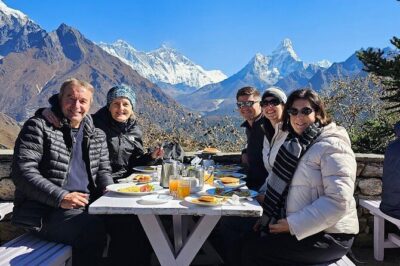
Everest Base Camp Helicopter Tour landing at Everest View Hotel
Read our review →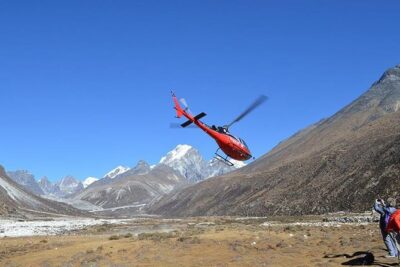
Everest Base Camp Helicopter Tour landing at Hotel Everest View
Read our review →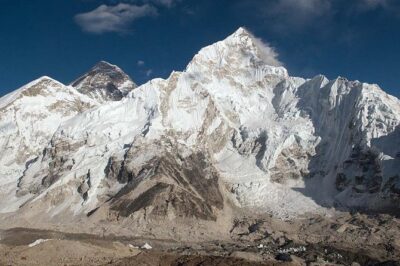
Everest Base Camp Trek with Helicopter Return from Gorakshep to Lukla
Read our review →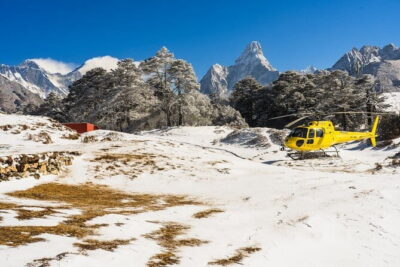
Everest Base Camp helicopter tour with landing
Read our review →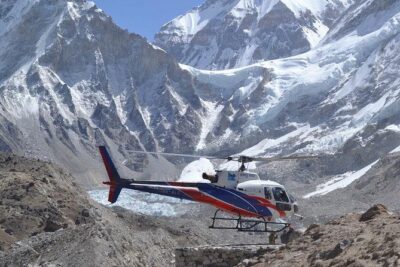
Everest Base Camp Helicopter Tour with Hotel Everest View Landing
Read our review →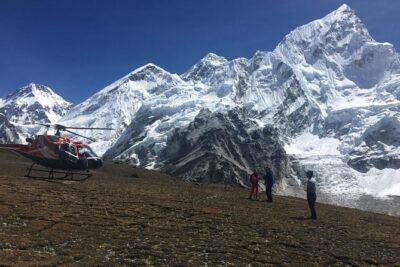
Guaranteed Landing at Everest Base Camp Kalapathar by Helicopter
Read our review →Everest Base Camp Helicopter Tour landing at Everest View Hotel.
Read our review →
Everest Base Camp Trek with Helicopter Return to Lukla – 10 Days
Read our review →Browse the lists this tour appears in