REVIEW · KATHMANDU
Everest Base Camp Trek with Helicopter Return -11 Days
Everest Base Camp is the main event, but the smart twist here comes afterward: you walk up through the Khumbu Valley and fly back by helicopter. That cuts the usual return trek and gives you more time at home, though the helicopter depends on mountain weather and is shared with other passengers.
I like the two built-in acclimatization days, especially the outing to Khumjung and the Hotel Everest View. I also like the practical support: a guide, one porter for every two clients, tea-house lodging, meals, permits, and rescue arrangements are included. The main caution is altitude. You reach 5,545 meters at Kalapatthar in only 10 trekking days, so this is a serious high-altitude hike, not a sightseeing stroll.
Key points at a glance
- Kalapatthar at 5,545 meters: Your best scheduled viewpoint for Mount Everest and the surrounding peaks.
- Helicopter return from Gorakshep: You avoid several days of walking back down, but the flight requires suitable weather and is shared.
- Two acclimatization days: One in Namche Bazaar and one in Dingboche help your body adjust to rising altitude.
- Tengboche Monastery: The route passes Nepal’s largest monastery in the Everest region.
- Useful trekking support: Meals, tea-house lodging, permits, a duffle bag, guide, porter support, and first-aid supplies are included.
- A demanding but focused schedule: You cover the classic Everest Base Camp route in 11 days, including arrival and departure days.
What this 11-day Everest trek is really like
This is a compressed Everest Base Camp program. You spend most of the trip walking uphill through the Khumbu Valley, sleeping in simple lodges, and adjusting to thinner air. The helicopter return is not a luxury add-on that removes the hard part. It removes the long descent after you have reached the goal.
The experience is operated by Himalayan Adventure Treks and Tours Pvt Ltd. The company assigns an experienced guide and provides one porter for every two clients. Names connected with the guiding team include Prakash Adhikari and Dikpal, while Bhagwat Simkhada handles trip planning and operations. Your assigned guide may differ, so I would ask for the guide’s name before departure if that matters to you.
The package costs $3,500 per person. That is a serious price, but it includes much more than a basic walking route. You receive airport pickup, two nights in a three-star Kathmandu hotel, meals during the trek, tea-house accommodation, permits and local fees, flights to Lukla, porters, a guide, a duffle bag, rescue arrangements, and the shared helicopter flight back to Kathmandu.
You still need to budget for insurance, drinks, hot showers, laundry, phone use, battery charging, personal expenses, and tips. Bottled water is not included, and the helicopter is shared rather than private. For a first Himalayan trek, the convenience and support may justify the cost. If you already have trekking experience and are comfortable arranging your own logistics, you may prefer a less expensive walking package.
More Helicopter Transfers in Kathmandu
- Everest Base Camp Trek with Helicopter Return from Gorakshep to Lukla
★ 5.0 · 161 reviews - Everest Base Camp Trek with Helicopter Return to Lukla – 10 Days
★ 5.0 · 34 reviews - Helicopter Return Everest Base Camp Trek, KTM-LUKLA & Gorakshep-KTM by Heli
★ 5.0 · 9 reviews
Day 1: Kathmandu arrival and a practical start
Your trip begins with pickup at Tribhuvan International Airport. A private vehicle takes you to the hotel, and the package includes two nights in a three-star Kathmandu property with breakfast.
This first day is deliberately light. Use it to rest, check your gear, and confirm the early start. The meeting time listed for the activity is 6:00 a.m., so you should not treat arrival day as a late-night sightseeing opportunity.
The package also includes the necessary paperwork, a company T-shirt, and a duffle bag that is returned after the trek. A duffle is useful here because you can leave nonessential luggage in Kathmandu and carry only what is needed in the mountains.
Day 2: Lukla to Phakding, 2,610 meters
The mountain portion begins with a flight from Kathmandu to Lukla at 2,860 meters. The information also refers to the Kathmandu or Ramechhap to Lukla flight, so confirm the departure airport before your trip. You then walk roughly three to four hours to Phakding.
This opening hike is relatively short, which is helpful after the flight. It introduces you to the trail without immediately forcing a long day at high altitude. Phakding is your first night in a lodge or tea house, and breakfast, lunch, and dinner are included during the trekking section.
The flight is an important part of the schedule. It gets you quickly into the Everest region, but mountain flights can be affected by weather. The operator’s policy says that a weather cancellation can lead to another date or a full refund for the experience. Ask how a delayed flight would affect the rest of your schedule, since this itinerary has little spare time.
Day 3: Phakding to Namche Bazaar, 3,446 meters
The walk to Namche Bazaar takes about six to seven hours. This is a longer day, and the rise in altitude begins to feel more serious.
Namche is the main trading center of the Khumbu Valley and the first major place to pause for acclimatization. The trail, the mountain settlements, and the change in scenery make this a satisfying stage, but the physical effort is real. You should walk steadily, drink regularly, and resist the urge to race ahead.
Namche is also where the itinerary makes a sensible choice. Instead of pushing onward the next morning, you spend an acclimatization day in the area. That pause is one of the most valuable parts of the whole program.
More Helicopter Transfers in Nepal
- Everest Base Camp Trek with Helicopter Return – 10 Days
★ 5.0 · 9 reviews - Everest Base Camp trek with Helicopter return 9 days
★ 5.0 · 8 reviews
Day 4: Khumjung and Hotel Everest View
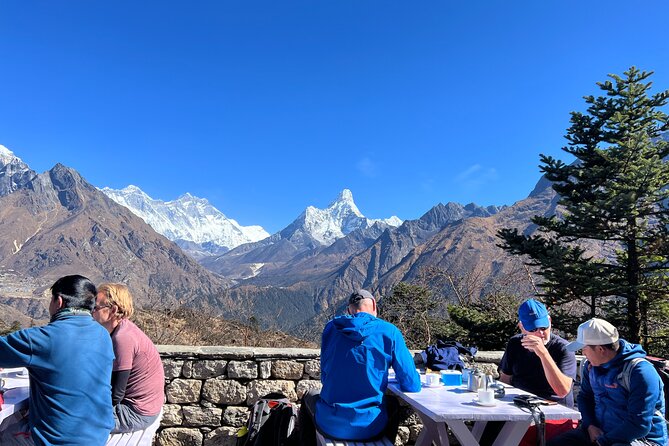
The acclimatization day includes a visit to Khumjung Village and the Hotel Everest View at 3,880 meters. This is not a day spent entirely in bed. The point is to walk higher during the day and return to sleep lower, giving your body a better chance to adjust.
Khumjung offers a closer look at life in the Sherpa villages than a straight march toward Base Camp would provide. The Hotel Everest View adds a major mountain viewpoint to the day. You get a break from carrying your main trekking load while still gaining altitude through a controlled outing.
I particularly like this arrangement because it combines sightseeing with useful acclimatization. Still, your guide should decide how hard to make the day based on how you feel. Headache, nausea, unusual tiredness, or poor coordination deserve attention, not bravado.
Day 5: Namche to Tengboche, 3,860 meters
The route to Tengboche takes about five to six hours. This section leads you toward one of the cultural highlights of the trek, Tengboche Monastery, described as the largest monastery in the Everest region.
The monastery gives this trek more depth than a simple mountain-view trip. You are not just ticking off elevations. You are moving through villages and religious sites that give the Khumbu its identity.
The walking becomes more demanding as the trail continues to rise and fall. The distance may look manageable on paper, but high altitude changes how your legs and lungs respond. Keep your pace modest and let the guide set the rhythm.
Day 6: Tengboche to Dingboche, 4,360 meters
The walk to Dingboche lasts about five to six hours. The route passes through rhododendron and juniper forests, and the trail becomes relatively steep in places.
Dingboche is an important stop because you are now above 4,000 meters. The village is not merely a convenient overnight point. It is where the second acclimatization day protects the rest of your schedule.
You will likely notice that ordinary tasks take longer at this elevation. Eating, packing, and getting ready in the morning all require patience. The included meals and lodge stays keep the daily routine simple, but you should expect basic mountain accommodation rather than hotel comfort.
Day 7: Dingboche acclimatization
The second acclimatization day gives you time to adjust before the highest section of the trek. The package specifies Dingboche as the base for the day but does not provide a detailed side-trip plan, so confirm the exact walking schedule with your guide.
This is the day to be honest about your condition. The next stages take you close to 5,000 meters, and there is no prize for hiding symptoms. A helpful guide should monitor your pace and general condition, and the package includes first-aid supplies plus travel and rescue arrangements.
The presence of rescue arrangements is reassuring, but it is not a substitute for travel insurance. Insurance is specifically excluded, and it should cover high-altitude trekking and emergency evacuation if required.
Day 8: Dingboche to Lobuche, 4,910 meters
The five to six hour walk to Lobuche takes you into a much harsher section of the route. You are now close to 5,000 meters, so cold, fatigue, and thin air become major parts of the experience.
The route is rewarding because every stage now feels connected to the Base Camp goal. It is also less forgiving. Keep your daypack light, use the duffle transport provided by the porter team, and carry the personal items you need for changing weather, water, and warmth.
The porter arrangement is one porter for two clients. That is a reasonable setup for a supported trek, but you should pack thoughtfully and respect the weight limit set by the operator. Extra porters are listed as a personal expense.
Day 9: Lobuche to Everest Base Camp and Gorakshep
This is the big walking day. You trek from Lobuche to Everest Base Camp at 5,360 meters, then continue to Gorakshep at 5,160 meters. The total walking time is about six to seven hours.
Everest Base Camp is the emotional high point for many people, but keep your expectations realistic. The attraction is the route, the glacier country, and the setting beneath the world’s highest mountain. The actual camp can change with the climbing season, and the information provided does not promise a specific camp layout or climbing activity.
Gorakshep is your overnight base before the Kalapatthar climb. Accommodation at this altitude is basic, and the night can feel long. You have reached the point where sleep, appetite, and comfort may all be less reliable than at lower elevations.
This is also why the itinerary places Kalapatthar on the following morning rather than combining every major objective into one exhausting day. The timing gives you a chance to reach Base Camp, rest, and then make the final viewpoint climb.
Day 10: Kalapatthar and the helicopter flight
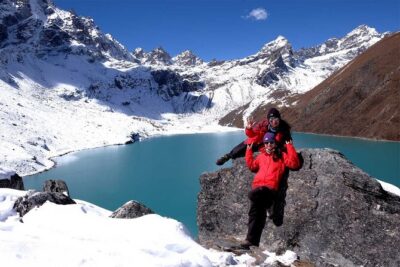
The climb from Gorakshep to Kalapatthar takes about three to four hours. At 5,545 meters, this is the highest point in the program and the place for the clearest scheduled views of Mount Everest and the surrounding peaks.
The climb is short compared with the earlier trekking days, but altitude makes it hard. You should not measure it by distance alone. Your guide can set a slow pace and decide how long you should remain at the viewpoint.
After Kalapatthar, you return by helicopter to Kathmandu. The package describes this as a shared helicopter flight from Gorakshep to Kathmandu, so confirm the exact pickup point and how the descent from Kalapatthar connects with the flight. The helicopter saves you several days of walking and gives you a dramatic final look at the Khumbu from above.
The catch is weather. High mountain flights are not guaranteed to run on schedule. If poor weather cancels the experience, the stated policy offers a different date or a full refund. That policy is useful, but you should still avoid booking a tight international connection immediately after the scheduled return.
Dinner that evening includes a farewell meal at an authentic Nepalese restaurant with cultural performance. It is a welcome change after several nights in mountain lodges and a pleasant way to finish the walking portion.
Day 11: Departure from Kathmandu
The final day is for airport departure, with breakfast included. Airport pickup is provided at the start, and the activity ends back at the meeting point.
Because the helicopter return happens on Day 10, this final morning gives you a little breathing room. Even so, flight schedules in Nepal can change, so keep your departure plans as practical as possible.
What the $3,500 price includes and leaves out
The value depends on what you want to handle yourself. At $3,500, you are paying for a guided and supported route rather than just a place on a trail.
Included services cover:
- Private airport pickup and hotel transfer
- Two Kathmandu hotel nights with breakfast
- Breakfast, lunch, and dinner during the trek
- Tea-house and lodge accommodation
- TIMS permit and Khumbu Valley fees
- Required paperwork
- Kathmandu or Ramechhap to Lukla flight arrangements
- Guide and porter support
- Duffle bag use
- First-aid supplies
- Travel and rescue arrangements
- Shared helicopter return from the Everest region
- Farewell dinner with cultural performance
You pay separately for bottled water, coffee, tea, laundry, phone calls, hot showers, battery charging, bar bills, extra porters, insurance, and tips. These costs can add up in the mountains, so bring a cash plan and ask the operator how much local currency you should carry.
The biggest value is time. A standard Everest Base Camp trek often requires roughly two weeks or more on foot, while this plan brings you back in 11 days. You pay for the helicopter, but you also avoid the long descent and the extra lodge nights.
Who should book this trek?
I would recommend this trip to a fit person who wants the classic Everest Base Camp route but has limited vacation time. It also suits you if you prefer having permits, transport, meals, guides, and porters arranged in one package.
You need a moderate physical fitness level, but that phrase should not fool you. The route reaches more than 5,500 meters, and several walking days last five to seven hours. You should be comfortable with sustained uphill and downhill walking before booking.
This is a private activity for your own group, not a large public departure. That can make communication easier and may allow the guide to respond more closely to your group’s pace. Ask in advance how many people will share the helicopter, since the flight itself is not private.
The trip may not suit you if you dislike basic lodges, have very limited flexibility after the trek, or want a relaxed Himalayan holiday. It is also a poor match if you are unwilling to purchase suitable travel and rescue insurance.
Final call: a focused route with real altitude demands
I would book this trek if reaching Everest Base Camp is your priority and you value a shorter return. The two acclimatization days, porter support, included meals, and organized rescue arrangements make the package more practical than trying to assemble the same route alone.
Before paying, confirm three things: the Lukla flight departure airport, the name and experience of your assigned guide, and the exact helicopter plan from Gorakshep. If you understand the altitude, allow flexibility for weather, and budget for excluded costs, this is a strong way to experience the Everest route without spending several extra days walking back down.
FAQ
How long is the Everest Base Camp trek with helicopter return?
The experience lasts approximately 11 days, including arrival in Kathmandu, the trek to Everest Base Camp, the Kalapatthar climb, the helicopter return, and departure.
Where does the experience start?
It starts at Tribhuvan International Airport in Kathmandu, Nepal. Airport pickup by private vehicle is included.
What time does the activity start?
The listed start time is 6:00 a.m. Confirm the exact pickup time with the operator before departure.
Is the helicopter ride private?
No. The included return flight is a shared helicopter from the Everest region to Kathmandu.
Are meals included?
Breakfast, lunch, and dinner are included during the trek. Breakfast is included during the Kathmandu hotel stays. Bottled water, coffee, and tea are not included.
Is travel insurance included?
No. Travel and rescue insurance is not included. The package does include travel and rescue arrangements, but you must arrange your own suitable insurance.
What happens if poor weather cancels the experience?
If poor weather causes the activity to be canceled, you are offered a different date or a full refund. For a regular cancellation, you must cancel at least 24 hours before the experience start time for a full refund.
More Hiking and Trekking Trips in Kathmandu
- Everest base camp trek & Heli return
★ 5.0 · 6 reviews - Everest Base Camp Trek | Deluxe Lodges | Both Way Helicopter Ride
★ 5.0 · 6 reviews - Everest Base Camp Trek with Helicopter Flight Back
★ 5.0 · 3 reviews - Everest Base Camp Trek with Chopper Return To Kathmandu
★ 5.0 · 2 reviews
More Everest Helicopter Tours in Kathmandu
- Everest Base Camp Helicopter Tour landing at Everest View Hotel
★ 5.0 · 668 reviews - Everest Base Camp Helicopter Tour landing at Hotel Everest View
★ 5.0 · 218 reviews - Everest Base Camp helicopter tour with landing
★ 5.0 · 61 reviews - Everest Base Camp Helicopter Tour with Hotel Everest View Landing
★ 5.0 · 52 reviews
Just added around Kathmandu
- Mount Everest Helicopter Tour with Landings★ 5.0 · 2 reviews
- Day Tour to Everest Base Camp By Helicopter★ 5.0 · 16 reviews
- Guaranteed Landing at Everest Base Camp Kalapathar by Helicopter★ 5.0 · 38 reviews
- Langtang Helicopter Tour★ 5.0 · 6 reviews
- Kathmandu To Lukla By Helicopter Flight★ 5.0 · 6 reviews
- Mount Everest Scenic Helicopter Tour★ 5.0 · 6 reviews
- Everest Helicopter Tour★ 5.0 · 3 reviews
- Everest Base Camp Tour & View Point by Helicopter from Katmandu★ 5.0 · 3 reviews
Everest & Himalaya Helicopter Tours, compared.
Everest Base Camp Helicopter Tour landing at Everest View Hotel
Read our review →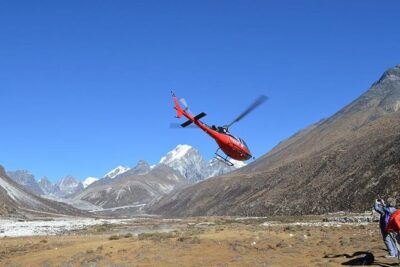
Everest Base Camp Helicopter Tour landing at Hotel Everest View
Read our review →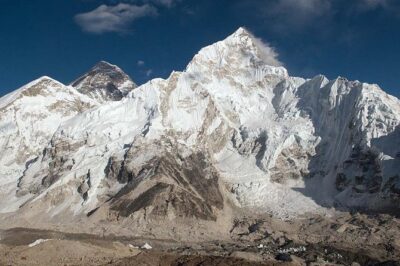
Everest Base Camp Trek with Helicopter Return from Gorakshep to Lukla
Read our review →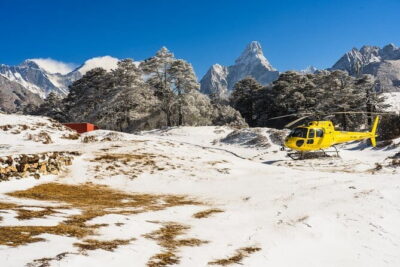
Everest Base Camp helicopter tour with landing
Read our review →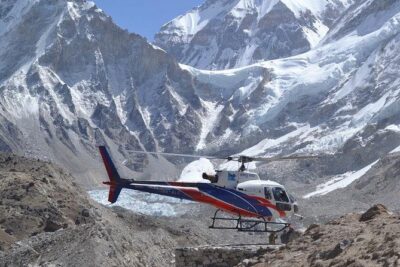
Everest Base Camp Helicopter Tour with Hotel Everest View Landing
Read our review →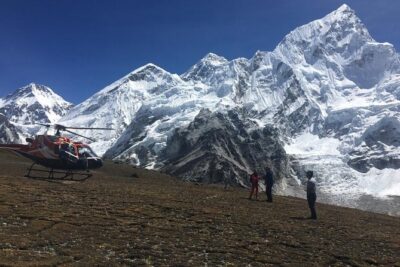
Guaranteed Landing at Everest Base Camp Kalapathar by Helicopter
Read our review →Everest Base Camp Helicopter Tour landing at Everest View Hotel.
Read our review →