
REVIEW · KATHMANDU
Everest Base Camp Trek with Chopper Return To Kathmandu
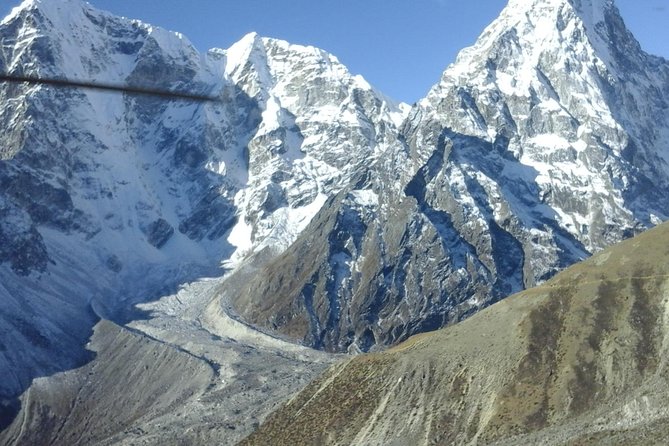
Everest Base Camp by foot, followed by a helicopter flight back to Kathmandu, gives you the best of two worlds: a real Himalayan trek without repeating the long return route. You walk through Sherpa villages, forests, memorials, and high yak country before reaching Everest Base Camp and the Khumbu Glacier.
I like the efficient eight-day plan and the practical support, including a guide, shared porter, sleeping bag, duffel bag, permits, meals, and domestic flights. I also like the early Kala Patthar hike, where you can see Everest, Lhotse, Nuptse, Pumori, and Lobuche West before boarding the helicopter.
The main consideration is altitude. The route reaches 5,545 meters at Kala Patthar, with several six- to seven-hour walking days. You need a moderate fitness level, patience with mountain weather, and a willingness to accept that helicopter plans can change.
Key points to know before booking
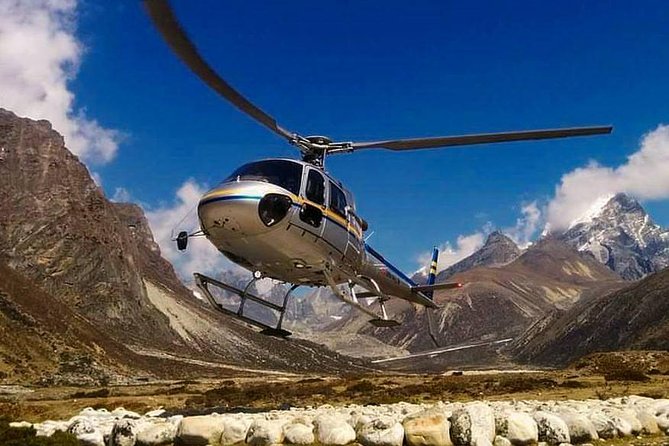
- Eight days with no long walk back: You trek from Lukla to Everest Base Camp, then fly from Gorak Shep to Kathmandu.
- A genuine high-altitude route: The trail passes through Namche Bazaar, Tengboche, Dingboche, Lobuche, and Gorak Shep.
- Kala Patthar is the visual high point: The early hike reaches 5,545 meters and offers a broad Himalayan panorama.
- A good package of practical inclusions: Meals, tea-house lodging, permits, flights, guide, porter, sleeping bag, and duffel bag are covered.
- Private trekking with a shared helicopter: Your trekking group is private, while the return helicopter is shared.
- Weather still rules the schedule: Poor conditions can affect the helicopter and may lead to a new date, alternative arrangement, or refund.
Why the helicopter return changes the Everest Base Camp trek
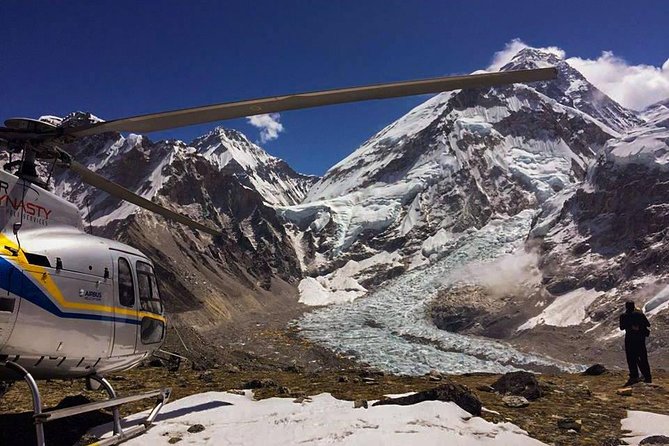
The classic Everest Base Camp route requires you to walk back toward Lukla after reaching the high point. That return takes several more days and repeats much of the trail. Here, you spend your walking time going uphill through the Khumbu and save the return journey for a helicopter flight.
That makes the trip useful if you have about a week rather than two weeks. It also gives you a different view of the mountains on the way back to Kathmandu, though you should not treat the helicopter as a guaranteed sightseeing flight. Mountain weather can change quickly, and the return depends on safe flying conditions.
The trekking itself is private, so only your group participates in the walking portion. An English-speaking guide leads the route, and one porter is assigned to share between two trekkers. That arrangement keeps your daypack lighter, but you still need to carry personal essentials such as water, layers, medication, and valuables.
At $2,600 per person, this is not a budget walk. The price makes more sense when you add up the included domestic flight to Lukla, helicopter return, permits, meals, tea-house accommodation, staff costs, airport transfers, and trekking equipment. You are paying for speed and logistics as much as for the trail.
More Everest Helicopter Tours in Kathmandu:
- Everest Base Camp Helicopter Tour landing at Everest View Hotel
★ 5.0 · 668 reviews - Everest Base Camp Helicopter Tour landing at Hotel Everest View
★ 5.0 · 218 reviews - Everest Base Camp Trek with Helicopter Return from Gorakshep to Lukla
★ 5.0 · 161 reviews
Day 1: Lukla to Phakding beside the Dudh Koshi
The day begins early, with a 6:15 am start and a vehicle transfer of about 20 minutes from Thamel to the airport. After the flight to Lukla, you have breakfast there before beginning the first walk.
Lukla is the gateway to the Everest region, and the change from Kathmandu is immediate. The first day is relatively short, about three to four hours, as you follow the Dudh Koshi River toward Phakding. This is a useful introduction to the rhythm of the route, with enough walking to begin adjusting without starting with the longest day.
Phakding is your first overnight stop. The included tea-house accommodation is on a twin-sharing basis, and meals are provided throughout the trek. The package lists eight breakfasts, eight lunches, and seven dinners, so you should note that dinner is not included on the final day.
Day 2: The long climb to Namche Bazaar
From Phakding, you walk for about six hours toward Namche Bazaar. The route passes through pine and rhododendron forest, with suspension bridges and early views toward the high peaks.
This is one of the first demanding days. The distance is manageable for a reasonably fit walker, but the rising altitude changes how hard the route feels. Move slowly, drink regularly, and avoid trying to keep pace with stronger members of your group.
The itinerary refers to the Irish Pub stop while describing the route to Namche. Namche itself is the main trading center of the Khumbu and an important staging point for acclimatization. You may get your first glimpse of Everest near the Nuptse and Lhotse ridge, though cloud cover can affect the view.
The value of reaching Namche is not just the village itself. It marks the shift from lower forested country into the high mountain environment, and it gives you time the next day to adjust before climbing higher.
Day 3: Acclimatization and viewpoints around Namche
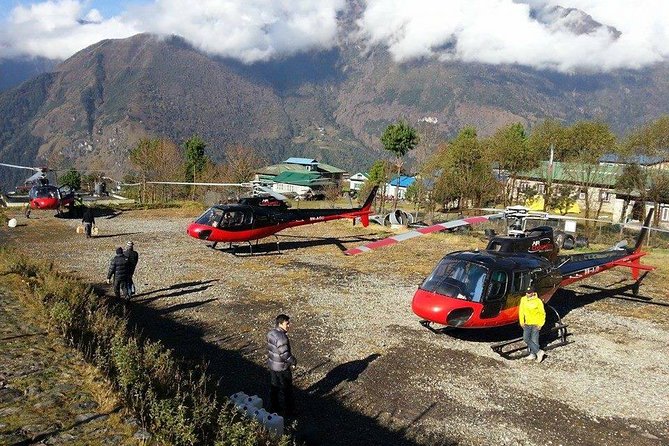
Day 3 is an acclimatization day, with about five hours of optional exploration around Namche Bazaar. You can hike toward Syangboche Airport, described as one of the highest airports in the world, or continue toward the Hotel Everest View.
The Hotel Everest View area offers views toward Everest, Tawache, Lhotse, and Ama Dablam. This is a valuable day because you gain height during the hike but return to Namche for the night, helping your body adjust before the next stages.
Late afternoon brings a visit to the Everest Photo Gallery and Sherpa Culture Museum. Those stops add context to what can otherwise become a parade of mountain views. You get a closer look at the region’s mountaineering story and Sherpa culture rather than spending the entire day focused only on the trail.
Do not waste the day by treating it as a complete rest day in bed. The point is controlled movement at a higher elevation, followed by recovery. Your guide can help set a sensible pace.
More Hiking and Trekking Trips in Kathmandu:
- Everest Base Camp Trek with Helicopter Return to Lukla – 10 Days
★ 5.0 · 34 reviews - Everest Base Camp Trek with Helicopter Return -11 Days
★ 5.0 · 12 reviews - Helicopter Return Everest Base Camp Trek, KTM-LUKLA & Gorakshep-KTM by Heli
★ 5.0 · 9 reviews - Everest Base Camp Trek with Helicopter Return – 10 Days
★ 5.0 · 9 reviews
Day 4: Namche to Tengboche and its monastery
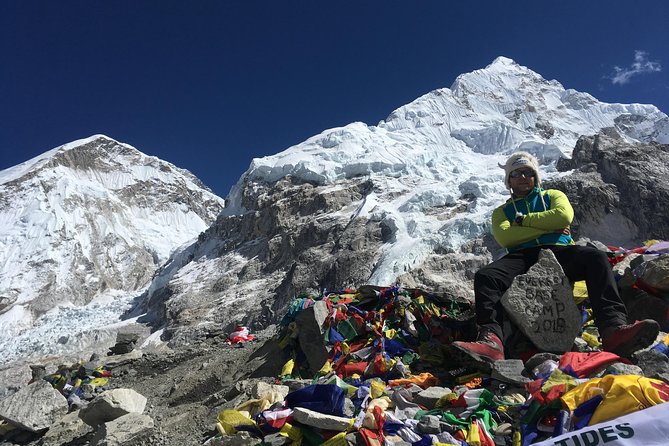
The walk from Namche to Tengboche takes about five to six hours. The route leads through more mountain country toward the largest monastery in the Khumbu region.
Tengboche is one of the most memorable stops because the monastery gives the trek a strong cultural center. The area is also linked with Mani Rimdu, a major festival held in October. If your trip does not coincide with the festival, you should expect the setting and monastery rather than a festival program.
The walking day is long enough to feel serious, but it is not yet the most demanding section. Ama Dablam is among the peaks associated with this part of the route, and the changing vegetation reminds you that you are gaining altitude.
The overnight tea-house stay is basic by nature. The package says you receive the best available tea houses on a twin-sharing basis, but mountain accommodation can vary. If you need a private room or upgraded lodging, confirm that before booking rather than assuming it is included.
Day 5: Across the Imja Khola to Dingboche
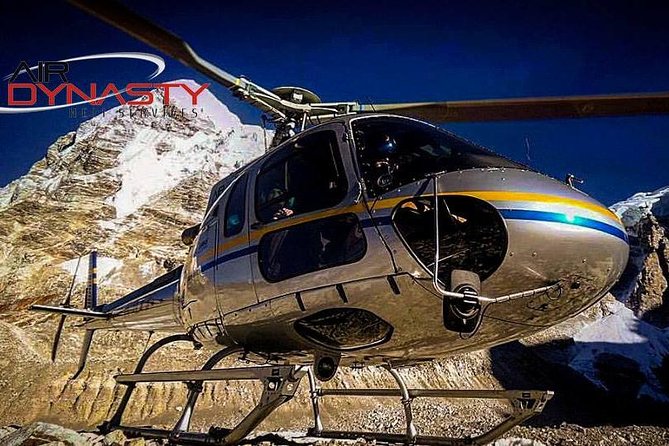
The route from Tengboche to Dingboche takes roughly six to seven hours. You cross the Imja Khola by suspension bridge and pass long lines of mani walls, the stone structures carved with Buddhist prayers.
This is a strong day for seeing how the trail changes. The forest begins to thin, the air feels more exposed, and the route takes on a high-alpine character. Dingboche is an important stop before the even higher stages to Lobuche and Gorak Shep.
The itinerary identifies a Dingboche viewpoint, which gives you a chance to look across the surrounding peaks. The approach is not simply a transfer between overnight stops. The bridges, mani walls, and open mountain views make this one of the more varied walking days.
The seven-hour estimate matters. You should be ready for a full day on your feet, not just a scenic stroll. Good boots, warm layers, sun protection, and a small supply of personal snacks are sensible additions, even though full-board meals are included.
Day 6: Dingboche to Lobuche via the memorials
You leave Dingboche with a gradual climb through yak grazing areas and alpine vegetation. The walk to Lobuche takes about six hours, with views toward Tawoche, Cholatse, and Ama Dablam.
The most emotional section comes near Thokla Pass at about 4,830 meters. A short but steep climb leads to memorials for mountaineers who died during Everest expeditions. Prayer flags mark the area, and the memorials bring a sober pause to an otherwise goal-focused trek.
This is also where altitude can become more noticeable. A short climb may feel surprisingly hard, and you should not measure your performance against anyone else in the group. Slow progress is normal at this elevation.
Lobuche is a practical overnight stop before the final approach. The day is not the highest point of the trip, but it prepares you for the thinner air and colder conditions ahead.
Day 7: Lobuche to Gorak Shep and Everest Base Camp
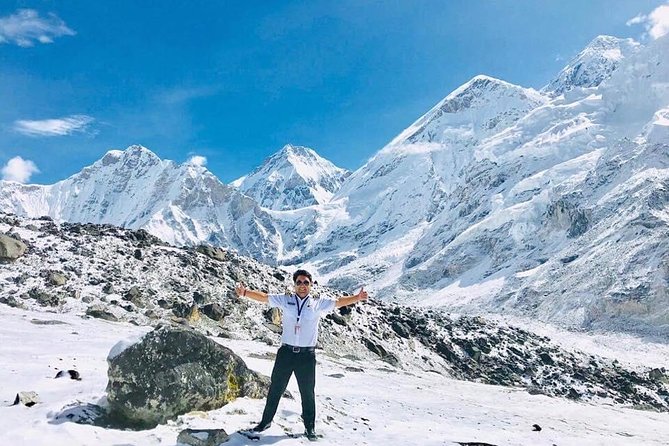
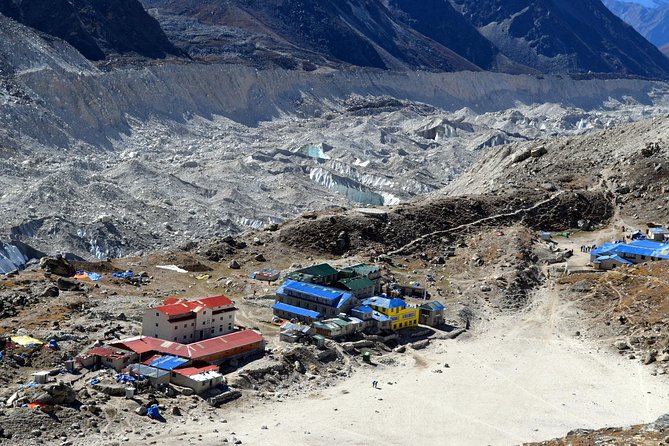
The six-hour walk from Lobuche reaches Gorak Shep, with the Khumbu Glacier visible nearby. The glacier is a huge tongue of ice descending from the upper slopes of Everest, and its scale helps you understand the environment more clearly than a distant summit view can.
After lunch at Gorak Shep, you continue to Everest Base Camp. The visit at base camp lasts about 20 to 25 minutes because of the cold, wind, and altitude. That short time is worth understanding before you go: Everest Base Camp is a milestone, not a comfortable place to linger.
You may see expedition activity depending on the season, but the information provided does not promise a particular camp setup or climbing period. The reliable part is the route, the Khumbu Glacier, and the chance to stand at the base camp area.
The walk back to Gorak Shep after the base camp visit adds to an already demanding day. Keep your expectations practical. Reaching the destination matters more than staying there for hours, and the limited time helps reduce exposure to the harsh conditions.
Day 8: Kala Patthar at 5,545 meters, then helicopter to Kathmandu
The final morning starts early with a hike to Kala Patthar, followed by breakfast at Gorak Shep. Kala Patthar means Black Rock and sits at 5,545 meters, making it the highest point described in the route.
The climb takes about 40 minutes according to the schedule, though your actual pace can vary with altitude and conditions. At the top, prayer flags mark a viewpoint with a 360-degree panorama toward Pumori, Lobuche West, Nuptse, Lhotse, and Everest.
This is likely to be the most rewarding photo stop of the trip. Everest Base Camp gives you the achievement of reaching the route’s famous destination, but Kala Patthar provides the broader mountain view. Starting early also gives you the best chance of seeing the peaks before clouds build, though no view is guaranteed.
After breakfast, you take the helicopter from Gorak Shep to Kathmandu. The helicopter return is the trip’s biggest convenience, but it is also the part most exposed to weather and operational changes. The experience requires good weather, and poor conditions can lead to a different date, an alternative experience, or a full refund if the operator cancels.
What the $2,600 price includes
The package covers a large amount of the trip’s core infrastructure:
- Airport pickup and drop-off in an air-conditioned vehicle
- Domestic flight from Kathmandu to Lukla, including departure taxes
- Helicopter return from Gorak Shep to Kathmandu
- English-speaking guide
- Trekking permits and required paperwork
- Breakfast, lunch, and dinner during the listed trekking days
- Twin-sharing tea-house accommodation
- One porter shared between two trekkers
- Sleeping bag and duffel bag for use during the trek
- Staff expenses, including transport, food, accommodation, salary, and equipment
That list gives the price real weight. You are not just purchasing a guided walk. You are purchasing a short, high-altitude trip with flights at both ends, food, staff, accommodation, permits, and equipment support.
You still pay separately for Nepal visa fees, Kathmandu accommodation and meals, extra nights caused by early arrival or late departure, laundry, phone calls, drinks, personal expenses, bottled or boiled water, and entrance fees for Kathmandu day tours. Budget for those costs before you decide the trip fits your finances.
Who will get the most from this trek
This trip suits you if you want the Everest Base Camp experience but cannot spare the longer time needed for a standard return trek. It also suits you if you prefer having transport, permits, meals, a guide, and porter support arranged in one package.
You should have moderate physical fitness. The itinerary includes multiple days of five to seven hours of walking, rising altitude, a steep section near Thokla Pass, and a final viewpoint at 5,545 meters.
It is less suitable if you want a relaxed holiday, guaranteed summit views, luxury accommodation throughout, or a completely fixed timetable. Tea houses are practical rather than lavish, and mountain weather can affect both flights and the helicopter return.
The shared helicopter is worth clarifying before you pay. The trekking activity is private for your group, but the return helicopter is described as shared. Ask how the operator handles luggage, flight timing, and any delay caused by weather.
Useful planning details before you go
The start time is 6:15 am, so arrange your evening before the trip with an early morning in mind. Complimentary domestic airport pickup and drop-off are included, which removes one common source of confusion in Kathmandu.
A mobile ticket is offered, and confirmation is normally received at booking. If you book within 12 hours of departure, confirmation depends on availability. Minimum numbers also apply, so the operator can cancel after confirmation if there are not enough participants, offering an alternative or a full refund.
Cancellation is free up to 24 hours before the experience starts. Cancellations or changes inside that period are not accepted for a refund. Since weather is a central factor, read the cancellation terms carefully and leave flexibility in your wider Nepal schedule.
Pack for changing conditions rather than one single temperature. You need trekking clothes, warm layers, sturdy footwear, sun protection, and personal medication. The operator supplies a sleeping bag and duffel bag, but the supplied information does not specify the exact clothing, personal gear, or water arrangements beyond noting that bottled or boiled water is extra.
Should you book the Everest Base Camp helicopter return?
I would book this trip if you have limited time and want the core Everest Base Camp route without walking back to Lukla. The strongest features are the private trekking setup, solid logistical coverage, Kala Patthar viewpoint, and helicopter return from Gorak Shep.
I would pause if your main goal is a slow cultural trek, quiet days, or a low-cost trip. Eight days is efficient, but the schedule is demanding, and altitude leaves little room for rushing.
For the right person, the $2,600 price is reasonable because it combines the trail, flights, staff, food, lodging, permits, equipment, and a dramatic return by air. Before booking, confirm the helicopter sharing arrangement, what happens if weather delays the flight, and how extra nights are handled. If you accept those conditions and can manage the walking days, this is a focused way to reach Everest Base Camp and see the high Himalaya.
FAQ
How long does the Everest Base Camp trek with helicopter return take?
The experience lasts approximately eight days.
Where does the trek begin?
The trip begins with hotel pickup in Kathmandu, followed by a domestic flight to Lukla. The walking route then continues toward Phakding.
How do I return to Kathmandu?
After the Kala Patthar hike and breakfast at Gorak Shep, you return to Kathmandu by helicopter.
Is the helicopter private?
The trekking portion is private for your group, while the helicopter return is described as shared.
What level of fitness do I need?
A moderate level of physical fitness is required. The trek includes several walking days of about five to seven hours and reaches high altitude.
What is the highest point on the route?
Kala Patthar is listed at 5,545 meters and is the highest point described in the experience.
Are meals included?
Breakfast, lunch, and dinner are included during the trekking portion. The package lists eight breakfasts, eight lunches, and seven dinners.
Is accommodation included?
Twin-sharing accommodation in the best available tea houses during the trek is included. Accommodation and meals in Kathmandu are not included.
What happens if bad weather cancels the experience?
If poor weather causes cancellation, you are offered a different date or a full refund. Minimum numbers also apply, and a cancellation for that reason may lead to an alternative or full refund.
Just added around Kathmandu
- Mount Everest Helicopter Tour with Landings★ 5.0 · 2 reviews
- Day Tour to Everest Base Camp By Helicopter★ 5.0 · 16 reviews
- Guaranteed Landing at Everest Base Camp Kalapathar by Helicopter★ 5.0 · 38 reviews
- Langtang Helicopter Tour★ 5.0 · 6 reviews
- Kathmandu To Lukla By Helicopter Flight★ 5.0 · 6 reviews
- Mount Everest Scenic Helicopter Tour★ 5.0 · 6 reviews
- Everest Helicopter Tour★ 5.0 · 3 reviews
- Everest Base Camp Tour & View Point by Helicopter from Katmandu★ 5.0 · 3 reviews
Everest & Himalaya Helicopter Tours, compared.
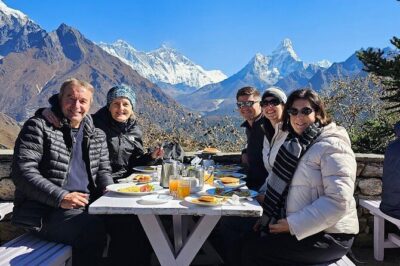
Everest Base Camp Helicopter Tour landing at Everest View Hotel
Read our review →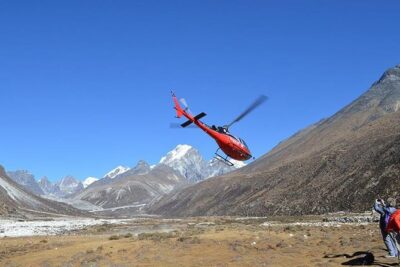
Everest Base Camp Helicopter Tour landing at Hotel Everest View
Read our review →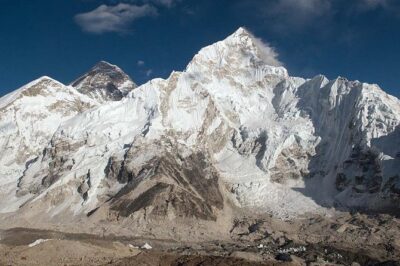
Everest Base Camp Trek with Helicopter Return from Gorakshep to Lukla
Read our review →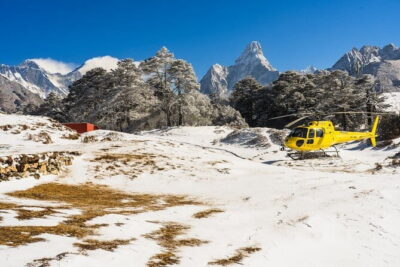
Everest Base Camp helicopter tour with landing
Read our review →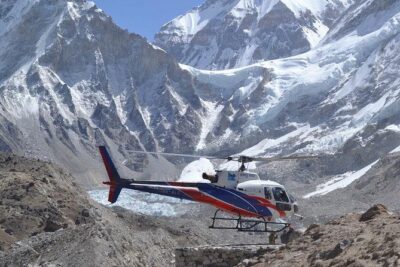
Everest Base Camp Helicopter Tour with Hotel Everest View Landing
Read our review →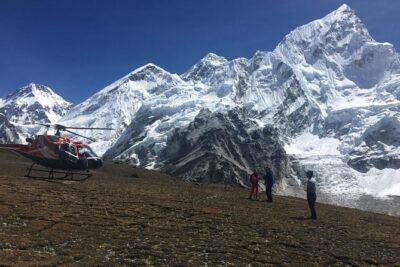
Guaranteed Landing at Everest Base Camp Kalapathar by Helicopter
Read our review →Everest Base Camp Helicopter Tour landing at Everest View Hotel.
Read our review →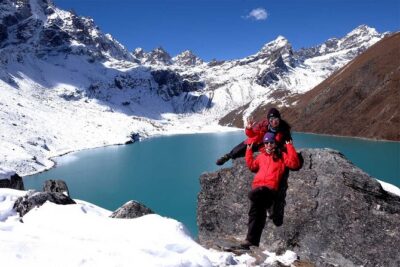
Everest Base Camp Trek with Helicopter Return to Lukla – 10 Days
Read our review →Browse the lists this tour appears in