REVIEW · KATHMANDU
Everest Base Camp trek with Helicopter return 9 days
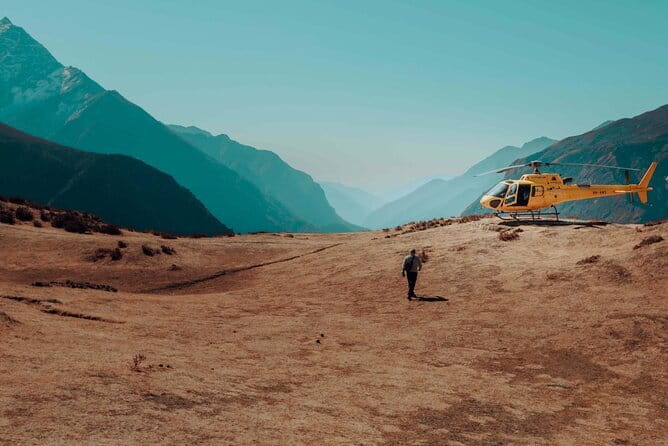
The clever part of this nine-day Everest Base Camp trek is the one-way plan. You walk into the Khumbu Valley, gaining height gradually, then skip the long return trek with a helicopter from Gorak Shep to Lukla. That gives you more time for the high country and less time retracing your steps.
I like the built-in acclimatization day at Namche Bazaar, and I like that the price includes permits, meals, a porter for every two people, airport transfers, and the mountain guide’s costs. The main caution is altitude. Kala Patthar reaches 5,644 meters, and the route becomes steeper and more remote beyond Dingboche. This is not a sightseeing stroll.
Key points to know
- Helicopter return from Gorak Shep: You walk in and fly out, saving several days of downhill trekking.
- Namche acclimatization day: The itinerary allows time to adjust before the trail climbs higher.
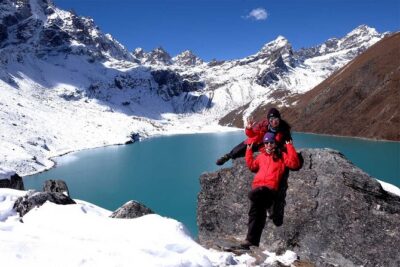
- Kala Patthar summit view: The final morning includes a climb to 5,644 meters for one of the best mountain viewpoints on the route.
- Private group format: Only your group takes part, with a guide and one porter for every two people.
- Practical inclusions: Permits, government charges, meals, airport transfers, a first-aid kit, and an oximeter check are covered.
- Altitude is the real challenge: The walking is classed as moderate, but the thin air makes the later days demanding.
What you are really buying for $3,888
At $3,888 per person, this is not a budget tea-house trek. You are paying for speed, private arrangements, support in the mountains, and the helicopter flight out. The cost also covers the Kathmandu and Lukla flights, permits, meals during the trek, airport transfers, one porter for two people, and the guide’s food, lodging, transport, insurance, and salary.
That package has real value if your time is tight. A normal return trek requires more days on foot after reaching Everest Base Camp. Here, the helicopter removes that repetition and gives you a nine-day schedule from arrival through return.
I would compare the price with care. It does not include international airfare, Nepal’s visa, travel or medical insurance, personal expenses, drinks, desserts, hot showers, phone charging, or tips. Tea-house showers and charging usually cost about $2 to $5, and tipping the guide, porter, and driver is expected.
The helicopter is also a useful practical feature, not just a flashy finish. Mountain weather can disrupt flights, and the company has shown flexibility with helicopter use on other Nepal trips when conditions caused problems. Still, a helicopter return should never be treated as an absolute guarantee of a precise departure time.
More Helicopter Transfers in Kathmandu
- Everest Base Camp Trek with Helicopter Return from Gorakshep to Lukla
★ 5.0 · 161 reviews - Everest Base Camp Trek with Helicopter Return to Lukla – 10 Days
★ 5.0 · 34 reviews - Everest Base Camp Trek with Helicopter Return -11 Days
★ 5.0 · 12 reviews
Day 1: A soft landing in Kathmandu
Your airport team meets you at the international terminal, takes you to the hotel in a private car, helps with check-in, and handles your bags. After that, you rest and meet the core team.
This first day is simple, but it matters. Kathmandu can be tiring after an international flight, and having someone meet you removes the first round of bargaining, navigation, and luggage handling. You also have a chance to check your equipment before the early mountain departure.
The tour is private, so the pace and group dynamic are limited to your own party. That is useful for families or friends who want to move together rather than join a large mixed group. It also means the cost is higher than a basic shared departure.
Day 2: The short flight from Kathmandu to Lukla
You leave early for the flight to Lukla. The flight itself is short, with mountain views, and arrives at Tenzing Hillary Airport. Porters join the group after landing, and the trek begins.
Lukla is the practical gateway to the Everest region. From here, you are immediately walking through mountain villages rather than spending time on a long road journey. The day is listed at about four hours, giving you a first taste of the trail without starting with a punishing distance.
This flight is one of the trip’s key timing points. The itinerary includes the Kathmandu to Lukla flight and the return flight from Lukla to Kathmandu, but mountain aviation depends on conditions. Keep your wider Nepal plans flexible if possible.
Your porter arrangement is one porter for every two people. Pack carefully and keep the load sensible. You should carry your own day bag with water, warm layers, rain protection, medication, and anything you need during the walking day.
Day 3: Phakding to Namche Bazaar
From Phakding, the route passes through rhododendron and magnolia forest toward Toktok at 2,760 meters. The trail continues through Bengkar Village at 2,630 meters, crosses bridges, and reaches Monjo before the climb toward Namche Bazaar.
The walking time is about six hours. This is where the trek begins to feel serious. You gain height, cross suspension bridges, and move through villages that serve as the main trading and resting points on the route.
Namche sits at roughly 3,440 meters and is the main hub of the Khumbu Valley. It has shops, tea houses, and a useful sense of bustle before the trail becomes quieter. You will appreciate arriving here because the next day is set aside for acclimatization.
The drawback is that this day includes a long climb after the earlier walking. Go slowly. The goal is not to prove fitness on day three. It is to arrive with enough energy for the higher sections later.
More Helicopter Transfers in Nepal
- Helicopter Return Everest Base Camp Trek, KTM-LUKLA & Gorakshep-KTM by Heli
★ 5.0 · 9 reviews - Everest Base Camp Trek with Helicopter Return – 10 Days
★ 5.0 · 9 reviews
Day 4: Namche and the Khumjung acclimatization walk
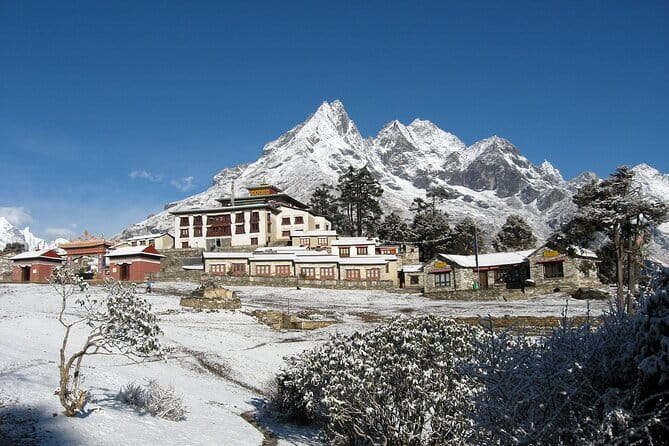
The itinerary uses this day for acclimatization. You walk toward Khumjung and may use the Syangboche airstrip area above Namche to reach the Everest View Hotel. The walking time is about five hours.
This is one of the strongest parts of the plan. You gain some height during the day, then return to sleep in the lower settlement of Namche. That lets your body begin adjusting before the route rises toward Tengboche and Dingboche.
The Everest View Hotel section offers a chance to look toward the high peaks without committing to a full day at extreme elevation. The route around Khumjung also gives you a closer look at the villages and mountain paths that make this trek more than a simple march to a famous endpoint.
Do not treat the acclimatization day as optional rest only. Walk at a steady pace, drink regularly, and tell your guide if you feel unwell. The guide carries an oximeter and checks pulse, oxygen saturation, and heart rate twice a day. Those checks are useful, but they do not replace honest communication about headache, nausea, dizziness, or unusual fatigue.
Day 5: Namche to Kyangjuma
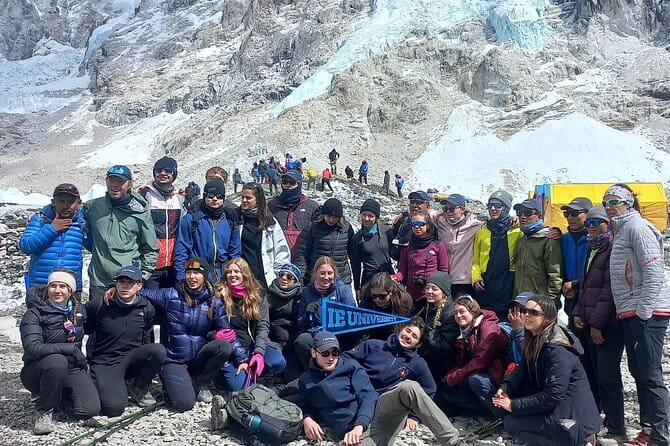
The trail leaves Namche and follows the green foothills toward Kyangjuma at about 3,550 meters. The day is listed at roughly five hours, with mountain views along the route.
This section is a good transition. You are no longer simply getting used to the route, but you have not yet reached the stark, high country above Dingboche. The trail winds uphill, then drops toward the next area, so the total effort is not just a steady climb.
Kyangjuma is a useful overnight point because it keeps the daily distances moderate. You can enjoy the views without rushing. The route also reminds you that Himalayan trekking is rarely a smooth uphill line. There are frequent rises and descents, and those descents still cost energy.
Day 6: Tengboche and the rhododendron forest
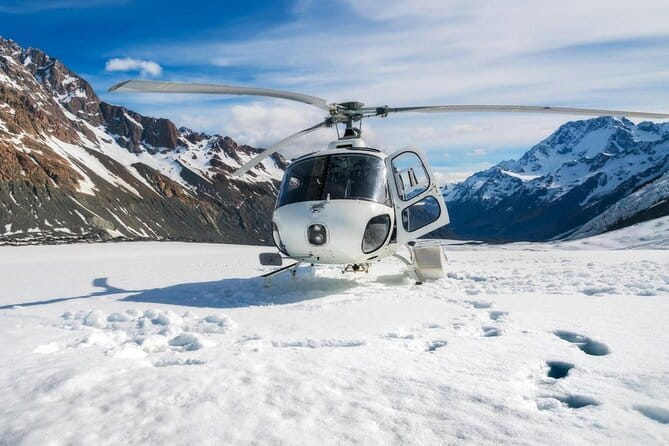
The plan calls for an early start to see sunrise, then a walk toward Tengboche. After breakfast, the trail descends through rhododendron forest to Deboche at about 3,320 meters. You might see musk deer, blue sheep, or Himalayan monkeys, although wildlife sightings are not guaranteed.
The walking time is about five hours. Tengboche is one of the memorable stops because the route combines forest, open mountain views, and a high Buddhist setting. The day is not as long as the Gorak Shep push, but the repeated ups and downs can still be tiring.
The descent to Deboche may feel easy at first. Save some strength, because the route later climbs again. At this point, the air is thinner and your body may not recover as quickly between hills.
This is also a good day to ask your guide about the pace for the days ahead. The team’s experience matters most when someone needs to slow down, adjust a walking target, or decide how to respond to altitude symptoms.
Day 7: Toward the Khumbu Glacier
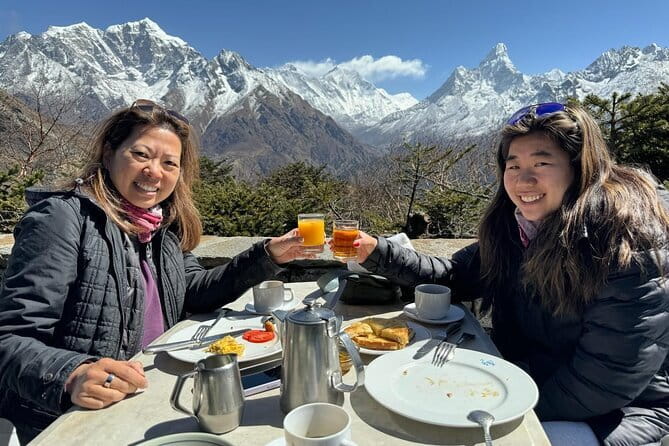
After Dingboche, the route becomes more remote and steeper. This day follows the trail toward the Khumbu Glacier, with a climb along a ridge after leaving Dingboche. You can see Cholatse and Tawache from the route, and the walking time is about six hours.
The scenery changes here. Forest gives way to rock, open slopes, and a colder, more exposed setting. The glacier is not just a dramatic photo stop. It signals that you are entering the high section where altitude, weather, and tired legs become central concerns.
This is the point where the moderate difficulty rating needs context. The path may not involve technical climbing, but 4,000-plus meters changes the effort. A short uphill can require frequent pauses. Keep your speed controlled and let the guide set a sensible rhythm.
Food is included for the eight breakfast, eight lunch, and eight dinner servings covered by the package. Drinks are not included, so budget separately for tea, bottled drinks, and other purchases at the tea houses.
Day 8: Lobuche to Gorak Shep and Everest Base Camp
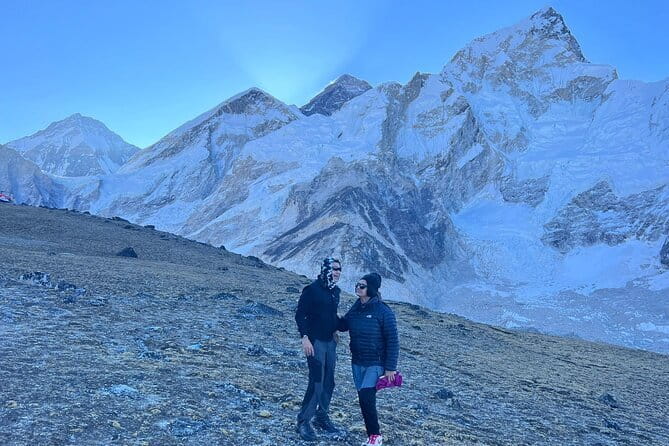
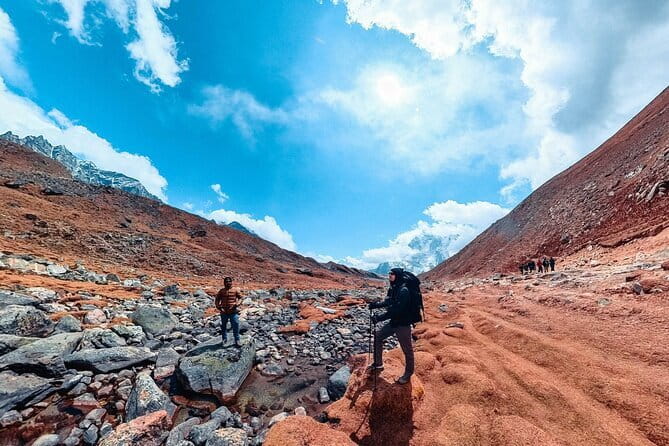
This is the big walking day. From Lobuche, you follow a broad valley toward Gorak Shep. The rocky trail gradually steepens as the elevation rises, and the total walking time is listed at about eight hours.
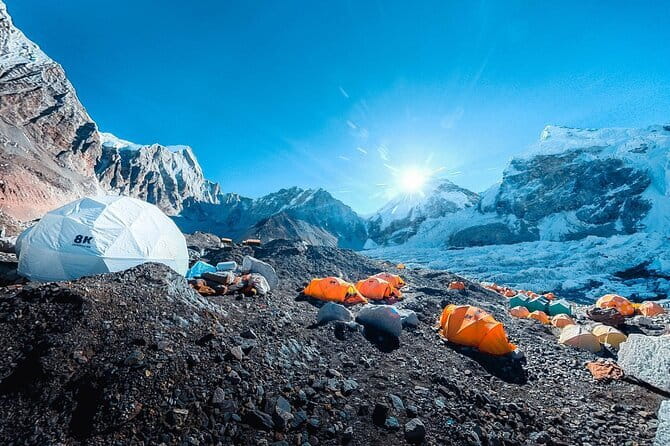
The route includes walking up and down around Gorak Shep and reaching Everest Base Camp. The base camp itself is a major goal, but the approach can be physically demanding. You are high, the ground is uneven, and there is little spare energy for rushing.
This day rewards patience. The route is about getting there safely, not winning a race. Keep your layers easy to reach, carry water, and use breaks well. Your guide’s role is especially important here because the group must balance the desire to reach Base Camp with the need to return to Gorak Shep.
The helicopter return begins from Gorak Shep, but the schedule places Kala Patthar on day nine. Confirm the precise flight sequence with the operator before departure, since the high-altitude pickup and morning weather can affect timing. The supplied plan includes a helicopter from Gorak Shep to Lukla, followed by the flight from Lukla to Kathmandu.
Day 9: Kala Patthar and the flight home
The final mountain objective is Kala Patthar at 5,644 meters. The trail starts above Gorak Shep and is well used and easy to follow, though the altitude makes the climb hard. The early sun creates the best light on the surrounding peaks, which is why the day begins early.
This is the viewpoint day. Base Camp puts you close to the route’s famous glacier and climbing history, but Kala Patthar gives the broad mountain view many people picture when they imagine Everest. You should expect a slow climb, frequent pauses, and cold conditions at the start.
After Kala Patthar, the helicopter takes you from Gorak Shep to Lukla. From there, the included flight returns you to Kathmandu. This is a striking finish because you see the valley from above after walking through it for a week.
The helicopter is also the itinerary’s biggest uncertainty. Weather may delay departure, and the schedule may need adjustment. That is not a flaw unique to this tour. It is part of flying in the Himalayas. Keep a little flexibility in your onward plans and listen closely to the guide’s instructions.
Guides, support, and the private format
The tour provides an experienced guide, with the guide’s pay, meals, lodging, transport, and insurance included. A porter is supplied for every two people. A first-aid kit and oximeter are also part of the support package.
The company’s wider team has included people named Raj, Ramesh, Sital, Ganesh, and others on different Nepal trips. Raj has handled planning and practical arrangements, while Ramesh has guided Everest groups. Ask at booking who will lead your departure, rather than assuming a particular name will be assigned.
This matters because a good guide does more than point out the trail. You need someone who can monitor pace, explain the next section, organize tea-house routines, and respond calmly when altitude or weather changes the plan.
The private format suits families, couples, and friends who want the same guide and walking pace. It may be less appealing if you enjoy meeting a larger mixed group or want the lowest possible price.
Meals, tea houses, and extra costs
The included meals cover breakfast, lunch, and dinner for eight days. That removes a major daily expense in the mountains, but it does not cover drinks, desserts, alcohol, or other personal purchases.
Hot showers and phone charging cost about $2 to $5 at tea houses. Chocolate, cake, pie, pudding, and other sweet items are extra. Bring enough Nepalese rupees or confirm the payment arrangements with the operator before leaving Kathmandu.
Your travel and medical insurance is not included. Make sure your policy covers trekking at the planned altitude and any emergency arrangements you may need. The tour price also excludes your Nepal visa, international flights, and personal expenses.
Airport transfers in a private car are included. That is especially useful on arrival and departure, when you may be carrying a full pack and dealing with early flights.
Who should book this trek?
I would choose this trip if you want the Everest Base Camp route but cannot spend several extra days walking back to Lukla. The helicopter return gives you a sharper schedule and keeps the focus on the upper valley.
It suits people with a moderate level of fitness who can manage repeated five-to-eight-hour walking days. You do not need technical climbing skills based on the information provided, but you do need patience, stamina, and a willingness to walk slowly at altitude.
I would be cautious about booking it if you dislike early starts, basic tea-house conditions, uncertain mountain flight times, or steep walking above Dingboche. The word moderate can sound reassuring, but it does not make 5,644 meters easy.
Should you book the Everest Base Camp helicopter return?
Book it if your priority is reaching Everest Base Camp and Kala Patthar within nine days, with meals, permits, porters, guides, and transport arranged in one package. The two strongest features are the acclimatization day at Namche and the helicopter exit from Gorak Shep.
Before paying, confirm the exact Kala Patthar and helicopter sequence, the guide assigned to your group, what happens if weather delays the flight, and the full tipping expectation. If you accept the altitude and the possibility of schedule changes, this is an efficient and well-supported way to experience the Everest route without walking back the same trail.
FAQ
How long is the Everest Base Camp helicopter return trek?
The experience lasts approximately nine days. You spend seven full days in the mountains and return toward Kathmandu by helicopter and flight on the final day.
What altitude does Kala Patthar reach?
Kala Patthar reaches 5,644 meters, or 18,519 feet.
Is the tour private?
Yes. Only your group participates in this private tour or activity.
Is airport pickup included?
Yes. The airport team meets you at the international terminal, transfers you to the hotel by private car, and helps with check-in and luggage.
What flights are included?
The package includes the flight from Kathmandu to Lukla, a helicopter from Gorak Shep to Lukla, and the Lukla to Kathmandu flight.
Are meals included during the trek?
Yes. Eight breakfasts, eight lunches, and eight dinners are included. Food in Kathmandu, drinks, desserts, and alcoholic beverages are not included.
What is the cancellation policy?
You receive a full refund if you cancel at least 24 hours before the experience start time. Cancellations or changes made within 24 hours are not accepted for a refund.
More Hiking and Trekking Trips in Kathmandu
- Everest base camp trek & Heli return
★ 5.0 · 6 reviews - Everest Base Camp Trek | Deluxe Lodges | Both Way Helicopter Ride
★ 5.0 · 6 reviews - Everest Base Camp Trek with Helicopter Flight Back
★ 5.0 · 3 reviews - Everest Base Camp Trek with Chopper Return To Kathmandu
★ 5.0 · 2 reviews
More Everest Helicopter Tours in Kathmandu
- Everest Base Camp Helicopter Tour landing at Everest View Hotel
★ 5.0 · 668 reviews - Everest Base Camp Helicopter Tour landing at Hotel Everest View
★ 5.0 · 218 reviews - Everest Base Camp helicopter tour with landing
★ 5.0 · 61 reviews - Everest Base Camp Helicopter Tour with Hotel Everest View Landing
★ 5.0 · 52 reviews
Just added around Kathmandu
- Mount Everest Helicopter Tour with Landings★ 5.0 · 2 reviews
- Day Tour to Everest Base Camp By Helicopter★ 5.0 · 16 reviews
- Guaranteed Landing at Everest Base Camp Kalapathar by Helicopter★ 5.0 · 38 reviews
- Langtang Helicopter Tour★ 5.0 · 6 reviews
- Kathmandu To Lukla By Helicopter Flight★ 5.0 · 6 reviews
- Mount Everest Scenic Helicopter Tour★ 5.0 · 6 reviews
- Everest Base Camp Helicopter Tour with Hotel Everest View Landing★ 5.0 · 52 reviews
- Everest Helicopter Tour★ 5.0 · 3 reviews
Everest & Himalaya Helicopter Tours, compared.
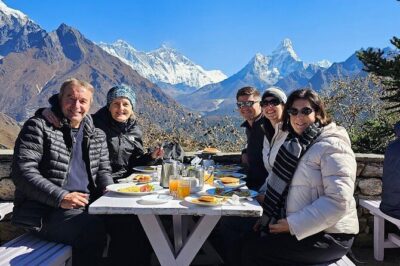
Everest Base Camp Helicopter Tour landing at Everest View Hotel
Read our review →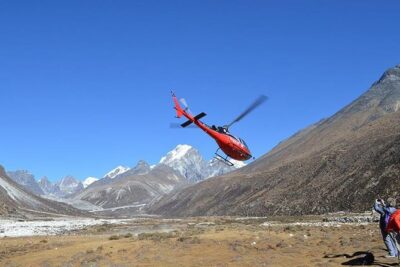
Everest Base Camp Helicopter Tour landing at Hotel Everest View
Read our review →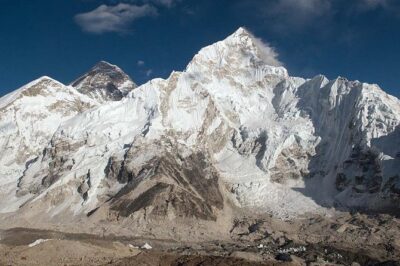
Everest Base Camp Trek with Helicopter Return from Gorakshep to Lukla
Read our review →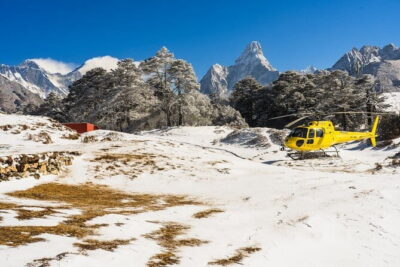
Everest Base Camp helicopter tour with landing
Read our review →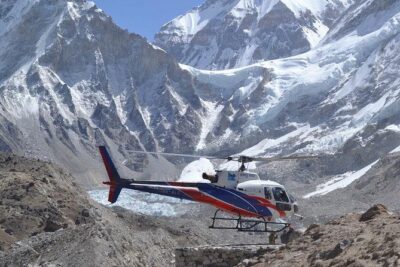
Everest Base Camp Helicopter Tour with Hotel Everest View Landing
Read our review →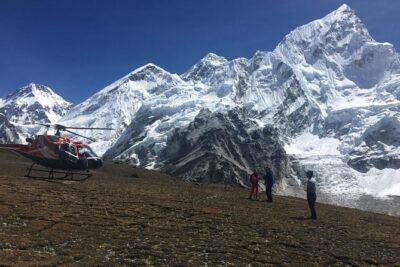
Guaranteed Landing at Everest Base Camp Kalapathar by Helicopter
Read our review →Everest Base Camp Helicopter Tour landing at Everest View Hotel.
Read our review →