
REVIEW · SKIING
Mt Cook: 55-Minute Scenic Flight in Helicopter or Ski Plane
The best part of this 55-minute flight is the route itself. You cross the Southern Alps, reach the West Coast, look down on Fox and Franz Josef Glaciers, then return over the Tasman Glacier and beneath the east face of Aoraki Mount Cook. It is a lot of New Zealand scenery in less than an hour.
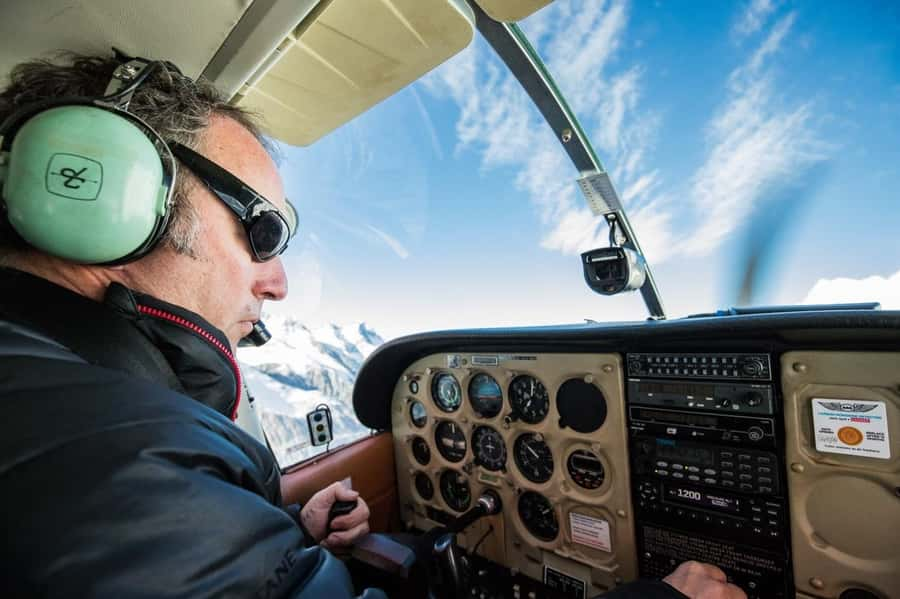
I like the choice between a helicopter and ski plane, and I like the small group limit of six people. The chance to land or take off from a glacier, as one passenger experienced, adds a memorable touch when conditions allow. The main caution is visibility: one seat behind the rotor blade offered a poor view, so your exact seat can affect the experience.
Key points at a glance
- 55-minute Southern Alps route: Cross the Main Divide, reach the Tasman Sea, and return over the glaciers surrounding Aoraki Mount Cook.
- Two ways to fly: Choose a helicopter or ski plane, subject to availability and operating conditions.
- Glacier views from above: See Fox, Franz Josef, Tasman, and other ice fields from the air.
- Small group of up to six: A compact flight makes the experience more personal than a large sightseeing operation.
- Weather matters: Poor conditions can shorten, postpone, or cancel the flight, with a refund or rescheduling offered after cancellation.
- Some seats have better views: Ask about seating if you are concerned about a rotor blade or blocked sightline.
Why this flight gives you more than a quick Mount Cook photo
A scenic flight around Aoraki Mount Cook is not simply a faster way to see the mountain. It changes your sense of scale. From the ground, a glacier may look like a white river in a distant valley. From the air, you can follow its route through icefalls, broad snowfields, and steep mountain walls.
This flight is particularly strong because it links several major sights instead of circling one peak and heading back. You cross from the eastern side of the Southern Alps to the West Coast, follow the Tasman Sea, then return across the range. That crossing gives you changing views and a clear sense of how sharply the terrain shifts.
The 55-minute length matters. A very short flight can feel like a costly glimpse before you have settled into the view. This one gives the pilot time to cover Aoraki Mount Cook, Mount Tasman, Mount Sefton, Fox Glacier, Franz Josef Glacier, and the Tasman Glacier. At $447 per person, it is expensive, but you are paying for a substantial aerial route rather than a brief look from above.
You also receive live English commentary from your guide. That helps you place the peaks and ice fields as they appear, instead of trying to identify every white ridge through a window. The exact commentary will depend on the flight and guide, but the route gives the guide plenty to point out.
More Scenic Helicopter Flights in New Zealand
- Mount Cook: Scenic Helicopter Flight with Alpine Landing
★ 4.8 · 442 reviews - Mount Cook: 50-Minute Aoraki Scenic Helicopter Flight
★ 4.7 · 10 reviews - Bay of Islands and Hole in the Rock Scenic Helicopter Tour
★ 5.0 · 115 reviews
Takeoff with Mount Cook views from the start
The flight begins with mountain scenery almost immediately. You do not need to wait through a long transfer before the main attraction appears. That is useful if you want to make the most of your time in the Mount Cook area, though it also means you should be ready with your camera as soon as the aircraft lifts off.
The operator offers both a helicopter and a ski plane. The aircraft create different kinds of experiences. A helicopter can hover and maneuver around mountain features, while a ski plane gives the flight a more traditional alpine feel and may offer a glacier landing when conditions permit. The information provided does not guarantee which aircraft will operate on a particular departure, so confirm your selection and remain open to a change.
The small group limit of six is a real advantage. You are not sharing the flight with a large crowd, and the guide can provide commentary to a compact group. It also makes the seating question more important. In a small aircraft, one obstructed position can affect a large part of your view.
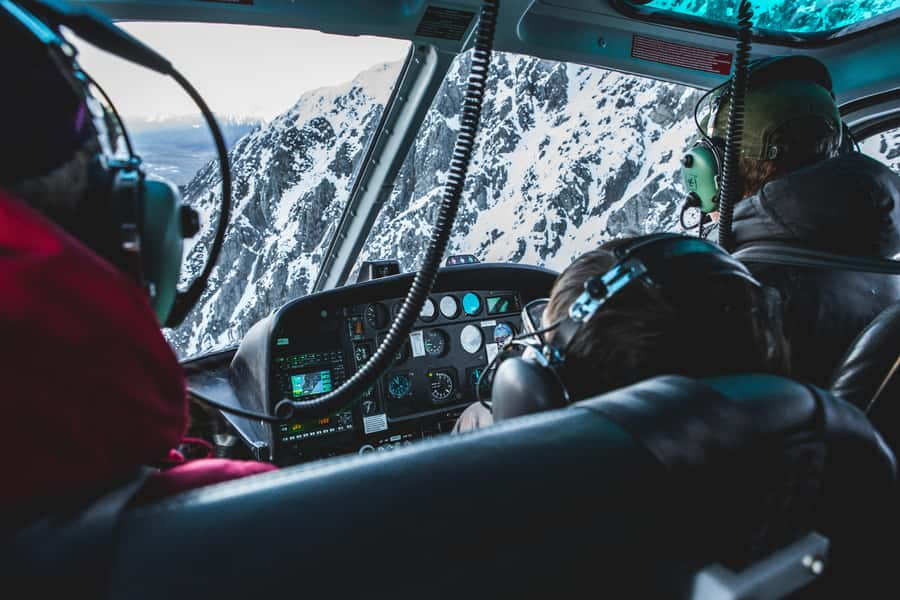
One verified booking described visibility as poor from a middle seat immediately behind the rotor blade, pilot, and another passenger. That is a useful warning, not a reason to reject the flight. Ask about seating before departure, especially if photography is a priority. You can use your phone and camera during the flight, but bags and selfie sticks are not allowed.
Crossing the Main Divide to the West Coast
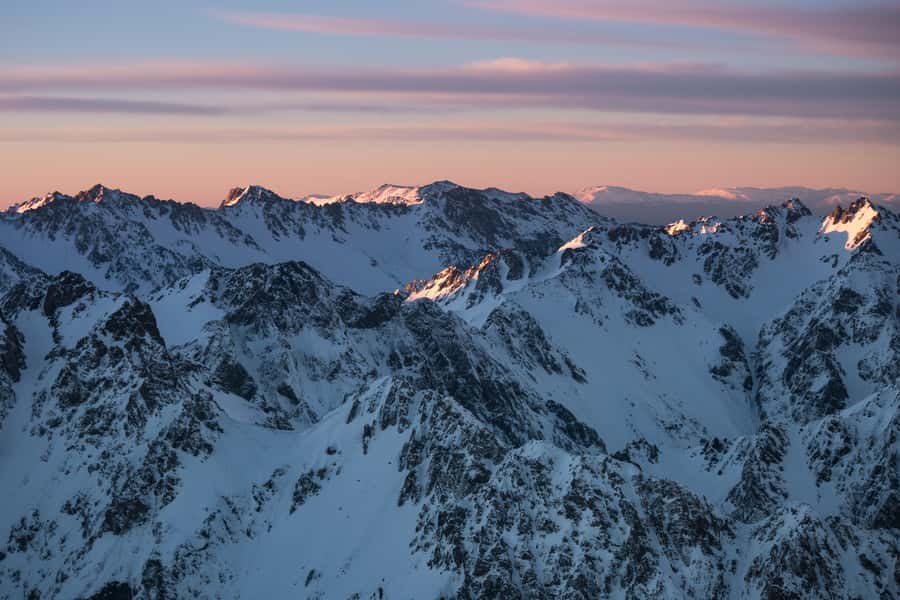
After takeoff, the route crosses the Main Divide of the Southern Alps. This is the backbone of the South Island, separating the eastern side around Mount Cook from the wetter West Coast.
The crossing is one of the most valuable parts of the flight because it lets you compare two very different sides of the range. The mountains are not just isolated peaks. They form a long wall of rock, snow, and ice, with routes and valleys shaped by weather and glacial movement.
Your guide provides live commentary in English as the flight continues. You can expect the views to change quickly, with broad snowfields giving way to steep faces and glacier channels. If clouds gather around the higher summits, the exact amount you see may vary. Mountain weather is the central factor in this experience.
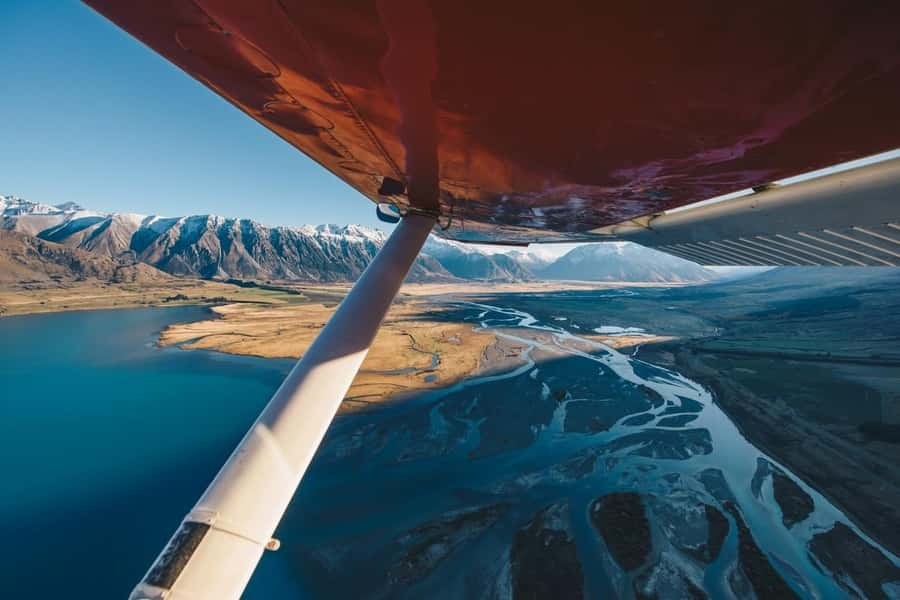
The flight then reaches the West Coast and tracks north toward the Tasman Sea. From this angle, Fox Glacier and Franz Josef Glacier become the main attractions. The aerial view helps you see the full length and setting of each glacier, rather than only the lower section accessible from the ground.
Fox and Franz Josef Glaciers from the air
Fox and Franz Josef Glaciers are among the most recognizable ice features on New Zealand’s West Coast. Seen from above, their importance is not just visual. You can understand how the ice moves between high mountain snowfields and lower valleys.
A flight is also useful here because access from the ground gives you only one angle at a time. From the air, you can see the glacier paths, the surrounding peaks, and the white upper reaches in one view. That wider perspective is the reason to choose a flight instead of relying only on roadside viewpoints.
The drawback is that aerial viewing can be brief and weather dependent. You will not stop for a long walk beside the ice, and you will not have time to study every feature. This is a survey from above, not a glacier hike.
Still, the 55-minute route gives these glaciers a proper place in the trip rather than treating them as a quick passing sight. One passenger described a ski plane landing and taking off from a glacier, which shows how memorable the flight can become when snow conditions and safety allow it. A glacier landing should be treated as a possible feature, not a guaranteed part of every departure.
More Scenic Helicopter Flights in Mount Cook:
- Helicopter Scenic Flight over Victoria Falls 12-13 minutes Flight
★ 5.0 · 1,391 reviews - Niagara Falls, Canada: Scenic Helicopter Flight
★ 4.8 · 1,068 reviews - Cairns: Great Barrier Reef Cruise & Scenic Helicopter Flight
★ 4.7 · 1,003 reviews - Cape Town: 12-Minute City Scenic Helicopter Tour
★ 4.8 · 853 reviews
Along the Tasman Sea, then back across the peaks
The route tracks north along the Tasman Sea before turning back across the Southern Alps. This return crossing keeps the flight from feeling like a simple out-and-back trip.
The change in direction gives you another chance to see the mountain chain from a different angle. Peaks that looked like a solid barrier on the first crossing begin to separate into ridges, valleys, and passes. A clear view can make the scale of the range easier to understand than any ground-level viewpoint.
You then return toward the Tasman Glacier, one of the main ice features on the eastern side of Aoraki Mount Cook National Park. The route follows the Tasman area before tracking south, bringing the flight back toward the central peaks.
This section is also where seat position may matter. A view on one side of the aircraft may be better for one group of peaks, while the opposite side may offer a stronger view later. Since the aircraft and seating arrangement can vary, you should not assume every passenger receives the same angle for the entire route.
Under Aoraki Mount Cook’s east face
The most dramatic section comes as the flight passes through the Grand Plateau and the Hochsteter Icefall, then travels beneath the east face of Aoraki Mount Cook.
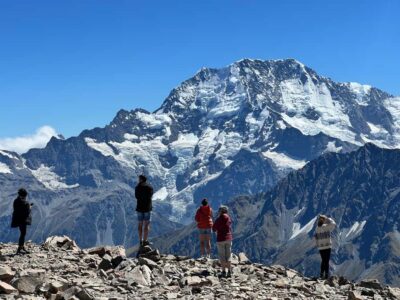
Aoraki Mount Cook is New Zealand’s highest mountain, and seeing its east face from the air gives you a very different impression than viewing the summit from a valley. The mountain rises from a complex setting of ice, ridges, and steep walls. Passing beneath the face makes the peak feel less like a distant postcard and more like part of a huge alpine system.
The Grand Plateau adds scale to the view. It is a broad high area of snow and ice, while the Hochsteter Icefall brings a more broken and dramatic texture. These features are difficult to appreciate fully from the ground, where distance and valley walls can hide their shape.
The route through this area depends heavily on safe flying conditions. If clouds or poor visibility move in, the operator may shorten or cancel the flight. One booking was canceled for safety reasons, and another flight was shortened before a later departure was canceled because of changing weather. The operator offers a full refund or a rescheduled flight when weather causes cancellation.
That flexibility is important, but it does not remove the risk of losing time on a tightly planned itinerary. I would avoid booking this as your only chance to see Mount Cook from the air if you have no spare time in the region.
Descending over the Tasman Terminal Lake
The flight finishes by descending over the Tasman Terminal Lake. This gives you a final look at the lower end of the Tasman Glacier system before returning to the departure area.
A terminal lake is a useful place to end the route because it shows where the glacier meets its lower valley environment. The views here are less about towering summit drama and more about seeing the full path from high ice to the lake below.
The final approach also gives you a chance to settle after the most intense mountain sections. Keep your camera ready, but do not spend the entire flight looking through a screen. Glare, reflections, and the aircraft frame can reduce the quality of your pictures. I would take a few photos, then watch the scenery directly.
Comfortable clothes are recommended. No special clothing list is provided, but you should avoid anything restrictive and be prepared for a compact aircraft environment. Bags and selfie sticks are not permitted, so carry only what the operator allows.
Helicopter or ski plane: which should you choose?
Your choice depends on the kind of flight you want.
A helicopter is appealing if you value close maneuvering and the ability to view mountain features from changing angles. The downside is that a rotor blade or aircraft structure may affect part of your view, depending on your seat. The poor visibility reported from one middle seat makes it sensible to ask about the cabin layout before boarding.
A ski plane has a stronger connection to alpine flying. A glacier landing or takeoff can turn the sightseeing flight into a more physical mountain experience, although the available information does not promise a landing on every flight. One passenger specifically found the glacier takeoff and landing memorable.
If the operator needs to change the aircraft, stay flexible. Safety comes first, and the company has moved passengers between aircraft when weather or operating conditions changed. One passenger who faced a shortened plane flight was later fitted onto a helicopter flight, creating another chance to fly.
The flight can also be rescheduled if the combined weight of the passengers reaches the aircraft’s maximum safety limit. This is uncommon, but it is worth knowing before you plan a fixed connection afterward. Passengers over 254 pounds, or 115 kilograms, are not suitable for this activity.
Is $447 a fair price?
At $447 per person, this is not a casual add-on. I would compare it with the cost of other major activities on your South Island trip and ask how much you value seeing the Southern Alps from above.
The price is easier to justify because the flight lasts 55 minutes and covers a wide route. You are not paying only for a view of Aoraki Mount Cook. You are also seeing the Main Divide, the West Coast, Fox Glacier, Franz Josef Glacier, the Tasman Glacier, the Grand Plateau, the Hochsteter Icefall, and the Tasman Terminal Lake.
The small group size adds value, especially for a special occasion or a first visit to Mount Cook. The English-speaking guide and live commentary also help you understand what you are seeing.
The price is harder to justify if your budget is tight, your schedule has no weather backup, or you are mainly hoping for one perfect photograph. A ground-based visit to Aoraki Mount Cook National Park can still be rewarding, and it avoids the risk of a canceled flight.
The strongest case for booking is that a scenic flight shows the full structure of the region in a short time. If you have limited time in the South Island and want to understand how the glaciers, peaks, and coast fit together, this flight offers a lot in one outing.
Who will enjoy this flight most?
I would recommend it to you if you value big scenery, want an aerial view of several glaciers, and can keep your schedule flexible. It suits photographers, couples, small groups, and anyone who wants a major highlight rather than another standard viewpoint.
It is less suitable if you dislike flying, need guaranteed departure times, or have limited mobility. The activity is not suitable for people with mobility impairments, and the operator requires passengers to remain within the stated weight limit.
You can cancel up to 24 hours before departure for a full refund, and you can reserve now and pay later. Those policies help reduce the risk of booking far ahead, though they cannot guarantee clear weather on the day.
The overall rating is 4.1 from six reviews, with the strongest praise focused on helpful staff, a good pilot, the excitement of glacier operations, and the company’s flexibility when weather changed. Those points match the practical picture: the flight can be superb, but mountain weather and aircraft seating are part of the deal.
Should you book this Mount Cook flight?
Book it if you want the broadest possible view of the Southern Alps in under an hour and can accept weather-related changes. The combination of Aoraki Mount Cook, two West Coast glaciers, the Tasman Glacier, and the chance of a ski plane or helicopter flight makes the route unusually full.
Before you confirm, ask about the aircraft, seating, and whether a glacier landing is expected or only possible. Leave spare time in your itinerary, avoid bringing a bag or selfie stick, and keep your camera ready without letting it replace the view.
I would choose this experience for a special day in the Mount Cook region, especially if you have not seen the Southern Alps from the air before. I would skip it only if the $447 price would strain your trip budget or if a weather delay would disrupt an important connection.
FAQ
How long is the scenic flight?
The flight lasts 55 minutes.
Is the flight by helicopter or ski plane?
You can take the flight by helicopter or ski plane. The aircraft used may depend on availability and operating conditions.
What mountains can I see?
The route includes views of Aoraki Mount Cook, Mount Tasman, and Mount Sefton.
Which glaciers are included in the route?
You can see Fox Glacier, Franz Josef Glacier, and the Tasman Glacier from the air.
Is a glacier landing guaranteed?
No. A passenger experienced a ski plane landing and takeoff from a glacier, but the provided information does not state that a glacier landing is included on every flight.
Can I use my phone or camera during the flight?
Yes. You can use your camera and phone during the flight.
Are bags and selfie sticks allowed?
No. Bags and selfie sticks are not allowed.
What happens if weather cancels the flight?
If the flight is canceled because of weather, you are offered a full refund or a rescheduled tour.
More Ski Trips in Mount Cook
- Mount Cook: Ski Plane and Helicopter Glacier Combo Flight
★ 4.6 · 271 reviews - 45-Minute Mount Cook Ski Plane and Helicopter Combo Tour
★ 4.5 · 107 reviews
Just added around Mount Cook
- Mount Cook Scenic 35 Minute Helicopter Flight★ 5.0 · 6 reviews
- Mount Cook: Mountains High 40-Minute Helicopter Flight★ 5.0 · 53 reviews
- Mount Cook: Alpine Vista Helicopter Flight with Alpine Landing★ 4.5 · 39 reviews
- Mount Cook Alpine Explorer Helicopter Flight with Alpine Landing★ 4.0 · 22 reviews
- Glentanner High Country Heli Hike★ 5.0 · 52 reviews
- Mount Cook: Tasman Glacier Helicopter Flight★ 4.3 · 7 reviews
- Mount Cook: 50-Minute Aoraki Scenic Helicopter Flight★ 4.7 · 10 reviews
- Mount Cook: Helicopter Flight with Alpine Landing★ 4.9 · 36 reviews
Scenic Helicopter Flights, compared.
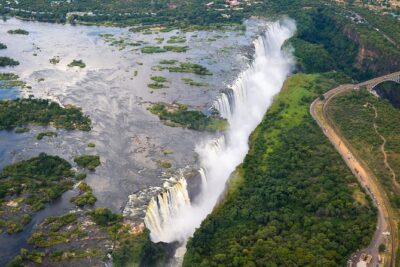
Helicopter Scenic Flight over Victoria Falls 12-13 minutes Flight
Read our review →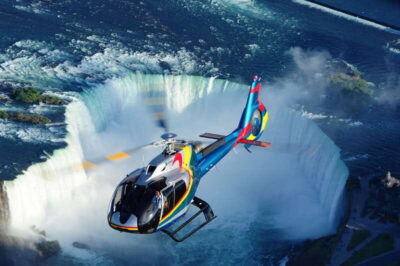
Niagara Falls, Canada: Scenic Helicopter Flight
Read our review →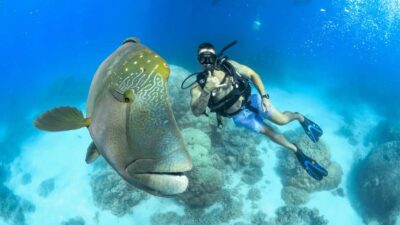
Cairns: Great Barrier Reef Cruise & Scenic Helicopter Flight
Read our review →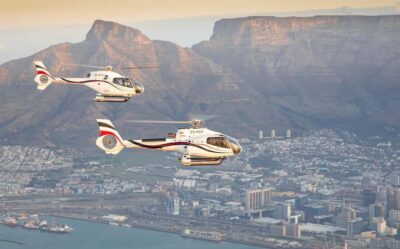
Cape Town: 12-Minute City Scenic Helicopter Tour
Read our review →
Mount Cook: Scenic Helicopter Flight with Alpine Landing
Read our review →Browse the lists this tour appears in