REVIEW · MOUNT COOK
Mount Cook: 50-Minute Aoraki Scenic Helicopter Flight
The best part of this flight is not simply seeing Aoraki/Mount Cook from above. It is the snow landing on the Tasman Glacier, where you step out into a quiet world of ice, rock, and high mountain air. From your seat, you may also see three glaciers, Lake Pukaki, the West Coast, and the Tasman Sea.
I like the wide reach of the route and the useful commentary from the pilot. I also like that the flight gives you a view of both sides of New Zealand’s South Island in less than an hour. The main drawback is weather, followed by seating: one passenger seated in the middle of the back reported very poor views, so ask about sightlines if that matters to you.
Key points to know before you fly
- The Tasman Glacier landing is the centerpiece: You get out onto snow high above the valley rather than viewing the ice only through a window.
- The route can stretch from coast to coast: On a clear day, you may see the wild Tasman Sea and the West Coast as well as Aoraki/Mount Cook.
- Three glaciers and Lake Pukaki are part of the view: The flight packs a great deal of South Island scenery into 50 minutes.
- Pilot commentary adds context: Pilot Tony received special praise for pointing out glaciers and mountains during the flight.
- Weather controls the experience: Cloud can block the biggest views, and all flights depend on safe conditions.
- Seat position may affect your photos: A middle-rear seat can limit your view, so it is worth asking about seating before boarding.
A 50-minute flight over Aoraki/Mount Cook National Park
This is a scenic helicopter flight with one clear goal: give you an airborne view of Aoraki/Mount Cook and the surrounding national park, then land on the Tasman Glacier.
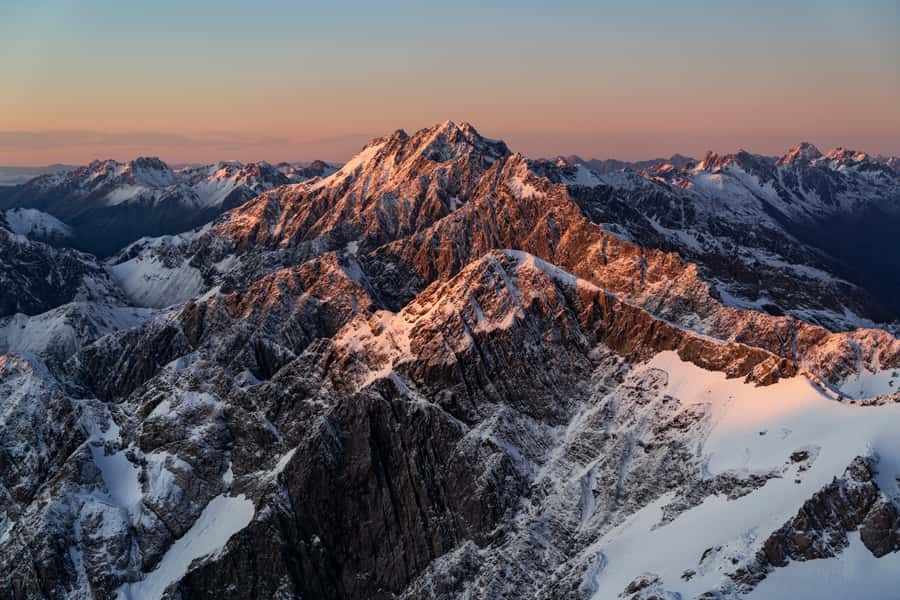
The flight lasts 50 minutes, which is long enough to make the trip feel like more than a quick look around the airfield. You will see ice, mountain ridges, glacial valleys, rivers of ice, and deep blue crevasses from above. The changing views are the point. From the ground, a glacier can appear as a distant white ribbon. From a helicopter, its folds, cracks, and steep edges become much easier to understand.
The route also reaches beyond the immediate Mount Cook area. On a clear day, you can see toward the West Coast and the wild Tasman Sea. That coast-to-coast perspective gives the flight real geographic value. You are not only looking at one famous peak. You are seeing how the Southern Alps divide the island and how the ice fields feed the valleys on either side.
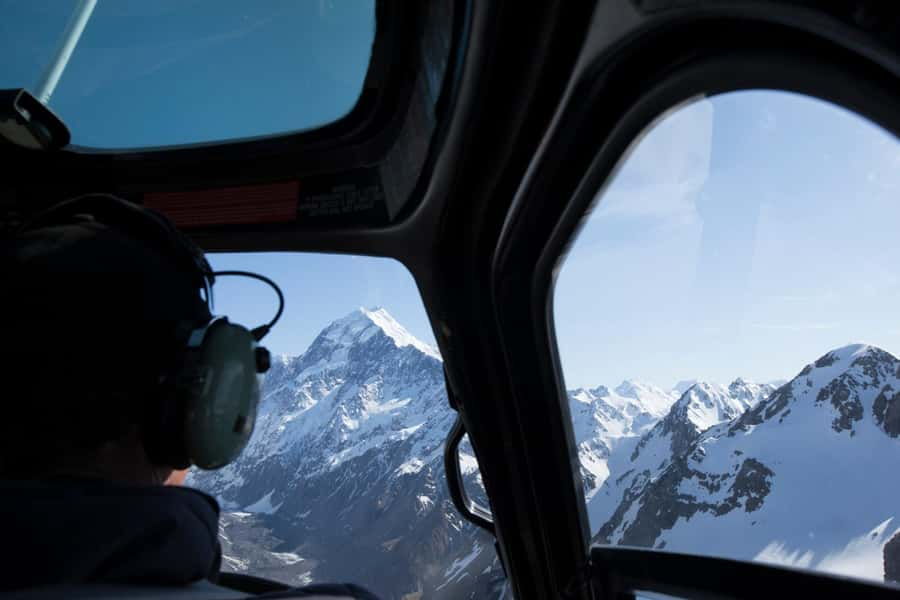
Your pilot provides commentary in English and points out the glaciers and mountains. That matters here because the scenery moves quickly. Without some guidance, it would be easy to photograph impressive peaks without knowing what you are seeing. Pilot Tony was singled out for informative commentary, particularly for identifying glaciers and mountain features.
More Mountain Helicopter Flights in New Zealand
- Mount Cook: Scenic Helicopter Flight with Alpine Landing
★ 4.8 · 442 reviews - Mount Cook: Ski Plane and Helicopter Glacier Combo Flight
★ 4.6 · 271 reviews - Mount Cook: 3 Hour Heli Hike to the Tasman Glacier
★ 4.7 · 218 reviews
The Tasman Glacier snow landing
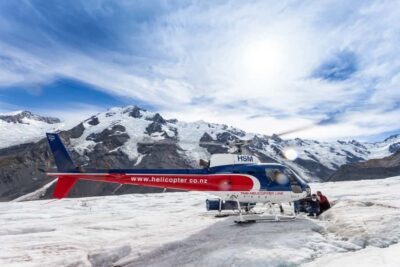
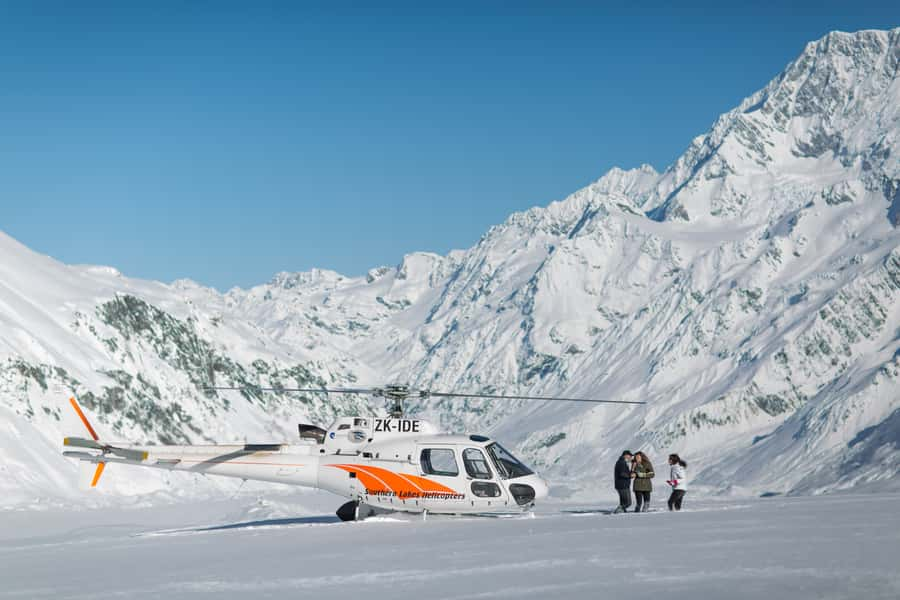
The landing on the Tasman Glacier is the experience’s defining moment. After viewing the ice from the air, the helicopter sets down on snow high on the glacier, allowing you to step outside and take in the setting directly.
I like this contrast. The flight gives you scale, speed, and a broad view. The landing slows everything down. You have a chance to look at the snow beneath your feet, the ice around you, and the high mountain setting without the helicopter window between you and the scene.
The quiet is part of the appeal. The description of natural silence is not just a poetic extra. A snow landing places you in a setting where the usual road noise and built surroundings are absent. For a short time, the glacier becomes the whole scene.
Bring comfortable shoes and clothing suited to the weather. The tour specifically recommends weather-appropriate clothing, and that is sensible even if conditions seem mild at the departure point. A glacier landing can feel very different from the valley below. Bring a camera, too, but do not rely only on your phone. A charged smartphone is also listed as something to bring, likely useful for photos and booking contact.
Drones and selfie sticks are not allowed. Bags are also not allowed, so plan to carry only what the operator permits. That rule may feel restrictive, but it reduces loose items around the aircraft and keeps the landing simple. Check what you can take with you before arriving rather than turning up with a full daypack.
Three glaciers, blue crevasses, and Lake Pukaki
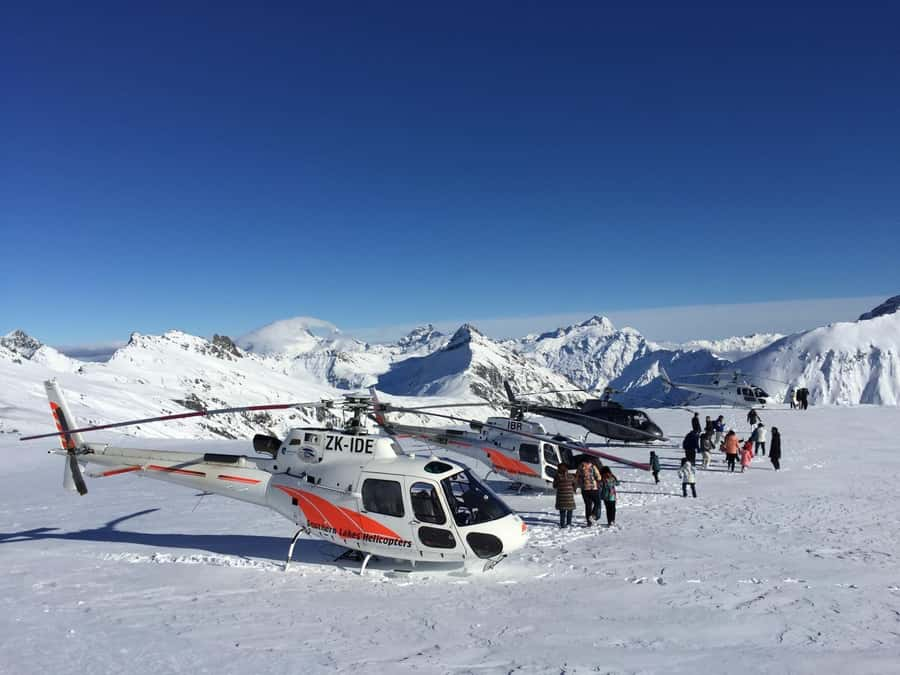
The flight is especially strong for people who want more than a single Mount Cook photograph. You will see three glaciers, along with hanging ice, broad rivers of frozen water, and the striking blue tones found in deep crevasses.
A helicopter view helps you read the shape of the ice. Hanging glaciers cling to steep mountain faces, while larger glacier systems flow through valleys. From above, you can see how the white and blue ice fits into the darker mountain terrain. The scenery is dramatic, but it is also useful for understanding how the park is formed.
Lake Pukaki adds a different note. The lake is not another glacier view, but it gives the route a broad, open contrast to the tight mountain valleys. Seeing it from above helps connect the famous lake with the surrounding peaks and ice fields.
The colors will depend heavily on the day. Bright weather can bring out the blue of the ice and the shape of the mountains. Cloud can flatten the view or hide the highest peaks. One passenger had a perfect-weather flight and called the glacier landing the highlight. Another flight faced cloud cover that blocked the full Ultimate Experience, though the pilot still made the flight as exciting as possible.
That is the honest trade-off with a mountain helicopter trip. The operator can fly only when conditions allow, but clear conditions are never guaranteed. You should book with the understanding that the route may be adjusted if cloud prevents safe or worthwhile access to the highest areas.
The coast-to-coast view
On a clear day, the flight can reveal both the West Coast and the Tasman Sea. This is one of the strongest reasons to choose the 50-minute option rather than a very short scenic flight.
The view from the air changes the way you understand the South Island. Aoraki/Mount Cook is part of a larger mountain system, and the flight lets you see that system from more than one direction. You may look across glaciated ridges toward one coast, then turn toward the other side of the island and the open sea.
I would treat this coast-to-coast view as a welcome possibility, not a promise. The tour information ties it to clear weather. If the day is cloudy, the mountain and glacier views closer to the flight area may be the best available part of the trip.
This is also why the pilot’s commentary matters. A quick look at the coast is far more useful when you know which side of the island you are seeing and how the mountain range shapes the view. The commentary is in English, and the experience is guided by a professional pilot throughout.
More Scenic Helicopter Flights in New Zealand
- Mt Cook: 55-Minute Scenic Flight in Helicopter or Ski Plane
★ 4.1 · 6 reviews - Bay of Islands and Hole in the Rock Scenic Helicopter Tour
★ 5.0 · 115 reviews - Fox Glacier: Scenic Helicopter Flight with Snow Landing
★ 4.7 · 107 reviews - Wanaka: Scenic Helicopter Flight with Glacier Experience
★ 5.0 · 42 reviews
Seating and the practical reality of helicopter views
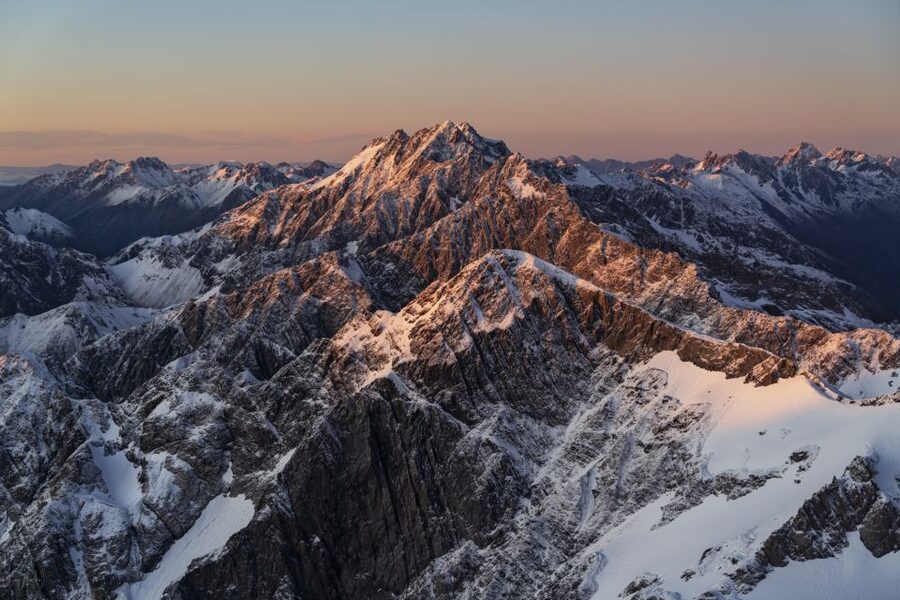
A helicopter flight is all about sightlines, so seating can affect how much value you get from the ticket. One passenger reported being seated in the middle of the back and being unable to see much. That is the clearest practical warning attached to this experience.
You may not be able to guarantee a particular seat, but you can ask about the arrangement when you arrive. If photography is important to you, ask how seats are assigned and whether windows can be opened or whether reflections may affect pictures. The available information does not promise specific seating, so do not book assuming you will have an unobstructed view in every direction.
Even with a less-than-perfect seat, the snow landing remains a major part of the trip. Still, the airborne portion is half the reason to pay for this experience, and a poor sightline can make the price feel harder to justify.
The meeting point is Southern Lakes Helicopters. Enter through the sliding doors and turn left. That simple instruction is useful because it avoids wasting time in the building before check-in.
Is $499 a good value?
At $499 per person, this is a major travel expense. I would not call it a casual add-on. The value comes from combining several experiences that would be difficult to arrange at ground level: a flight over Aoraki/Mount Cook National Park, views of three glaciers, possible coast-to-coast scenery, Lake Pukaki, and a snow landing on the Tasman Glacier.
The 50-minute duration helps. A short flight can feel over almost as soon as you have taken in the first mountain view. Here, the longer route gives the pilot time to cover more of the park and reach beyond the central peaks.
I think the price makes the most sense for you if Aoraki/Mount Cook is a major reason for visiting the South Island, or if you have limited time and want to see a large area in one outing. It is also a strong choice for anyone who cannot or does not want to hike into high mountain country but still wants to experience a glacier up close.
The value is weaker if you are mainly after a guaranteed photograph of the summit. Cloud may block the highest views, and a rear seat may limit your window. You are paying for access to a changing mountain experience, not a fixed show with guaranteed visibility.
The overall rating is 4.7 from 10 recorded ratings, with praise focused on the scenery, the glacier landing, and the pilot commentary. There was also a French-language note calling it a beautiful experience, and a German-language comment describing the flight over the mountain ridges and glaciers as especially spectacular. Those comments fit the design of the trip: the strongest elements are the flight itself and the landing, not extras on the ground.
Who should book this flight?
I would recommend it to photographers, first-time visitors to Aoraki/Mount Cook, and anyone who wants a high-impact view without spending a full day on a demanding hike. It also suits couples, families, and small groups looking for a memorable South Island activity, provided everyone is comfortable with helicopter travel and weather uncertainty.
It is particularly useful if you want to compare different parts of the park quickly. The route includes glaciers, a major lake, high peaks, and possible views toward both coasts. You get a sense of the area’s scale that a single valley walk cannot provide.
I would think twice if your budget is tight or if you need a guaranteed clear view. You should also consider the no-bag rule, the possibility of an unfavorable seat, and the fact that minimum numbers apply. The activity is wheelchair accessible, but you should still confirm any personal access needs when booking.
Flights are weather dependent. The booking allows free cancellation up to 24 hours in advance for a full refund, and you can reserve now and pay later. Those terms are helpful when mountain weather is part of the decision, but they do not remove the need for flexibility on the day.
You must provide the weight of every passenger for aircraft weight and balance. Give accurate information when booking. It is a normal and important part of safe flight operations.
My verdict on the Tasman Glacier flight
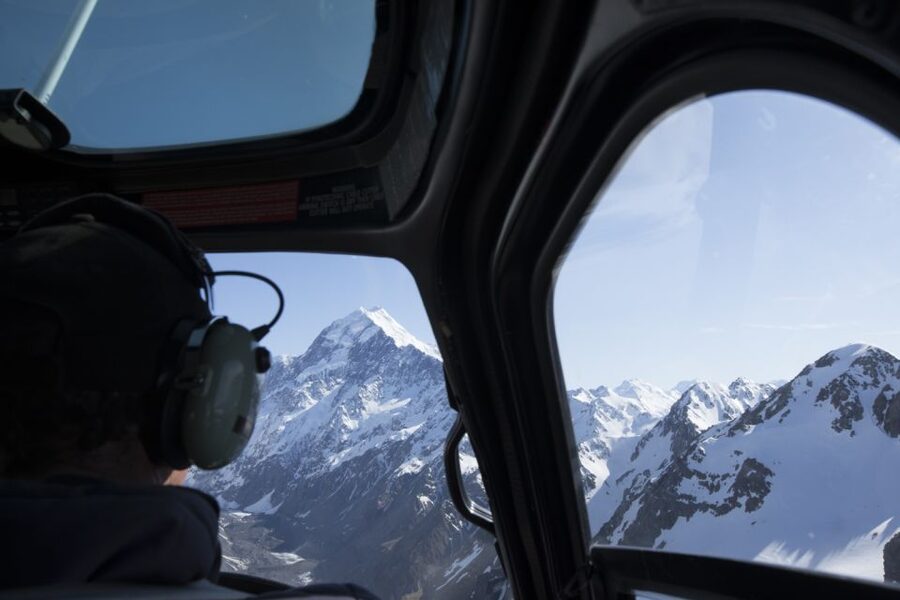
Book this tour if you want the full aerial picture of the Mount Cook region, not just a short pass over one peak. The snow landing gives the flight a real sense of place, and the possible views toward the West Coast and Tasman Sea make the 50-minute route feel substantial.
Book with realistic expectations. Cloud may change the route, and your seat may not offer the best window. Ask about seating, dress for the weather, leave the bags and selfie stick behind, and keep your schedule flexible.
At $499, this is a splurge. For the right visitor, it is a well-targeted one: a concentrated look at Aoraki/Mount Cook National Park, three glaciers, Lake Pukaki, and the Tasman Glacier under your feet.
FAQ
How long is the helicopter flight?
The scenic flight lasts 50 minutes.
Does the tour include a snow landing?
Yes. The flight includes a snow landing on the Tasman Glacier.
What might I see from the helicopter?
You may see Aoraki/Mount Cook, three glaciers, Lake Pukaki, hanging glaciers, rivers of ice, blue ice crevasses, and, on a clear day, the West Coast and Tasman Sea.
Is the flight available in languages other than English?
The live tour guide and in-flight commentary are in English.
Is the activity wheelchair accessible?
Yes, the activity is listed as wheelchair accessible.
What should I bring, and what cannot I bring?
Bring comfortable shoes, a camera, weather-appropriate clothing, and a charged smartphone. Drones, selfie sticks, and bags are not allowed.
More Scenic Helicopter Flights in Mount Cook
- Helicopter Scenic Flight over Victoria Falls 12-13 minutes Flight
★ 5.0 · 1,391 reviews - Niagara Falls, Canada: Scenic Helicopter Flight
★ 4.8 · 1,068 reviews - Cairns: Great Barrier Reef Cruise & Scenic Helicopter Flight
★ 4.7 · 1,003 reviews - Cape Town: 12-Minute City Scenic Helicopter Tour
★ 4.8 · 853 reviews
More Mountain Helicopter Flights in Mount Cook
- Mount Cook and The Glaciers 55-Minute Helicopter Flight
★ 4.5 · 133 reviews - Mount Cook: Mountains High 40-Minute Helicopter Flight
★ 5.0 · 53 reviews - Mount Cook: Alpine Vista Helicopter Flight with Alpine Landing
★ 4.5 · 39 reviews - Mount Cook: Helicopter Flight with Alpine Landing
★ 4.9 · 36 reviews
Just added around Mount Cook
- Mount Cook Scenic 35 Minute Helicopter Flight★ 5.0 · 6 reviews
- Mount Cook: Mountains High 40-Minute Helicopter Flight★ 5.0 · 53 reviews
- Mount Cook: Alpine Vista Helicopter Flight with Alpine Landing★ 4.5 · 39 reviews
- Mount Cook Alpine Explorer Helicopter Flight with Alpine Landing★ 4.0 · 22 reviews
- Glentanner High Country Heli Hike★ 5.0 · 52 reviews
- Mount Cook: Tasman Glacier Helicopter Flight★ 4.3 · 7 reviews
- Mt Cook: 55-Minute Scenic Flight in Helicopter or Ski Plane★ 4.1 · 6 reviews
- Mount Cook: Helicopter Flight with Alpine Landing★ 4.9 · 36 reviews
Mountain & Alpine Helicopter Flights, compared.
Franz Josef Glacier: Helicopter Flight & Alpine Landing
Read our review →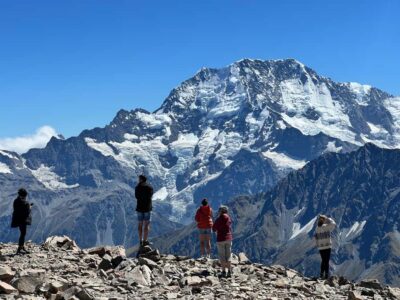
Mount Cook: Scenic Helicopter Flight with Alpine Landing
Read our review →
Volcano Adventure: Hilo Sightseeing w/ Optional Helicopter Tour
Read our review →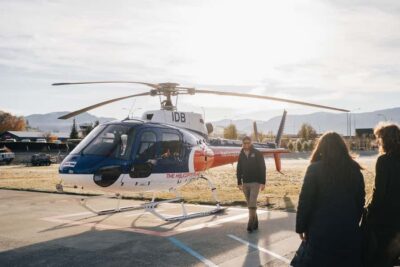
Queenstown: Pilot’s Choice Helicopter Tour & Alpine Landing
Read our review →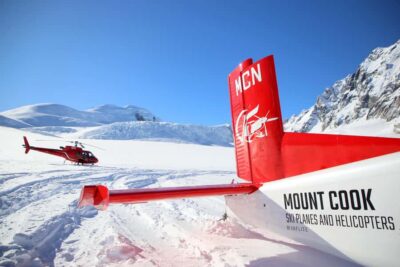
Mount Cook: Ski Plane and Helicopter Glacier Combo Flight
Read our review →
Helicopter Tour with Mountain Summit Landing from Reykjavik
Read our review →
Mount Cook: 3-Hour Tasman Glacier Helicopter Ride and Hike
Read our review →