
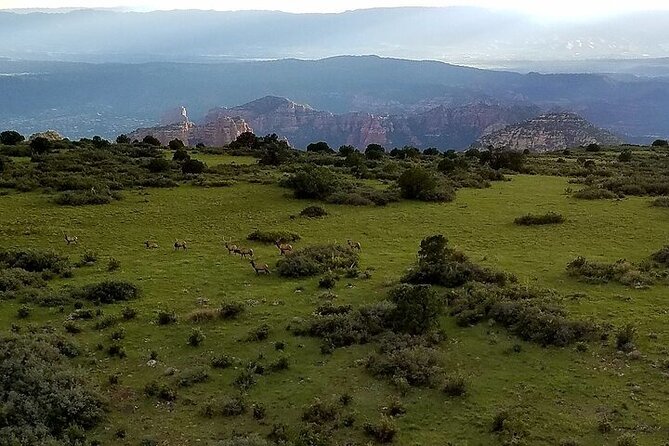
REVIEW · SEDONA
Secret Wilderness Sedona Helicopter Sunset Tour
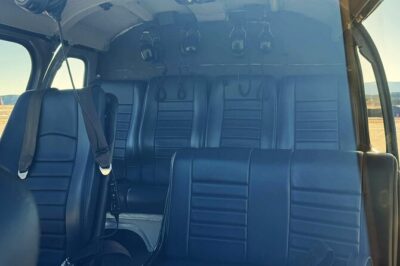
Sedona looks grand from the ground, but the sunset helicopter view puts its red-rock formations into a new frame. In about 35 minutes, you may see Cathedral Rock, Bell Rock, Devil’s Bridge, Soldier Pass, Boynton Canyon, and the Chapel of the Holy Cross, with trails and homes reduced to tiny marks below. I like the six forward-facing seats and the headsets, which make it easier to see and hear without craning around. I also like that pilots such as Josh and Steve have been praised for smooth flying and clear narration.
The main drawback is the price: $601 per person is a serious splurge for a short flight. Sunset timing and weather also matter, and the exact view can change with conditions. Still, if you have limited time in Sedona and want a broad look at its famous red rocks without a long hike, this is one of the most efficient ways to see them.
Key points to know before booking
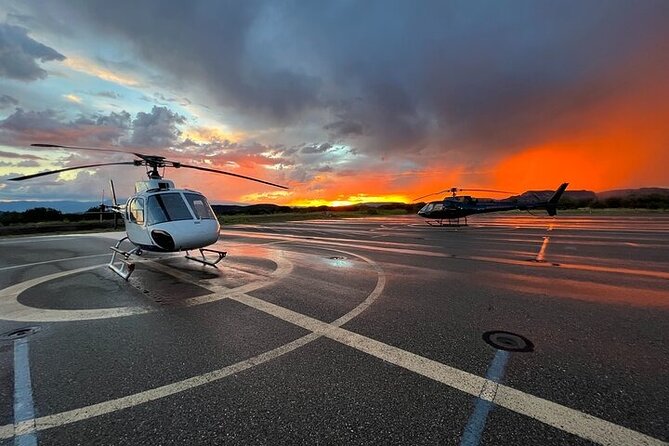
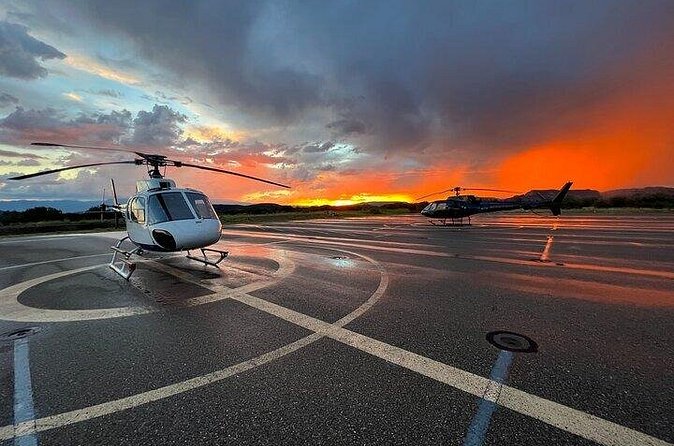
- A six-seat helicopter keeps the group small: Every seat faces forward, so you are not packed into a large sightseeing aircraft.
- The flight lasts about 35 minutes: That is enough for a sweeping aerial tour, but not a long, slow expedition.
- The route covers Sedona’s major red-rock sights: Expect views of Cathedral Rock, Bell Rock, Devil’s Bridge, Soldier Pass, Boynton Canyon, and the Chapel of the Holy Cross.
- Sunset is the main event: Late light can bring out the red and orange tones, but the experience depends on good weather.
- Noise-reducing headsets include microphones: You can hear the pilot and narration over the helicopter.
- The price buys time and access, not a full-day outing: At $601, this makes the most sense for a special occasion or a first, high-level look at Sedona.
Seeing Sedona in one wide sweep
The strength of this flight is simple: it lets you connect places that would take days to visit on foot or by road. From the air, Cathedral Rock, Bell Rock, Soldier Pass, Brins Mesa, Long Canyon, Boynton Canyon, and Doe Mountain become part of one large picture rather than separate stops on a map.
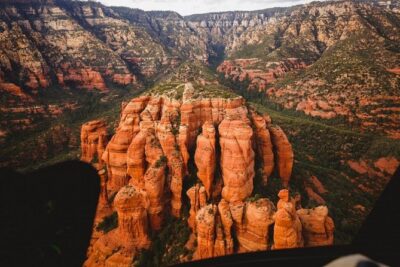
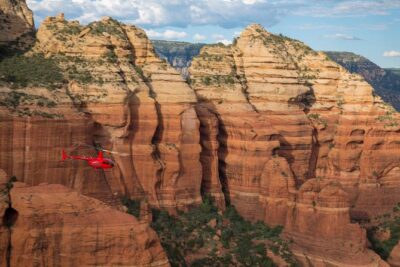
That broader view matters in Sedona. On the ground, red-rock formations often rise directly beside you, and a trail may show only one canyon wall at a time. From the helicopter, you can see the shape of a butte, the curve of a canyon, and the way a trail cuts across the desert.
You should think of this as a scenic flight rather than a landing tour. The helicopter does not take you out to hike, and the experience ends back at the airport meeting point. Its value comes from the views, the short travel time, and the chance to see Sedona’s famous sights without fighting for a trailhead parking space.
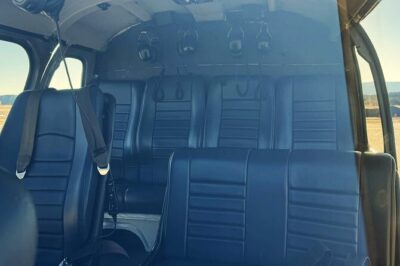
The flight begins at 1225 Airport Road in Sedona. The helicopter has six forward-facing seats, air conditioning, and headsets with microphones. Those details sound basic, but they matter. A forward-facing seat gives you a clear view ahead, while the microphone lets you hear the pilot’s explanation instead of guessing what you are looking at.
More National Park Trips in the USA:
- ATV Tour of Lake Mead National Park with Optional Grand Canyon Helicopter Ride
★ 5.0 · 102 reviews - 55 Mile – Helicopter Tour Around Zion National Park
★ 4.5 · 73 reviews - Denali National Park: Helicopter Flight with Glacier Landing
★ 5.0 · 64 reviews
Cathedral Rock and Bell Rock from above
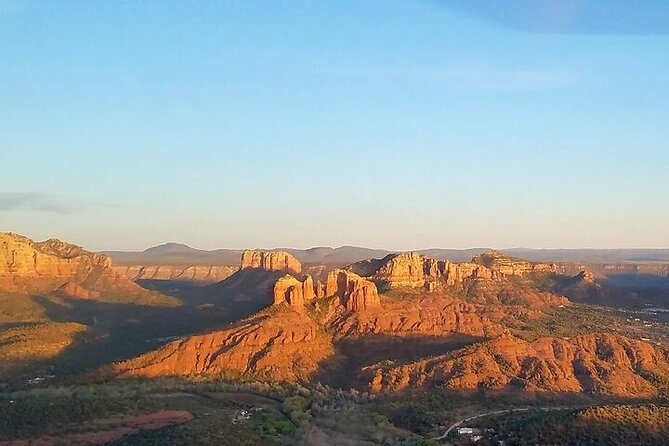
Cathedral Rock is one of Sedona’s most recognizable formations, a large sandstone butte that appears in countless photographs of Arizona. From the air, its broad shape makes more sense than it does from a nearby trail. You can appreciate the stone towers and the surrounding open space in one glance.
Bell Rock offers a different profile. Located north of the Village of Oak Creek and south of Sedona, it rises as a distinct butte with a broad, bell-like form. The aerial view helps you see why the formation is so easy to recognize from different points around the area.
The route also follows the area around Bell Rock, where a trail makes a gentle climb, curves west of the butte, and levels out below its northern slopes. You will not be hiking this route during the helicopter ride, but seeing the trail’s position gives you a useful sense of the terrain. It is a good reminder that Sedona’s famous views are not isolated rocks. They are part of a wide network of ridges, paths, and valleys.
For photographers, this section of the trip should be especially appealing. The changing light can pick out the edges of the sandstone, while the higher angle shows the relation between Bell Rock and the surrounding desert.
The Chapel of the Holy Cross and Sedona’s human touch
The Chapel of the Holy Cross is one of the area’s most unusual sights. Built between 1954 and 1956 into Sedona’s red-rock buttes, the Roman Catholic chapel appears to grow from the stone rather than sit apart from it.
The aerial perspective is useful here because you can see both the structure and its setting. The chapel was inspired and commissioned by local rancher and sculptor Marguerite Brunswig Staude, with design work by August K. Strotz of Anshen & Allen and project architecture by Richard Hein. It is under the Roman Catholic Diocese of Phoenix, with ministry conducted by St. John Vianney Parish in Sedona.
You will not get the same close architectural detail that you would from the ground. Instead, the helicopter gives you context: the chapel’s position within the buttes and the way the building fits the red-rock setting. If you have already visited the chapel, the flight adds a new angle. If you have not, it may help you decide if a ground visit belongs on your itinerary.
This is also one of the places where the sunset timing can make a real difference. Warm light on the rock can sharpen the contrast between the chapel and its surroundings, though cloud cover and the exact flight time will affect what you see.
Soldier Pass, Devil’s Bridge, and the trail country
Soldier Pass is known for several striking features, including Devil’s Kitchen and the Seven Sacred Pools. A flight over this area lets you see the formations without taking on the trail itself.
Devil’s Kitchen is a natural sinkhole, while the Seven Sacred Pools are a series of rock basins. From the air, these features may be easier to place within the wider terrain than they are from a trail. You can also see the kind of rugged country that attracts jeep tours and off-road vehicles near Soldier Pass.
Devil’s Bridge is the largest natural sandstone arch in the Sedona area. Its name is a little dramatic, but the formation is genuinely impressive. The aerial view is one of the best reasons to choose a helicopter over a regular drive. From above, you can see the full arch and the surrounding rock rather than waiting in line for a ground-level photograph.
Some routes in this part of Sedona are demanding. One listed out-and-back trail covers 2 miles and is considered highly challenging, suitable only for experienced adventurers. Another loop covers 3 miles and is considered moderately challenging, taking about 1 hour and 15 minutes on average. The flight does not require that effort, which is a major part of its appeal for anyone with limited mobility, limited time, or no interest in a strenuous hike.
More Evening Flights in the USA:
- Las Vegas Helicopter Night Strip Flight Tour with Optional Dinner
★ 4.5 · 5,693 reviews - Las Vegas: Night Helicopter Flight over Las Vegas Strip
★ 4.6 · 1,566 reviews - Las Vegas: Helicopter Night Flight over the Strip
★ 4.7 · 1,565 reviews - Las Vegas Strip Helicopter Night Flight
★ 4.5 · 1,487 reviews
Brins Mesa, Seven Canyons, and Doe Mountain
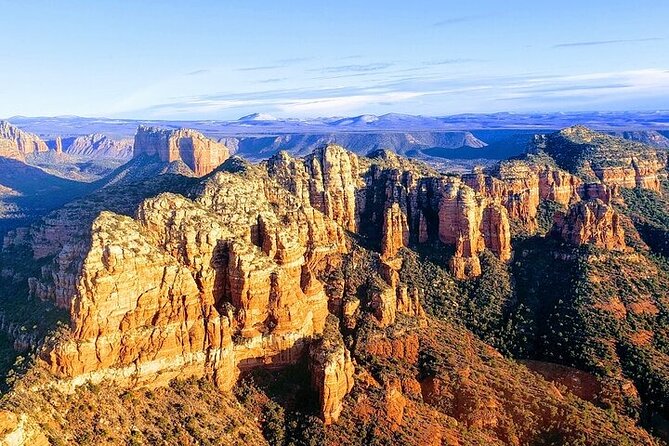
Brins Mesa is known for broad red-rock views and access to trails such as Brins Mesa and Soldiers Pass. From the helicopter, you can see how the mesa relates to the surrounding canyons and ridges. That is difficult to grasp from a trail, where the view is often framed by nearby rock walls.
Seven Canyons combines nature with a private golf club and residential community. It is a different side of Sedona from the open trail country, with homes, golf, and outdoor recreation sharing the same red-rock setting. The aerial view gives you a quick sense of how development fits among the formations.
Doe Mountain is a flat-topped mesa near the Boynton Pass area. Its hike is considered moderately challenging and offers wide views of the red rocks and Verde Valley. From the helicopter, you see the mesa’s level top and steep sides without making the climb.
I like this part of the route because it shows that Sedona is not just a collection of famous rocks. It is a mixture of public trails, private areas, residential zones, and broad desert spaces. The flight helps you understand that layout quickly.
Cockscomb, Long Canyon, and Boynton Canyon
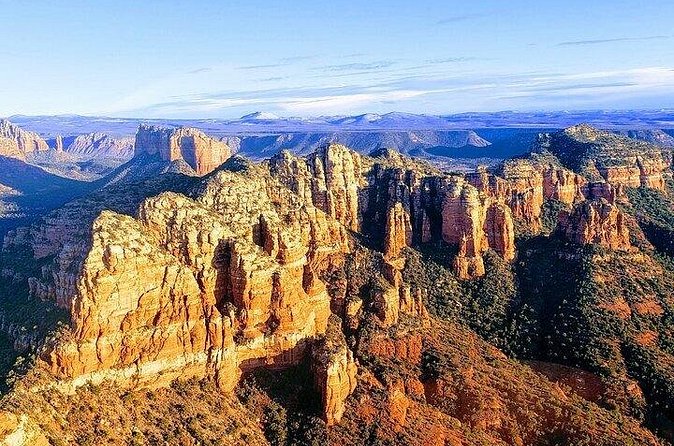
Cockscomb Butte, also known as Cockscomb, is a prominent summit at Sedona’s southern end. It is one of the last major peaks you encounter when heading south through the area. From above, its shape becomes easier to distinguish from the surrounding formations.
Long Canyon is also included in the aerial route. The geographic description associated with this canyon places it in Navajo County, well away from central Sedona, so you should treat the route information carefully rather than assume every named point is a separate landing or exact timed stop. The helicopter experience is a scenic circuit, not a hop-on, hop-off tour.
Boynton Canyon is one of the area’s best-known box canyons. Its trail is easy to reach from nearby towns on paved roads, which has helped make it popular. From above, you can see the canyon’s enclosed form and the red-rock walls that make this kind of terrain so distinctive.
These sections are most valuable if you want orientation. You may not remember every name after a short flight, but you will come away with a clearer picture of how Sedona’s major canyons and buttes fit together.
Birthing Cave and the quieter side of the route
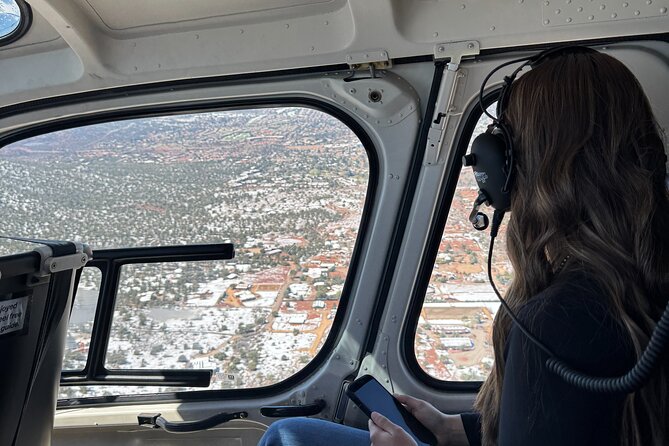
Birthing Cave offers a gentler contrast to the more demanding trails. The route to the cave is generally flat and family-friendly, with a few rocky steps near the end. Small children may need help at that final section.
The cave itself gives hikers views back toward Sedona from inside the rock. From a helicopter, you will not have that same enclosed viewpoint, but you can see another part of the area’s trail network and the open spaces around it.
This is a useful reminder that the tour is not only about the biggest formations. It also covers smaller features and hiking areas that you might otherwise miss if you have only one day in town.
What the sunset timing adds
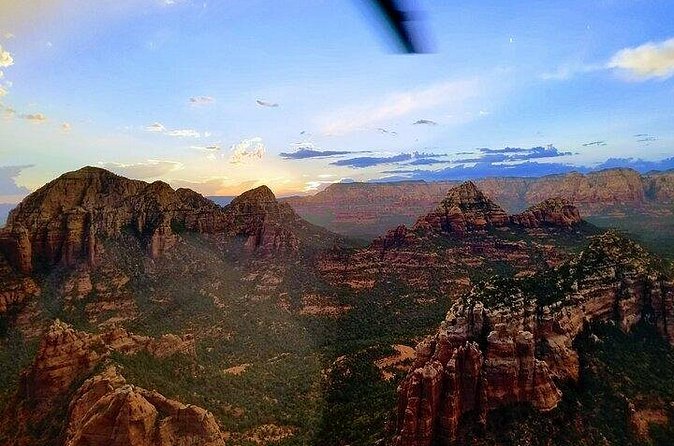
A sunset flight is not just a daytime tour with a later departure. The low light can bring out more color in the sandstone and create longer shadows across the canyons. That can make the formations look more three-dimensional than they do under harsh midday sun.
The tradeoff is predictability. This experience requires good weather, and poor conditions can lead to a cancellation, a new date, or a full refund. Even with clear skies, the exact quality of the sunset depends on the day.
I would book this near the end of a Sedona stay only if you have flexibility. If the flight is a major reason for your trip, schedule it early enough that a weather-related change is possible.
Is $601 a fair price?
At $601 per person, this is expensive. A 35-minute flight is not a budget activity, and the cost may be hard to justify if you are mainly looking for a quick thrill.
The value improves in three situations. First, you have only a short time in Sedona and want to see many major sights without spending hours on roads and trails. Second, you are celebrating something special and want a memorable experience rather than another standard sightseeing stop. Third, hiking long or difficult trails is not practical for you, but you still want to see Devil’s Bridge, Soldier Pass, Boynton Canyon, and the larger red-rock formations.
The six-seat layout also gives the flight a more personal feel than a large aircraft. It does not make the price low, but it does mean you are not paying for a distant view through a crowded cabin.
What to know before you go
Your total weight per passenger must be 229 pounds or less. Service animals are allowed, and the tour is near public transportation. Most people can participate, but the helicopter setting may not suit everyone.
Noise-reducing headsets with microphones are provided. Air conditioning is also available, which is useful in Sedona’s warm climate. Gratuity is not included.
The names associated with recent flights include pilots Josh and Steve, along with hosts or check-in staff such as Connor and Tali. Staff help with getting you safely to the tarmac and into the helicopter, while the pilot handles the flight and narration. You should not assume a particular person will operate your tour, but these names give you an idea of the team members connected with the experience.
Free cancellation is available when you cancel at least 24 hours before the start time. Changes or cancellations inside that window are not accepted for a refund. If poor weather cancels the flight, you can choose another date or receive a full refund.
Who should book this helicopter tour?
I would recommend it to someone who wants a fast, dramatic introduction to Sedona and is willing to pay for it. It is also a strong choice for a special occasion, for anyone unable to tackle the area’s harder hikes, or for a returning visitor who wants a different view of familiar places.
I would skip it if your budget is tight, if you prefer slow walks and close contact with nature, or if you need a long activity to justify the cost. Thirty-five minutes passes quickly, even when the views are excellent.
Book this Secret Wilderness Sedona Helicopter Sunset Tour if your priority is seeing many major formations in a short time, with a small group and clear aerial narration. Skip it if $601 would force you to cut better-value hikes, meals, or lodging from the rest of your trip.
FAQ
How long is the Secret Wilderness Sedona Helicopter Sunset Tour?
The flight lasts approximately 35 minutes.
Where does the tour begin?
You meet at 1225 Airport Road, Sedona, Arizona 86336.
Where does the tour end?
The activity ends back at the meeting point.
How many people can join the tour?
The helicopter has six forward-facing seats, and the tour accepts a maximum of six travelers.
What sights are included?
The route features Sedona sights and areas such as Cathedral Rock, Bell Rock, the Chapel of the Holy Cross, Brins Mesa, Soldier Pass, Devil’s Bridge, Seven Canyons, Doe Mountain, Cockscomb Butte, Long Canyon, Boynton Canyon, and Birthing Cave.
Are headsets provided?
Yes. Noise-reducing headsets with microphones are included.
Is the helicopter air-conditioned?
Yes, the helicopter is air-conditioned.
Are service animals allowed?
Yes, service animals are allowed.
What happens if bad weather cancels the flight?
You can choose a different date or receive a full refund if poor weather causes the cancellation.
Just added around the USA
- Zion National Park and Canaan Cliffs: Helicopter Tour★ 4.7 · 22 reviews
- Zion National Park, Canaan Cliffs: Extended Helicopter Tour★ 4.5 · 4 reviews
- Zion National Park: 10- or 20-Minute Scenic Helicopter Tour★ 4.9 · 55 reviews
- West Maui and Molokai Special 45-Minute Helicopter Tour★ 5.0 · 9 reviews
- Waikoloa: Big Island Spectacular Helicopter Tour★ 4.5 · 5 reviews
- Oahu: Waikiki 20-Minute Doors On / Doors Off Helicopter Tour★ 4.9 · 32 reviews
- Las Vegas: Valley of Fire Helicopter with Scenic Landing★ 5.0 · 2 reviews
- Hudson Valley Fall Foliage Helicopter Tour from Westchester (Shared)★ 4.0 · 2 reviews
Sedona Helicopter Tours, compared.
Everything Sedona (20+ Mile) – Sedona Helicopter Tour
Read our review →
Ancient Sedona (30+ Mile) – Sedona Helicopter Tour
Read our review →
Secret Wilderness (45+ Mile) – Sedona Helicopter Tour
Read our review →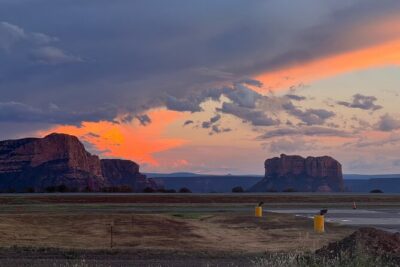
Mogollon Rim (80+ Mile) – Sedona Helicopter Tour
Read our review →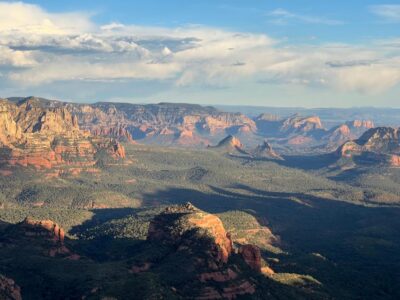
Secret Wilderness – 45 Mile Helicopter Tour in Sedona
Read our review →Browse the lists this tour appears in