
REVIEW · AUSTRALIA
Port Douglas: Great Barrier Reef 30-Minute Helicopter Flight
From the air, the Great Barrier Reef becomes a huge patchwork of blue water, pale sand and coral gardens. This 30-minute helicopter flight gives you a quick but powerful look at the reef, with views stretching from Port Douglas and Four Mile Beach to Low Isles and Batt Reef. I like the small six-person limit, which keeps the flight more personal, and I like that pilots such as Brooke, Brie, Bruno and Matt have been praised for clear commentary and careful flying.
The main drawback is time. Thirty minutes passes quickly, and this is a shared flight, so you cannot count on a window seat or a private route. You also need to arrive 45 minutes early, and the meeting point can be a little confusing if you are not told clearly whether to go to the Sheraton Mirage lobby shop or the helipad across the highway.
Key points at a glance
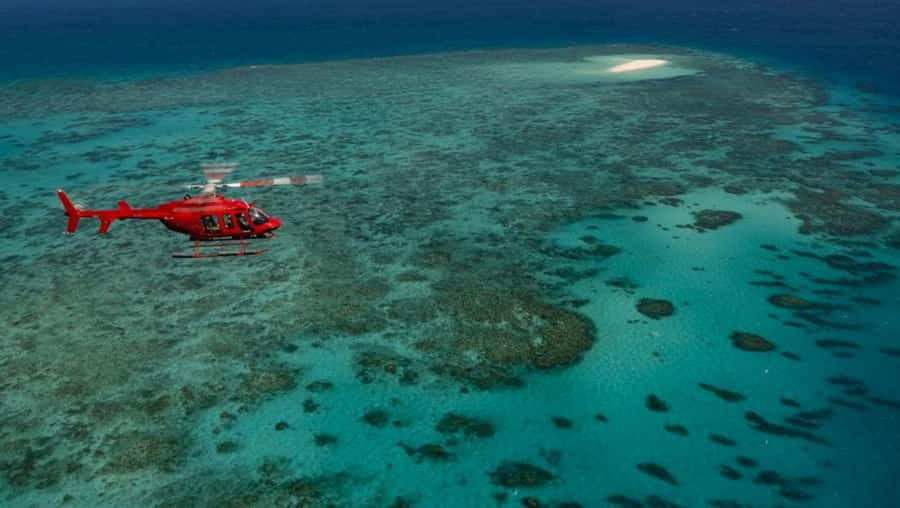
- Low Isles from above: See two coral cay islands, about 55 acres of fringing reef and the historic lighthouse built around 1878.
- Batt Reef wildlife search: Use the aircraft’s broad view to look for turtles, sharks, manta rays, dolphins, dugong and, from July to September, humpback whales.
- A small shared flight: The helicopter carries no more than six participants, though seating is assigned and a window place is not guaranteed.
- Pilots who explain what you see: Live English commentary helps turn a scenic flight into a short reef lesson, with pilots answering questions and adjusting the route around sightings when possible.
- A strict airport-style schedule: Check in 45 minutes before takeoff. Check-in closes 30 minutes before departure, with no late entry.
- A useful weather backup: You can cancel up to two days before departure for a full refund, subject to the stated booking conditions.
Port Douglas to the reef in one short flight
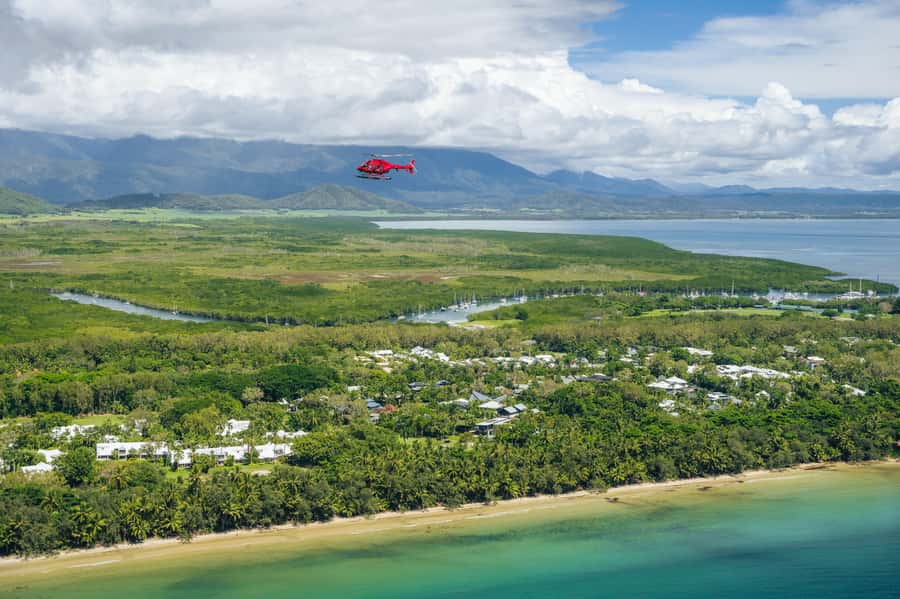
The flight begins around Port Douglas, giving you a bird’s-eye view of the town and its long sweep of Four Mile Beach. From high above, the coast provides an easy introduction to the reef: land, beach and open sea sit in clear layers before the helicopter heads farther out.
I like this opening because it gives you some visual bearings before the reef takes over. You are not simply looking at water from the first second. You see where Port Douglas sits in relation to the coast, then watch the sea change from ordinary coastal blue to the more varied colors created by sand, coral and shallow water.
The helicopter’s air-conditioned cabin and headsets matter here. Aircraft noise can make normal conversation difficult, so the voice-activated microphones let you hear the pilot’s running commentary and ask questions. The commentary is in English, and the pilot is also your guide to spotting marine life.
The flight is shared rather than private. That helps keep the price lower than a charter, but it also means the pilot must balance the views of everyone aboard. One useful detail from the flight experience is that pilots may circle around something spotted in the water so each passenger has a fair chance to see it. That does not guarantee a perfect photograph, but it makes a sighting more useful than a quick glimpse during a straight pass.
More Coastal Helicopter Tours in Australia
- Cairns: Great Barrier Reef Cruise & Scenic Helicopter Flight
★ 4.7 · 1,003 reviews - Full Day Reef Cruise and 10 Minute Helicopter Scenic Flight
★ 4.5 · 340 reviews - Gold Coast: Coastal City Scenic Helicopter Flight
★ 4.8 · 151 reviews
Four Mile Beach and Port Douglas from above
Four Mile Beach is one of the first major sights on the route. From the ground, it is a long beach backed by the Port Douglas area. From the helicopter, its shape becomes the point: a broad pale strip marking the edge of the forest and the sea.
This part of the flight is especially good for first-time visitors who want a sense of place. You can see how compact Port Douglas is compared with the open reef beyond it. If you are taking photographs, this is a good time to settle your camera settings before the helicopter reaches the brighter water farther offshore.
Bring sunglasses. Glare from the sea can be strong, and the light changes quickly as the helicopter turns. A small daypack is allowed, but loose items should be kept secure. Binoculars are also recommended, though you should not expect them to replace the view from the aircraft. Marine animals can be small from this height, and your pilot’s help is valuable.
The flight is not built around a landing at the beach or any time on the islands. You remain in the helicopter throughout the scenic route. That makes the experience efficient, but it also means you are buying an aerial view rather than a reef visit involving swimming, snorkeling or walking.
Low Isles and its 1878 lighthouse
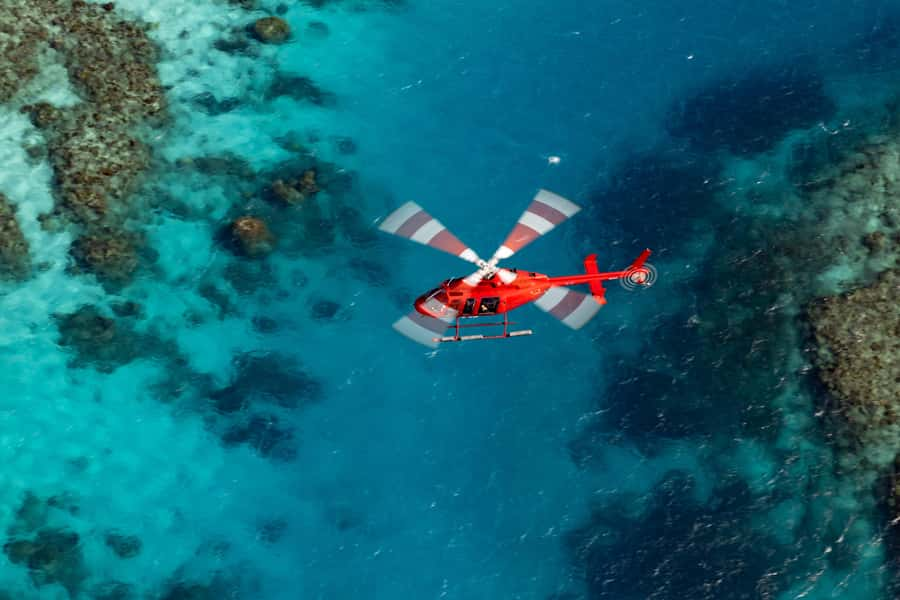
Low Isles is one of the most appealing parts of the route because it gives you several details to look for at once. The area consists of two coral cay islands, around 55 acres of fringing reef and a lighthouse dating from about 1878.
From above, the contrast between the small islands and the surrounding reef is the main attraction. The coral cays appear as small landforms surrounded by shallow water, while the reef creates irregular shapes around them. This is where the helicopter view earns its price. A boat can show you one patch of water at a time. From the air, you can take in the full outline.
The lighthouse adds a human detail to an otherwise natural scene. It also gives you a fixed point to identify as the helicopter passes over. Listen closely to the pilot’s explanation here, since the value of this part is not only the color of the water but also understanding what you are looking at.
Aerial color can be hard to judge in photographs. Bright sun, reflections and aircraft windows affect what your camera records. I would treat photographs as a bonus and keep some attention on the view itself. The reef’s changing shades are often easier to appreciate with your own eyes than through a phone screen.
Batt Reef and the search for marine life
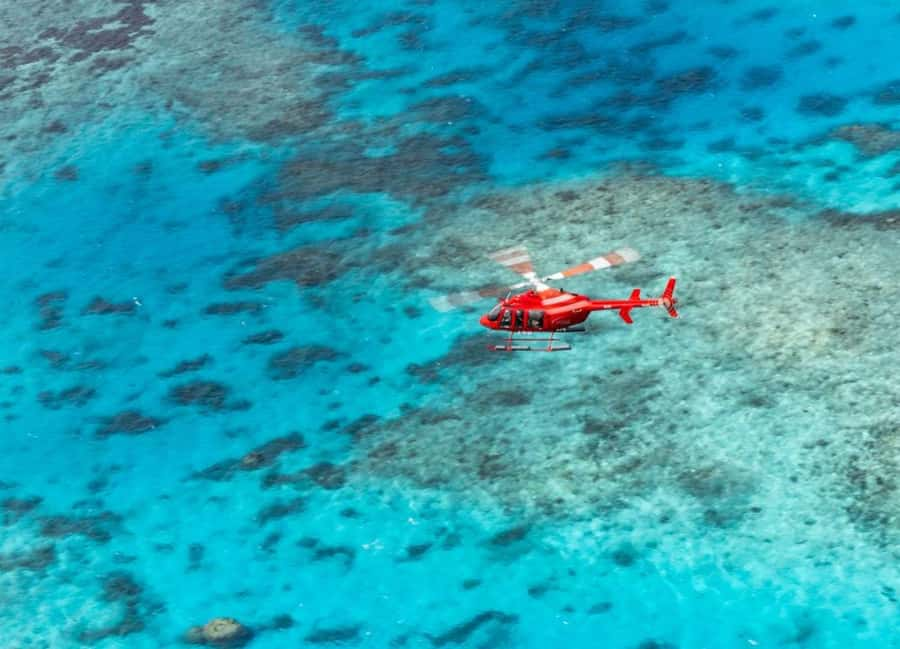
The route continues to Batt Reef, where the pilot helps you look for larger animals. From high above, turtles and sharks may be easier to spot because you can scan a wide area at once. Manta rays, dolphins and dugong are also possible sightings, while humpback whales may be seen from July through September.
The key word is possible. This is a scenic flight, not a wildlife guarantee. Animals move, weather affects visibility and some species are difficult to detect from the air. Still, the helicopter gives you a useful advantage: you can search broad stretches of water quickly rather than waiting beside one reef area.
I like the way this turns the flight into an active search. You are not only admiring blue and green water. You are listening for a direction from the pilot, scanning the sea and trying to pick out movement or a dark shape below. Pilots have been praised for answering questions and maneuvering around sightings so passengers can get a better view.
If you want to see humpback whales, July through September is the relevant season stated for this experience. That does not promise whales on a particular departure, but it gives you a sensible time to book if whales are high on your list. For turtles, sharks and other animals, no fixed season is provided, so keep your expectations open.
Same place, a different flight path:
- Sydney Harbour Scenic Helicopter Flight
★ 5.0 · 649 reviews - Uluru 15-Minute Helicopter Experience
★ 4.9 · 548 reviews - Yulara: Uluru & Kata Tjuta 25-Minute Helicopter Experience
★ 4.8 · 536 reviews - Sydney: 20-Minute Shared Helicopter Ride over Sydney Harbour
★ 4.8 · 226 reviews
What the six-person limit really means
The tour is limited to six participants, which is a strong feature for a short flight. A smaller group generally makes check-in and boarding easier than a large aircraft operation, and the pilot’s commentary feels more direct when only a few people are listening.
You should still remember that this is not a private helicopter. Other passengers share the flight, and seating is not guaranteed by the booking information. If a window seat matters greatly to you, this uncertainty is worth considering before you pay.
The crew handles the practical side carefully. Ground staff take passengers through the briefing and help with boarding. A ground crew member may also take photographs by the helicopter before you get in. That gives you a small memento of the experience, though the included items are the flight, commentary, headsets and aircraft service, not a stated photo package.
The aircraft are modern and air-conditioned. You receive a headset with a voice-activated microphone, so you can hear the pilot and speak when appropriate. Several pilots have been singled out for smooth takeoffs and landings, clear explanations and a friendly manner. That matters on a flight this short because a rushed or confusing briefing would use up part of your limited time.
Price, timing and the practical trade-off
At $322 per person, this is not a casual add-on for every Port Douglas holiday. You are paying for a short flight, not a full-day reef cruise or an activity with time in the water. The price makes the most sense if you value seeing the Great Barrier Reef’s overall shape and color from above.
I see two good reasons to choose it. First, you get a broad view in only half an hour, which suits a tight schedule. Second, the helicopter can give you a better chance of spotting larger marine animals from the air. If you already have a snorkeling trip planned, this flight adds a different view rather than repeating the same experience.
The value is weaker if you want close contact with the reef. You will not swim, snorkel, walk on Low Isles or spend time on a boat. You also cannot rely on seeing a specific animal. In that case, compare the flight with your other reef plans and decide if the aerial perspective is worth the extra cost.
Allow more time than the stated 30 minutes. You should check in 45 minutes before departure, and check-in closes 30 minutes before takeoff. Missing the closing time can mean missing the flight and losing the fare. Confirm the exact meeting point in advance: it may be the lobby shop at Sheraton Mirage or the helipad across the highway.
Hotel pickup and drop-off from Port Douglas are not included. You need to arrange your own way to the meeting point. The operator may require a minimum number of passengers, so a departure can be canceled after confirmation if that minimum is not met. In that case, an alternative or full refund is offered.
Weight limits and what to bring
Passenger weight and the weight of any accompanying carry-on bag must be provided when booking. The maximum single-seat weight is 130 kilograms, including carry-on luggage.
If you exceed 130 kilograms, you must purchase an additional seat at 50 percent of the ticket price, payable to the local partner on the day. This is important to settle before arrival, since it affects both aircraft balance and the final cost.
Bring sunglasses, a daypack and binoculars. Smoking, food and drinks are not allowed, and the restrictions also include drones, selfie sticks, non-folding strollers, bicycles, alcohol, drugs and fireworks. These rules are easy to follow, but the drone restriction is worth noting if you have been using one along the Queensland coast.
The experience is not described as private or specifically adapted for every mobility need. If you have a particular accessibility requirement, ask the operator before booking rather than assuming the small group format will solve it.
Who will get the most from this flight
I would choose this for someone who wants a clear overview of the reef but has only a short window in Port Douglas. It also suits photographers who want aerial patterns, couples seeking a memorable splurge and families with older children who can follow a safety briefing and sit through a short flight.
It is a good choice if you are nervous about spending a full day on the water. The flight is brief, and the smooth takeoff and landing noted by passengers may reassure you. Still, anyone prone to motion sickness or uneasy in helicopters should consider whether a short flight is right for them.
You should also book with realistic wildlife expectations. The pilot will help you search, but the reef is not a zoo. The reward is the overall scene, with any turtle, shark, ray, dolphin, dugong or whale sighting adding to it.
The experience has received a 4.7 out of 5 rating from nine completed ratings, with the strongest praise focused on friendly ground staff, capable pilots, clear commentary, smooth flying and good organization. One practical weakness was confusion about where to meet, so take that seriously and confirm the location before the day.
Should you book the Port Douglas helicopter flight?
Book it if you want to see the Great Barrier Reef as a whole, not just from water level. The views over Four Mile Beach, Low Isles and Batt Reef give you a fast sense of how the coast, coral cays and open reef fit together. The six-person limit and live pilot commentary add more value than a simple flyover.
Skip it if $322 feels too high for 30 minutes, if you need a guaranteed window seat or if your main goal is swimming and snorkeling. For everyone else, this is a polished short experience with a real sense of place. Confirm the meeting point, report your weight accurately, arrive early and bring sunglasses. Then let the pilot handle the search while you watch the reef change below.
FAQ
How long is the helicopter flight?
The scenic flight lasts 30 minutes. You should allow extra time for check-in, the safety briefing and boarding.
Where does the experience meet?
The meeting point may be the lobby shop at Sheraton Mirage or the helipad across the highway. The local team will advise you, so confirm the exact location before departure.
Is hotel pickup included from Port Douglas?
No. Hotel pickup and drop-off from Port Douglas are not included.
What places can I see from the helicopter?
The route includes Port Douglas, Four Mile Beach, Low Isles and Batt Reef. Low Isles includes two coral cay islands, about 55 acres of fringing reef and a lighthouse dating from around 1878.
What animals might I see?
You may look for sea turtles, sharks, manta rays, dolphins and dugong. Humpback whales may be seen from July through September. Wildlife sightings are not guaranteed.
Is the flight private?
No. Travel is shared, and the small group is limited to six participants. Window seats are not guaranteed.
What is the passenger weight limit?
The maximum single-seat weight is 130 kilograms, including any carry-on bag. Passengers above 130 kilograms must purchase an extra seat at 50 percent of the ticket price, payable on the day.
Just added around Australia
- Melbourne: Private Yarra Valley Winery Lunch by Helicopter★ 5.0 · 10 reviews
- Winery Lunch by Helicopter to Levantine Hill in Yarra Valley★ 5.0 · 2 reviews
- 90-Minute Hinchinbrook Island Scenic Helicopter Flight★ 4.5 · 2 reviews
- 30-Minute Sydney Harbour and Olympic Park Helicopter Tour★ 5.0 · 30 reviews
- 3 Hour Helicopter Wine Tasting Tour in Hunter Valley★ 5.0 · 12 reviews
- Hunter Valley Helicopter Tour with a Bubbly Breakfast★ 5.0 · 27 reviews
- Katherine Gorge Flight from Darwin, with Cruise and Heli Scenic★ 4.5 · 11 reviews
- 1 Day Great Barrier Reef Cruise and 10 Minute Helicopter Flight★ 4.5 · 4 reviews
Island & Coastal Helicopter Tours, compared.
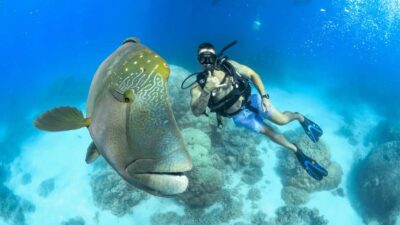
Cairns: Great Barrier Reef Cruise & Scenic Helicopter Flight
Read our review →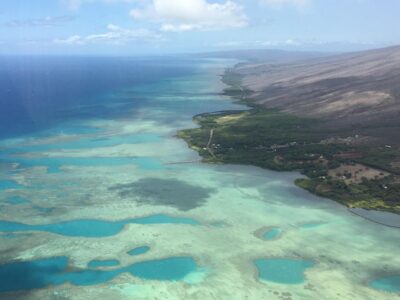
West Maui and Molokai Special 45-Minute Helicopter Tour
Read our review →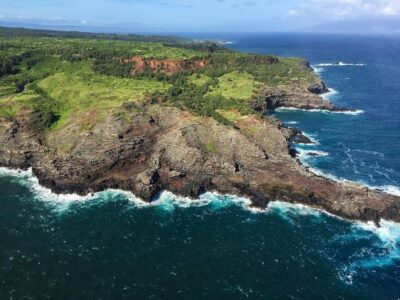
Doors Off West Maui and Molokai 45 minute Helicopter Tour
Read our review →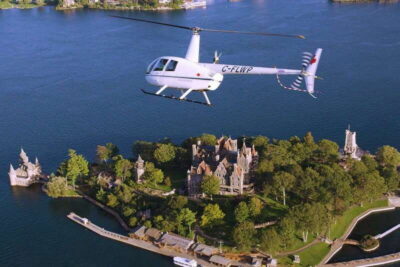
1000 Islands: 10, 20, 30, or 60-Min Scenic Helicopter Tour
Read our review →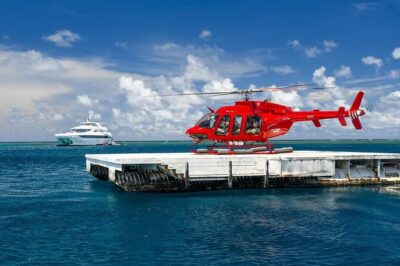
Full Day Reef Cruise and 10 Minute Helicopter Scenic Flight
Read our review →
Browse the lists this tour appears in