
REVIEW · ALASKA
Heli Glacier Crevasse Ice Climbing- Summer
A helicopter carries you from Palmer into the Chugach Mountains, then sets you down on Knik Glacier for a guided climb inside a glacier crevasse. You will learn to walk on ice, use climbing tools, and descend into a moulin, a deep vertical shaft formed in the glacier.
I like the mix of big scenery and hands-on adventure. The flight may reveal mountain goats, bears, moose, waterfalls, and miles of ice, while the climb gives you something real to do once you land. I also like the calm, encouraging instruction from guides Kate, Tom, and Cory, especially for first-time climbers.
The main drawback is the price: $1,415.91 per person is a serious splurge for about four hours. You also need to check in one hour early, arrange your own way to the lodge unless you add a transfer, and pay a comfort surcharge if you weigh more than 250 pounds.
Key points to know before you book
- A helicopter flight is part of the experience: You fly from Alaska Glacier Lodge over the Chugach Mountains to Knik Glacier, with a chance to spot wildlife from the air.
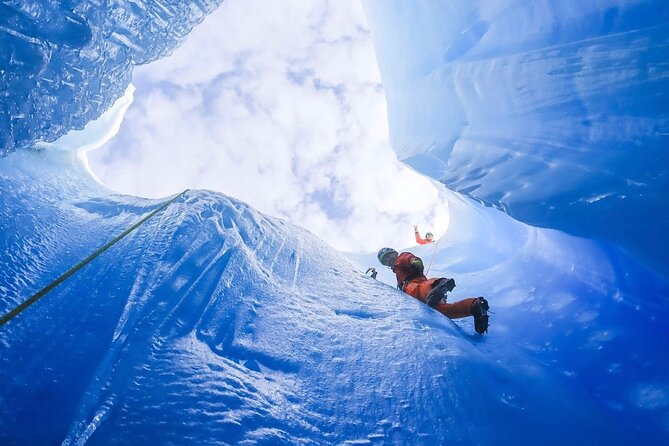
- The climb happens inside a moulin: You may be lowered 25 to 30 feet at first, then farther into a vertical ice shaft, depending on conditions and your comfort.
- Beginners can take part: Instructors provide boots, crampons, harnesses, helmets, and climbing tools, then coach you through each movement.
- The setting is private and remote: Only your group participates, which allows the guides to adjust the pace and give direct instruction.
- Lunch is included: You also receive the use of climbing equipment, landing and facility fees, and instruction.
- Plan carefully for weight and timing rules: Total passenger weight is limited to 300 pounds, passengers over 250 pounds pay a comfort surcharge, and late arrival can reduce or cancel the activity without a refund.
Flying from Palmer to Knik Glacier
Your morning begins at 8:00 a.m. at Alaska Glacier Lodge, 29979 E Knik River Road, Palmer. You must check in one hour before departure, so plan to arrive by 7:00 a.m. That early arrival matters. The operator warns that late check-in can shorten your time or lead to cancellation without a refund.
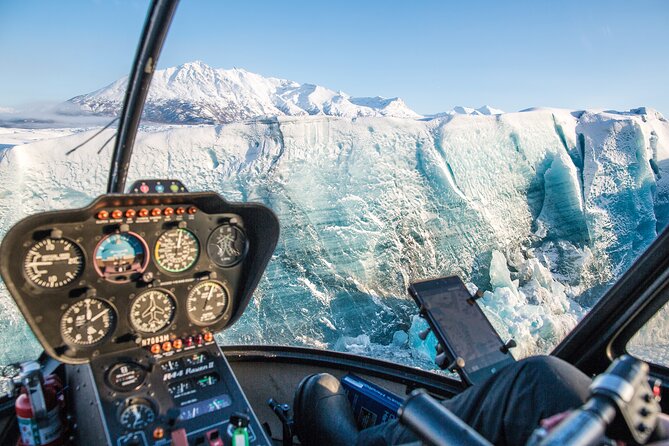
The helicopter flight is not just a shuttle. It is the first major part of the outing. From the air, you look across the Chugach Mountains and toward Knik Glacier, a broad field of ice cut by crevasses, meltwater channels, and steep folds. The flight gives you a useful sense of scale. From the ground, a glacier can seem like a wall of ice. From above, you see how far it reaches.
Wildlife sightings are possible, though never guaranteed. The flight has revealed mountain goats near a waterfall, bears with a cub, and moose. Pilots may angle the aircraft to give you better views, but wildlife is a bonus, not a promise. The strongest part of the flight is the combination of mountain views and the gradual approach to the landing site.
The return flight is also included, bringing you back to the lodge at the end of the four-hour activity. Since the aircraft carries the group in and out, you do not spend time on a long road approach or a hike to the glacier. That convenience is a large part of the cost.
More Glacier Helicopter Flights in the USA:
- Alaska Helicopter Tour with Glacier Landing – 60 mins – ANCHORAGE AREA
★ 5.0 · 725 reviews - Alaska Helicopter and Glacier Dogsled Tour – ANCHORAGE AREA
★ 5.0 · 491 reviews - Helicopter Glacier Dogsled + Knik Glacier Landing- Anchorage Area
★ 5.0 · 193 reviews
Getting fitted for boots, harness, and crampons
At the lodge, you are fitted with climbing boots, a harness, helmet, and crampons. Give the operator your shoe size when booking. Proper fit matters here more than style. You will be walking on uneven ice, kicking crampon points into frozen walls, and standing in a harness while being lowered into a moulin.
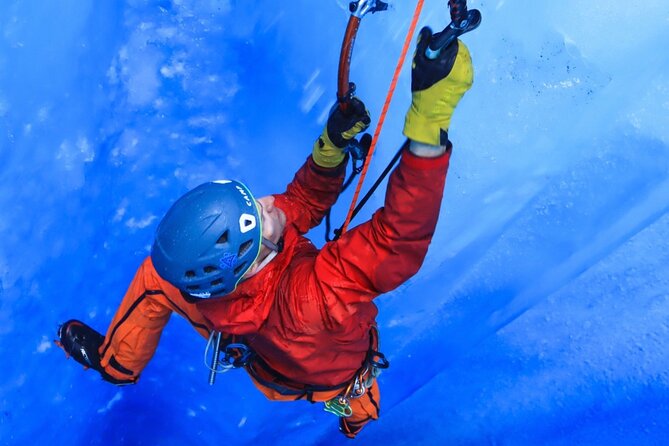
Crampons are metal devices that attach to your boots and give you grip on hard ice. The guides fit them before you leave the helicopter and help you practice walking. You will learn to lift your feet rather than shuffle, since the points can catch on clothing or straps if you move carelessly.
The guides also supply ice-climbing tools and explain how to hold them. You practice the motion needed to make the tools catch in the ice, then learn how to place your feet and keep your body balanced. This early practice is valuable. It turns a strange set of equipment into something you can use with confidence.
The included gear means you do not need to own climbing equipment. You should still dress for cold conditions and bring suitable personal layers, since the glacier can feel cold even during summer. One guide, Kate, also carries extra gloves and layers for people who need them, along with extra snacks. That is useful preparation, but you should not count on borrowed clothing as your main plan.
Learning how to move safely on the ice
Before the climb, the guides take you across part of the glacier and explain what to avoid stepping on. Glacial ice is not a smooth frozen floor. It can be hard, slick, broken, or cut by channels and holes. The guides teach you to use your crampons on slopes and show you how to kick the front points into the ice when climbing.
This instruction is not a rushed safety speech. You get time to practice. The guides explain the climbing positions and coach you as you go, which makes the activity workable for a complete beginner. You do not need previous ice-climbing experience, although you do need to be comfortable with a physical activity that uses your arms and legs.
The guides also set up the rope anchor in the ice. One account describes the A and V boring method, in which holes are made in the ice so the anchor can support a very large load. The technical details give you a better understanding of what happens before you are lowered. You are not simply tied to a rope and sent down a hole. The guides build the system, check it, explain it, and control your movement.
That careful pace is one of the strongest reasons to choose this activity over a basic glacier landing. You get the scenery, but you also learn how people travel on and climb glacier ice. You can ask questions and take your time instead of being pushed through a fixed sequence.
Descending into a glacier moulin
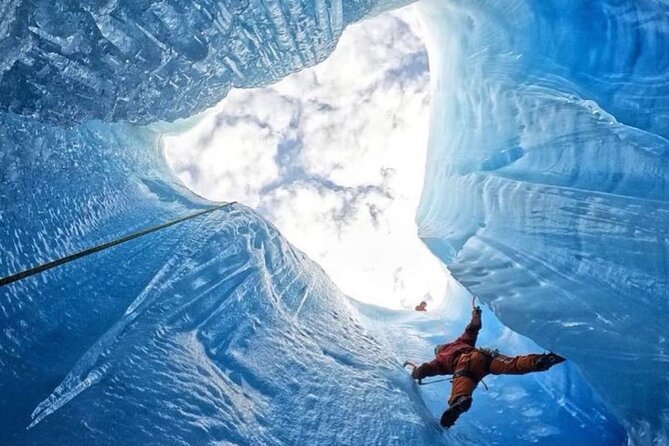
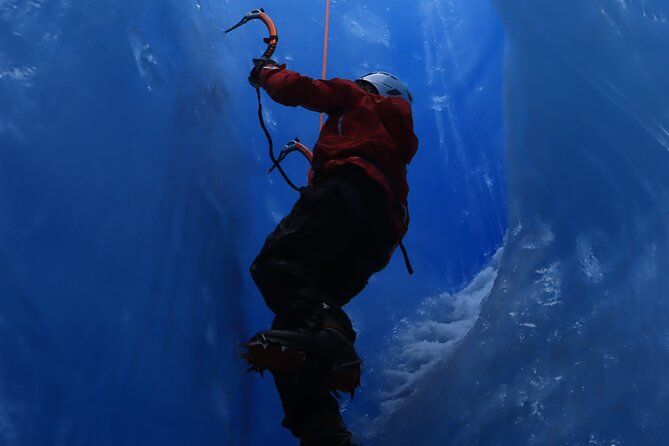
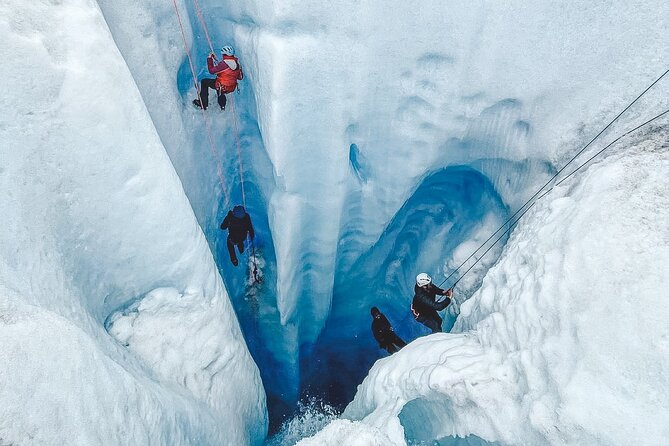
The central event is the descent into a moulin. A moulin is a vertical shaft or passage formed when meltwater cuts through glacier ice. From above, it may look like a blue opening in the surface. Inside, the walls can be smooth, polished, and intensely colored.
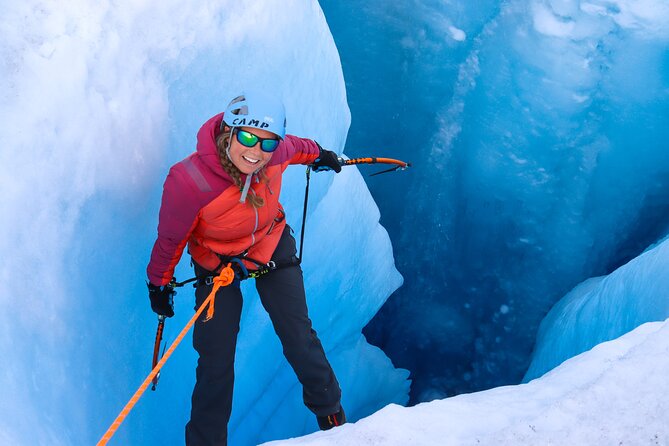
The first descent may be about 25 to 30 feet. The guides lower you into the moulin on your harness, then coach you as you climb back out. This first attempt helps you learn how the rope feels, how to place your feet, and how much pressure your tools need to catch in the ice.
If conditions allow, you may then be lowered farther. One account describes walking down the ice wall while suspended from a pulley, reaching the bottom of a beautiful moulin, and then being pulled back to a section of rougher ice where climbing back up was possible. The lower walls can be too slick for an inexperienced climber to use normal ice-climbing movements. The guides control the process and bring you back to a suitable section when it is time to climb.
You should understand that the exact depth and route can change. A glacier is an active natural environment, not a built attraction. Conditions, safety, your ability, and the guides’ judgment all affect what you do. The published experience describes lowering into a crevasse and climbing, but it does not promise a specific depth for every group.
This is also the point where fitness matters. You do not need to be an athlete, but climbing uses your arms, legs, and core. After several climbs, your muscles may be tired. The guides let you work at your own pace, which is important for beginners and for anyone who feels nervous about heights or enclosed ice.
Same place, a different flight path:
- New York City: Manhattan Helicopter Tour
★ 4.7 · 7,076 reviews - NYC: Manhattan Sightseeing Helicopter Tour
★ 4.8 · 5,826 reviews - Las Vegas Helicopter Night Strip Flight Tour with Optional Dinner
★ 4.5 · 5,693 reviews - Grand Canyon Village: Helicopter Tour & Hummer Tour Options
★ 4.7 · 2,586 reviews
Seeing blue ice, meltwater, and the glacier up close
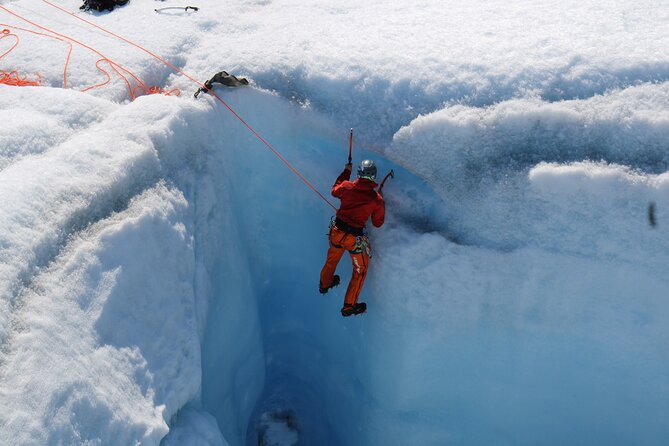
The helicopter gives you a grand view. The walk gives you the close view. You can examine the different textures of ice, see how water has shaped the glacier, and walk beside a clear blue river flowing through the ice. The meltwater can look unusually clean and bright, and you may be able to fill a water bottle with it.
That contrast is what makes the experience feel complete. A flightseeing trip can show you a huge glacier but leave you standing on it for only a few minutes. A climbing trip without the flight might give you more time on the ice but less sense of the surrounding mountains. This outing combines both.
You should bring a camera or phone only if the operator permits it in the manner you plan to use it. Bags must remain in your vehicle or in available lockers, and drones are not allowed. Smoking items, including vapes, lighters, and electronic cigarettes, are also prohibited. Firearms are not permitted.
The guides take photographs during moments when you can safely pause, but you should not expect every part of the climb to be a photo stop. The best memories may come from the view inside the moulin, the sound of meltwater, and the odd feeling of walking down a vertical wall of ice.
Lunch after the climbing
Lunch is included, and it arrives at a sensible point in the day. After climbing and walking on crampons, you will likely welcome food and a chance to rest. The supplied details do not specify the menu, so contact the operator if you need information about dietary requirements.
This meal is more than a small extra. Remote glacier activities do not offer a cafe or an easy place to buy food. Carrying lunch as part of the operation means you can stay with the group rather than worrying about provisions. Extra snacks are also available from the guiding team according to the supplied trip details.
The lunch break gives you time to look around before the helicopter returns. Do not assume the whole four hours are spent climbing. The total time includes the lodge check-in, equipment fitting, helicopter flights, glacier walking, instruction, climbing, lunch, and the return to the meeting point.
What the $1,415.91 price really covers
At $1,415.91 per person, this is among the more expensive ways to spend half a day near Palmer. The price makes more sense when you separate the parts: helicopter transport into the Chugach Mountains, landing and facility fees, climbing boots, harness, helmet, crampons, climbing tools, professional instruction, lunch, and the return flight.
The private format matters. Only your group participates, so the guides can spend time with each person and adjust the pace. A first-time climber may need more coaching than an experienced one. A mixed group can also work, since the guides can offer different levels of support during the climb.
The cost is harder to justify if you mainly want a quick glacier photo or a short helicopter ride. You are paying for a technical activity, special equipment, several instructors, and access to a remote landing site. If that combination is the point of your Alaska trip, the price may feel fair. If you are comparing it with a standard glacier flight or a simple sightseeing landing, expect a large difference.
Transfers from your hotel are not included, though they can be added for an extra fee by contacting Alaska Helicopter Tours. Build that cost into your decision if you are not driving to the lodge. The meeting point is outside Palmer, and the activity ends back there.
Who should book this climb
I would recommend this for an adult or older teen who wants an active glacier experience rather than a passive scenic flight. It suits people who are curious about ice climbing but do not own equipment or want to arrange a multi-day mountaineering trip.
The experience is not recommended for children aged 12 and under. Most people can participate, but the activity involves crampons, ropes, ice tools, and a descent into a vertical opening. You should be honest about your comfort with heights, cold conditions, and physical effort when deciding.
It is also a strong choice for a private group with mixed experience. A complete beginner can learn the basic techniques, while someone with more climbing background may enjoy the unusual setting and the chance to climb inside a moulin. The guides, including Kate, Tom, and Cory, are described as calm, friendly, safety-focused, and encouraging.
Weight rules require special attention. The total weight per passenger is listed as 300 pounds. Anyone over 250 pounds must pay a comfort surcharge directly to the operator because of aircraft comfort and balance. Ask for the exact charge before committing.
Practical planning for the morning
Wear warm layers and bring gloves suited to cold conditions. The operator supplies climbing boots, but you need to provide your shoe size in advance. Since the glacier environment can change and the activity is outdoors, flexible clothing is more useful than a single heavy layer.
Arrive at Alaska Glacier Lodge by 7:00 a.m. for an 8:00 a.m. start. Confirmation is provided when you book. Do not plan a tight connection afterward, since the advertised duration is approximately four hours and weather or glacier conditions may affect the schedule.
Leave prohibited items in your vehicle or use the lockers. Do not bring drones, smoking items, lighters, vapes, electronic cigarettes, or firearms. You also should not expect hotel pickup unless you arrange and pay for a transfer ahead of time.
Free cancellation is available if you cancel at least 24 hours before the local start time. Cancellations or changes made inside that 24-hour window are not refunded or accepted. That rule matters here because the price is high.
Should you book the Knik Glacier ice climb?
Book it if you want a private, active glacier day and can accept the cost. The helicopter flight, close look at Knik Glacier, careful instruction, and moulin descent create a much fuller experience than a simple scenic landing.
Skip it if your main goal is low-cost sightseeing, if you dislike heights or strenuous activity, or if you need a flexible schedule. For the right person, the price buys access to a rare setting and a guided introduction to ice climbing. For everyone else, a standard flightseeing trip may be a better use of the budget.
FAQ
Where does the tour begin?
The tour begins at Alaska Glacier Lodge, 29979 E Knik River Road, Palmer, Alaska 99645. The activity ends back at the same meeting point.
What time does the tour start?
The scheduled start time is 8:00 a.m. You must check in one hour before departure.
How long does the activity last?
The experience lasts approximately four hours, including the helicopter flights, glacier activity, lunch, and return to the lodge.
Is hotel pickup included?
No. Hotel pickup and drop-off are not included. Transfers to the departure location can be added for an extra fee by contacting Alaska Helicopter Tours.
What equipment is provided?
The tour provides climbing boots, a harness, helmet, ice crampons, climbing instruction, landing and facility fees, and lunch. You must provide your shoe size for the boots.
Can children join the experience?
The activity is not recommended for children aged 12 and under. Most other participants can take part, according to the supplied tour information.
What are the weight requirements?
The total weight per passenger is 300 pounds. Passengers weighing more than 250 pounds must pay a comfort surcharge directly to the operator because of aircraft comfort and balance.
Just added around the USA
- Zion National Park and Canaan Cliffs: Helicopter Tour★ 4.7 · 22 reviews
- Zion National Park, Canaan Cliffs: Extended Helicopter Tour★ 4.5 · 4 reviews
- Zion National Park: 10- or 20-Minute Scenic Helicopter Tour★ 4.9 · 55 reviews
- West Maui and Molokai Special 45-Minute Helicopter Tour★ 5.0 · 9 reviews
- Waikoloa: Big Island Spectacular Helicopter Tour★ 4.5 · 5 reviews
- Oahu: Waikiki 20-Minute Doors On / Doors Off Helicopter Tour★ 4.9 · 32 reviews
- Las Vegas: Valley of Fire Helicopter with Scenic Landing★ 5.0 · 2 reviews
- Hudson Valley Fall Foliage Helicopter Tour from Westchester (Shared)★ 4.0 · 2 reviews
Glacier & Snow Landing Flights, compared.
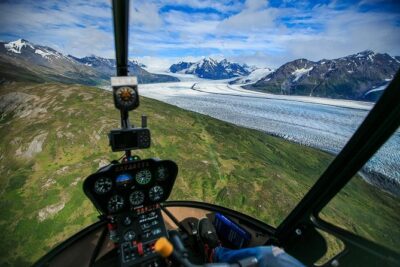
Alaska Helicopter Tour with Glacier Landing – 60 mins – ANCHORAGE AREA
Read our review →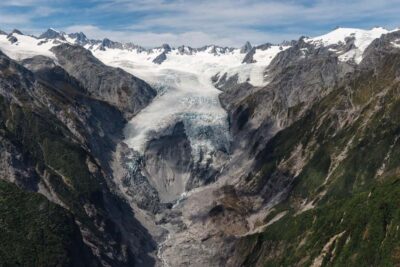
Franz Josef Glacier: Helicopter Flight & Alpine Landing
Read our review →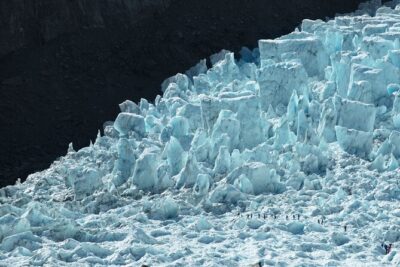
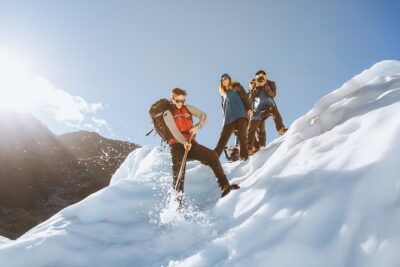
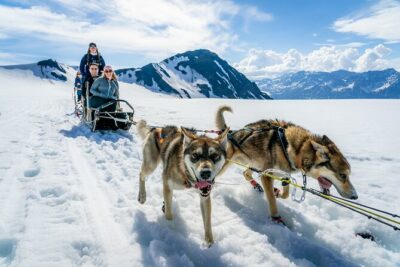
Alaska Helicopter and Glacier Dogsled Tour – ANCHORAGE AREA
Read our review →
Franz Josef: 35min Helicopter Trip over Two Glaciers
Read our review →
Mount Cook: Scenic Helicopter Flight with Alpine Landing
Read our review →
Franz Josef & Fox Glaciers Helicopter Flight & Snow Landing
Read our review →Browse the lists this tour appears in